Highlights of the Department
- Regular lectures by guest speakers on specialized topics.
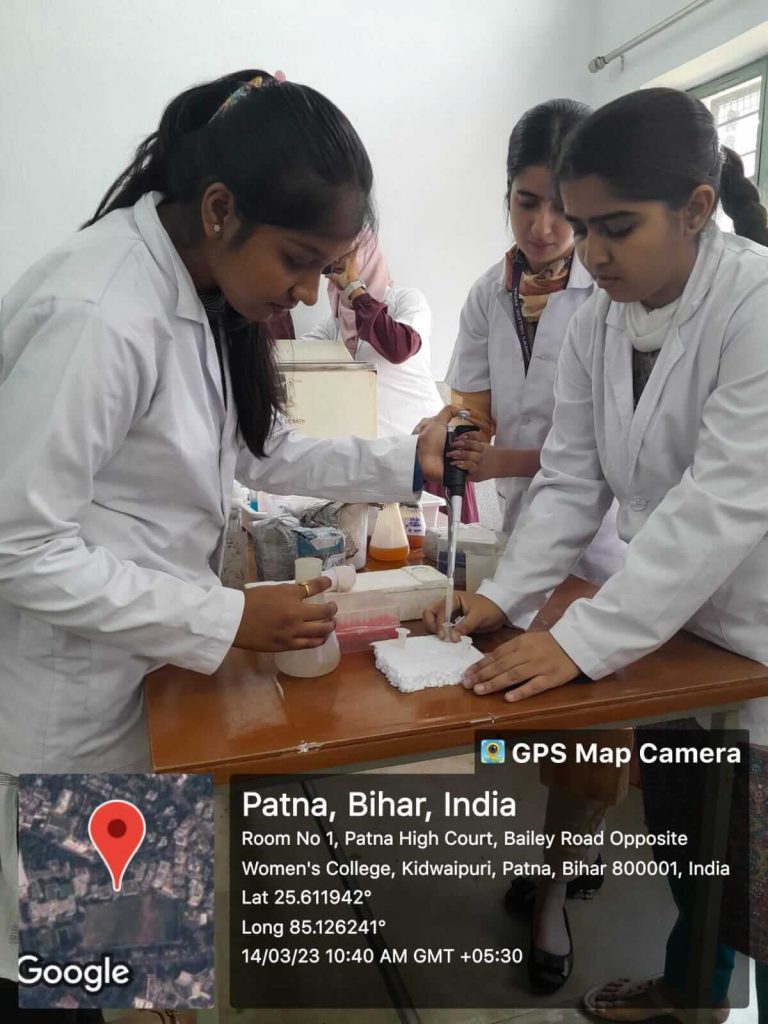
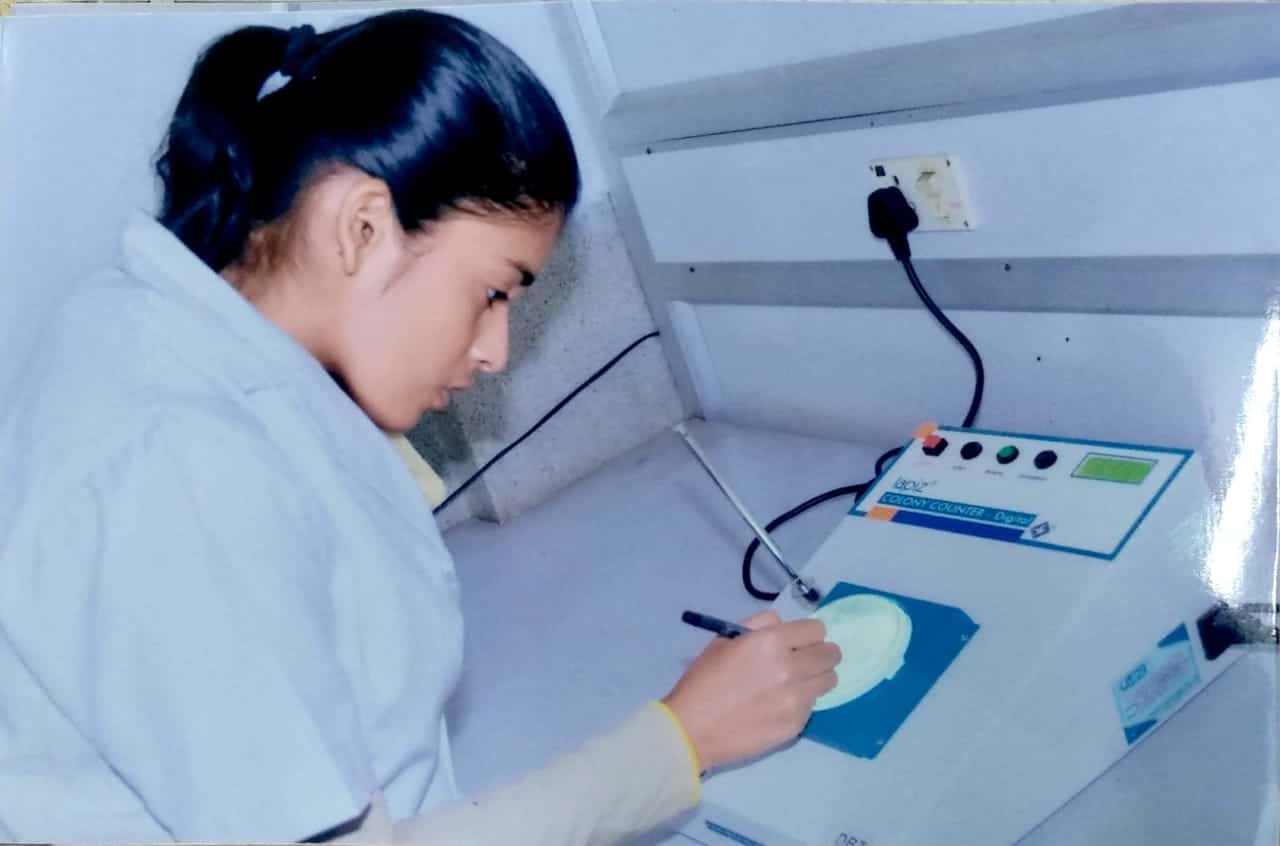
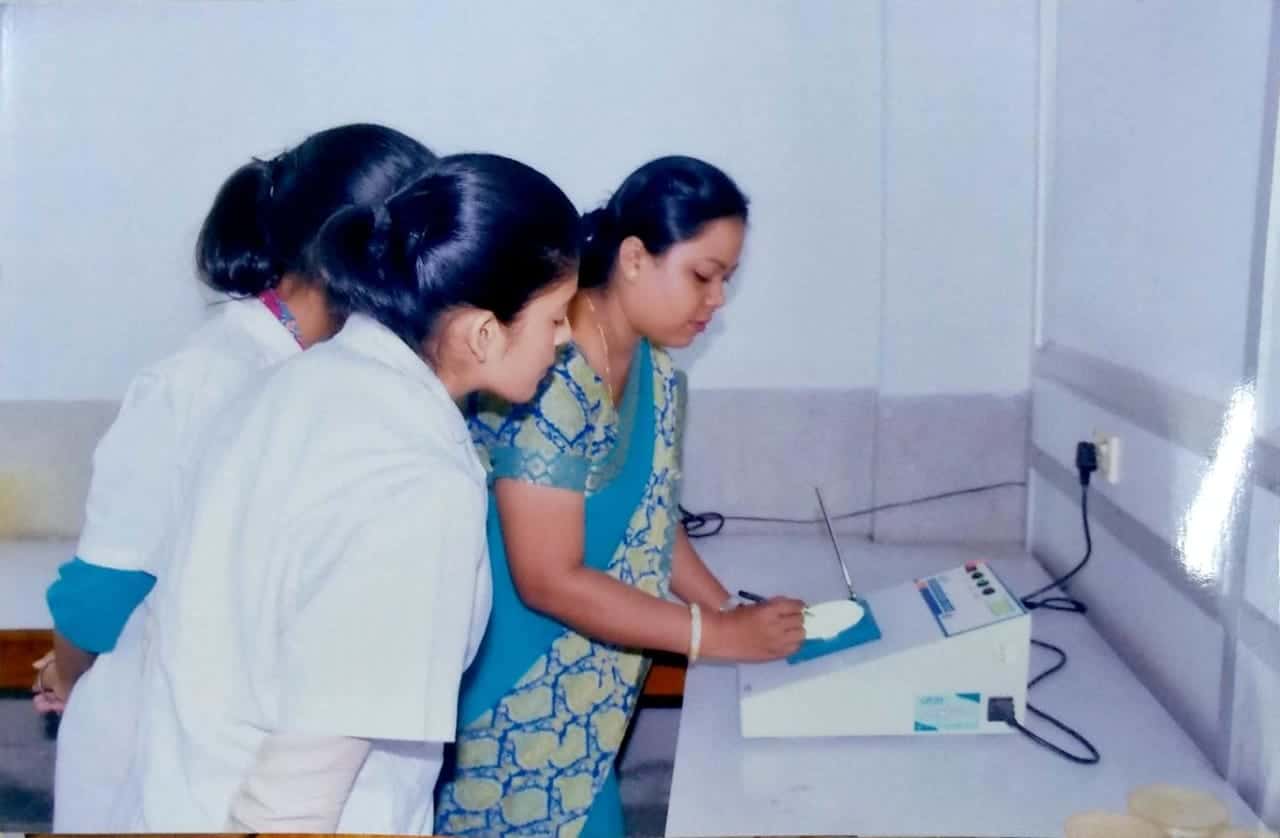
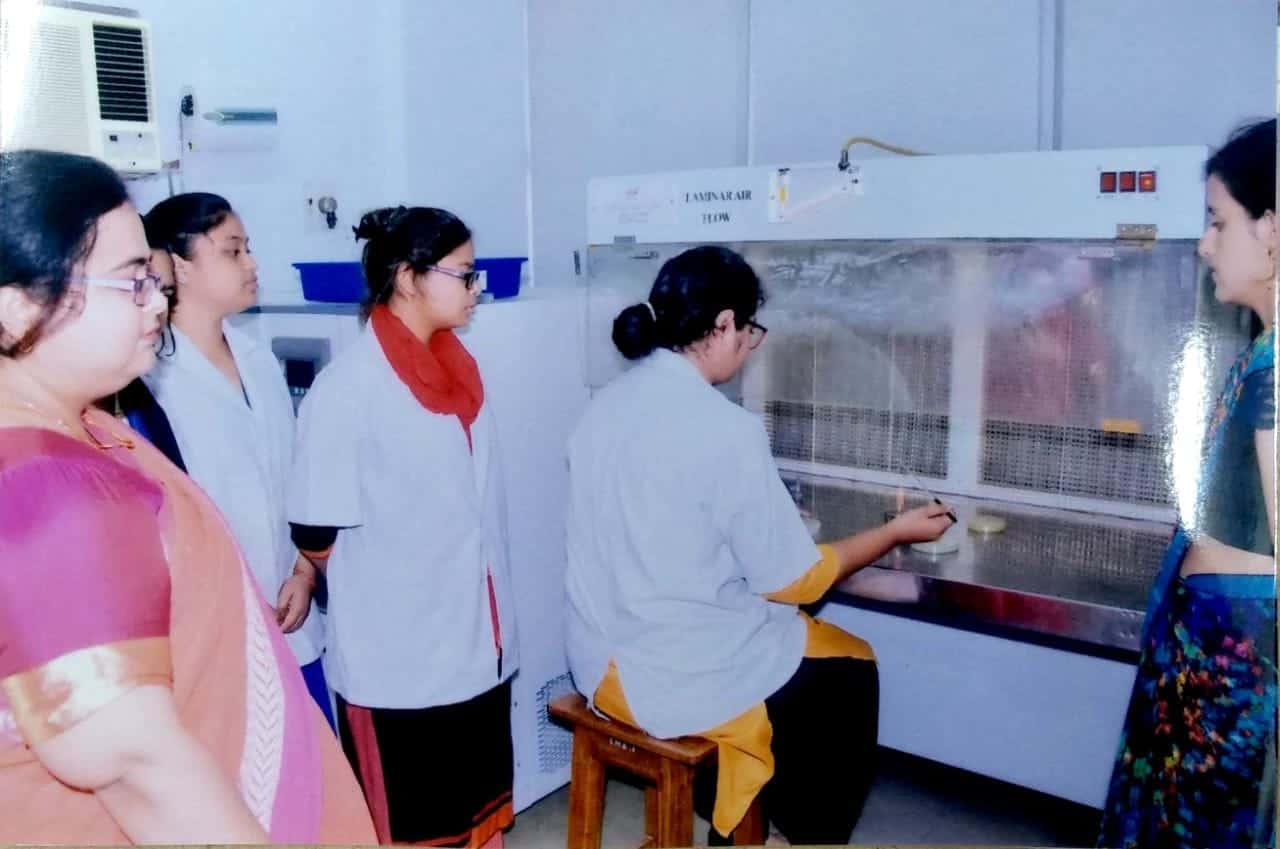
- Hands-on training in Microbiology & Biochemical Techniques, Mushroom cultivation, Basic Tissue Culture Techniques & Statistical Analysis.
- Regular Seminars & Group Discussions to enhance communication skills.
- Academic Evaluation of students by Terminal Examinations.
- Monitoring of the student’s Experimental skills by Assignments & Annual Projects.
- Exposure trips to various Industries and Research Institutions.
- Development of Computer literacy and Entrepreneurship skills.
- Departmental library with the recent edition of Books & Journal for students reference.
- Well equipped laboratories with tissue culture and instrumentation facilities.
- Active Participation in Cultural Programmes and Extra-Curricular activities.
- Students going for higher studies in reputed institutions of India and abroad.
- Regular Parent-Teacher interaction & feedback from the students.
- Smart Boards are used for teaching and learning purpose.
Teaching Staff




Non-Teaching Staff
 |
Basic Information Mr. Vijay Kumar Mishra Store keeper |
Activities



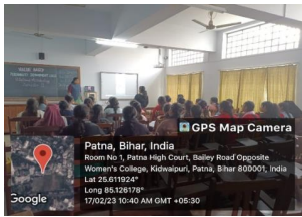
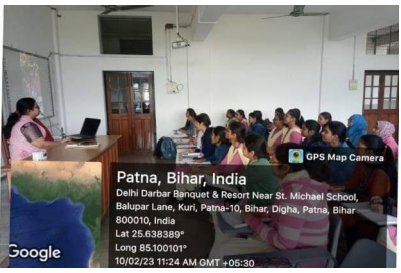
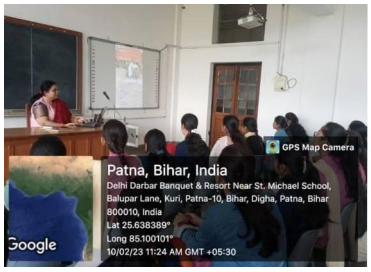
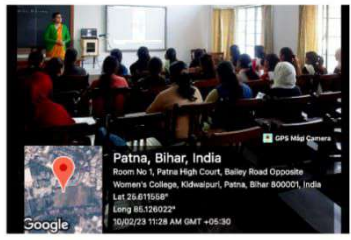
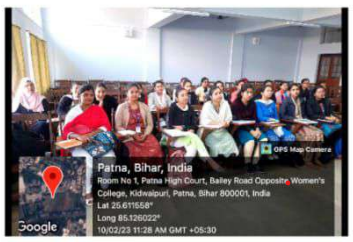


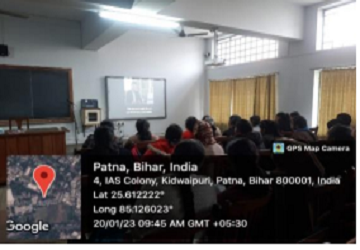
Department of Microbiology, Patna Women’s College, Autonomous, Patna University organized a Fresher’s Day Programme to welcome the B.Sc Semester l students (2022-2025) on 31.8.2022.The programme started with a Prayer Dance followed by a Welcome speech by Dr. Jaya Philip, Head , Department of Microbiology. The Cultural committee members Ms. Manisha Prasad and Ms Samiksha Sinha were welcomed with plant sampling and flowers.The Programme was hosted by Yemna Abid and Saumya Sinha. The students presented a melodious group song. Further, a self written Poem on the theme ‘Nature and Empowerment ‘ was recited by Mariya Abid. Aishwarya Laxmi presented a Hindi Poem ‘Naari ‘. Students mesmerized the audience with an energetic Laavni dance. Students also presented an entertaining Skit on ‘Examination Day’ Ankita Anand was crowned Miss Fresher of the department. The Cultural committee members praised the students for their active participation and enthusiasm. The Supervisors of the programme were Dr. Preeti. Dr. Niti and Dr. Swetnisha. The vote of thanks was given by Ariba Khan. The freshers Day Programme served as a platform for the new students to showcase there creative skills and talents.
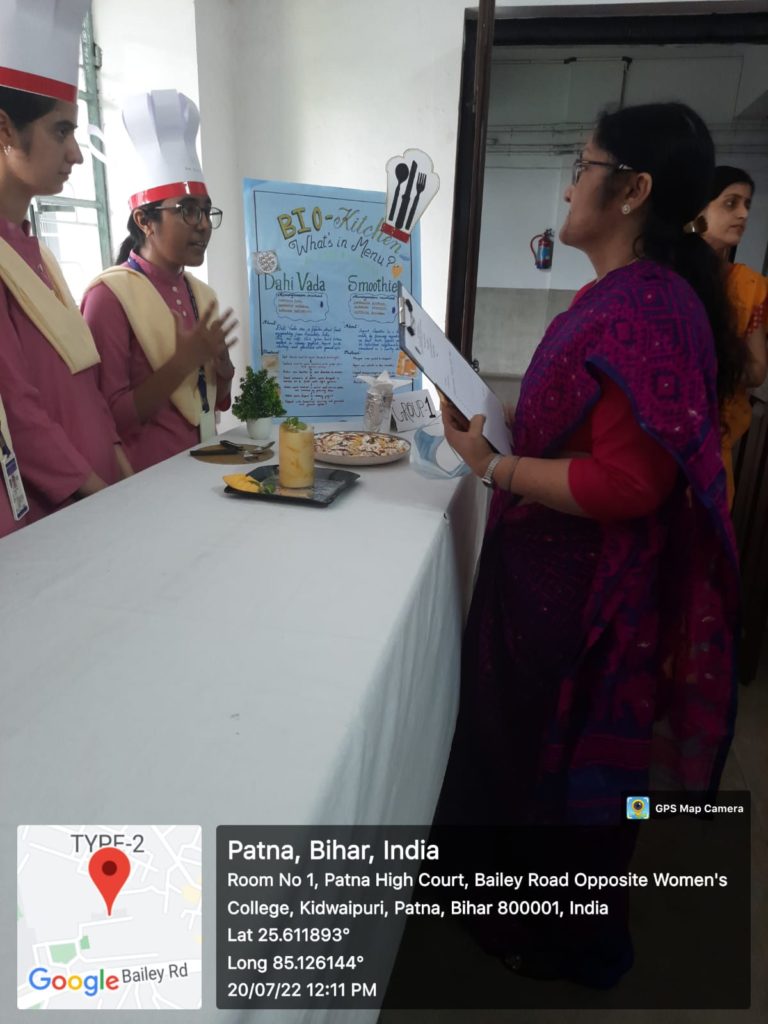
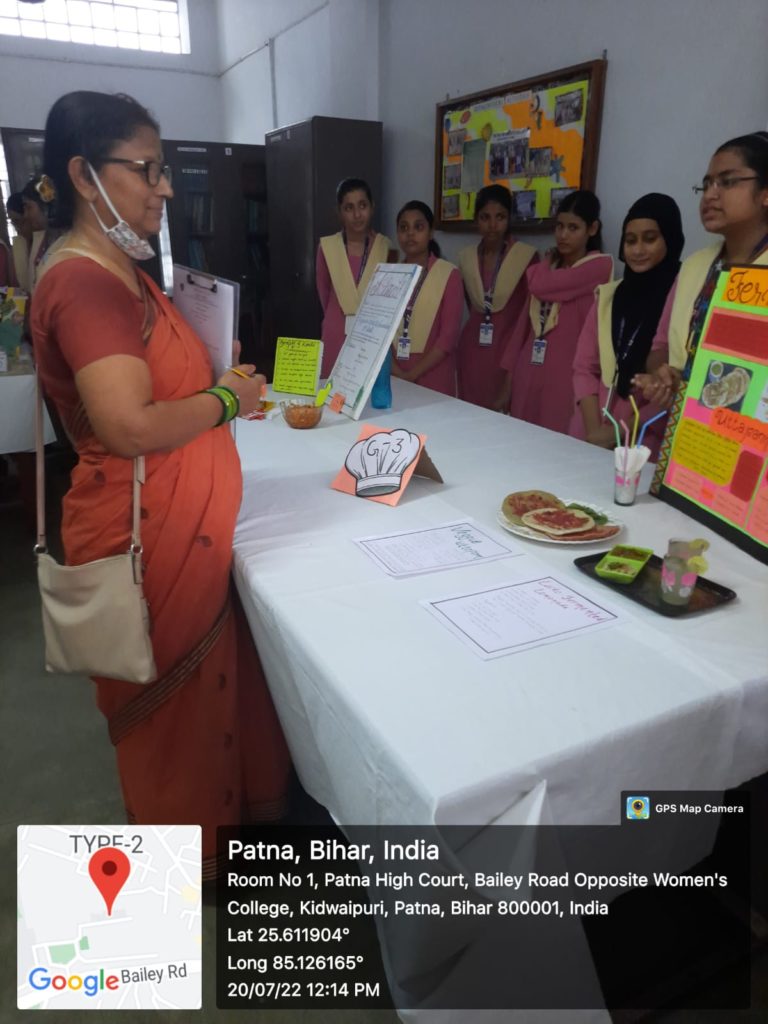
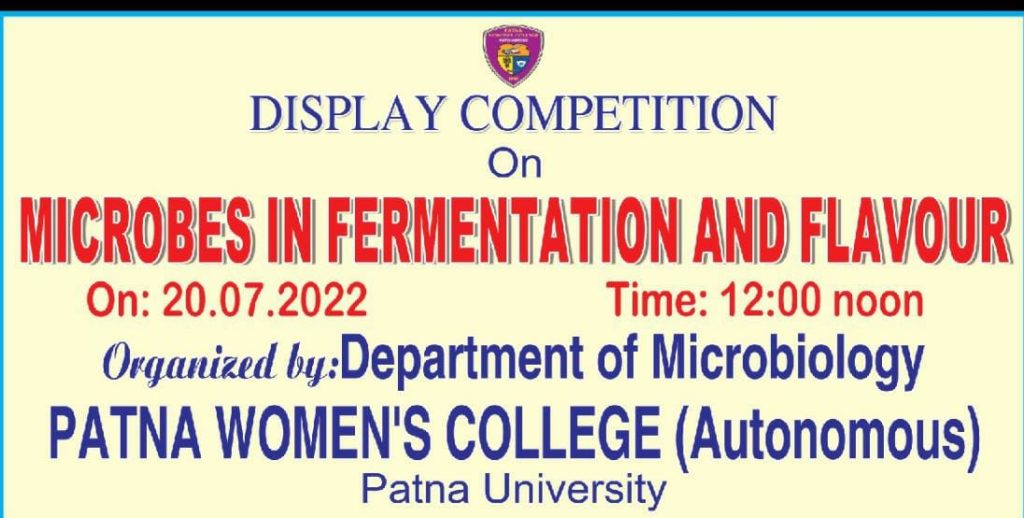
A display competition on the theme “ Microbes in fermentation and flavour “ was held in the Department of Microbiology for the students of 5th semester on 20th July 2022 under the supervision of Dr. Jaya Philip , Head, Department of Microbiology, Dr. Niti Yashvardhini, Dr. Preeti Swarupa , Dr. Swetnisha, Assistant Professor Department Of Microbiology. In the contest the students presented various fermented dishes including dosa, idli, vada, kimchi, and many more prepared by the biological process of fermentation thus enhancing the nutritional value. The event was judged by Dr. Jyotsana Kumari, Assistant Professor, Department of Chemistry and Dr. Urvashi Sinha, Assistant Professor Department of Botany. The students got a golden opportunity to showcase their talents and a chance to develop new ones and also enhance the spirit of team work. The students were praised by the judges for their vibrant presentation, hardwork and for the successful completion of the event.In this competition first place was secured by group 6: Saba naaz, Anoushka,Tripti Kumari ,Prapti ojha , Surbhi Singh
Second place was secured by Group 1: Ramsha imam , Kajal Kumari , Mehreen rouf, Mahi Raj Third Place was Secured by Group 8 : Akriti , Anushka S. Bhadhuri, Madhumita


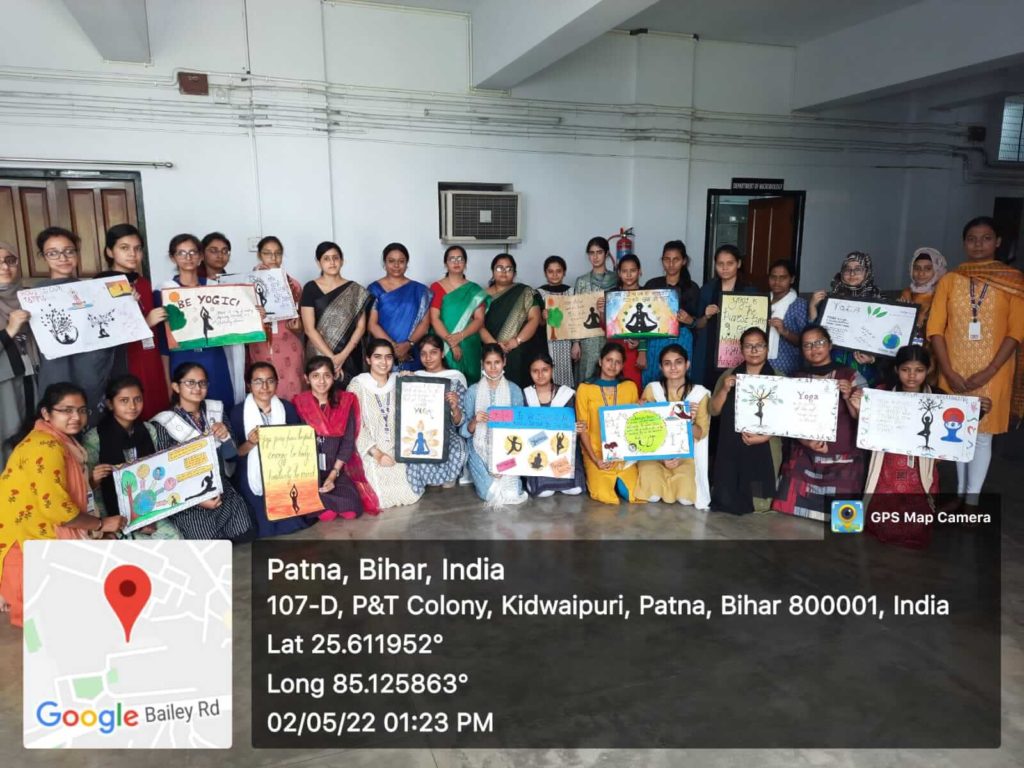
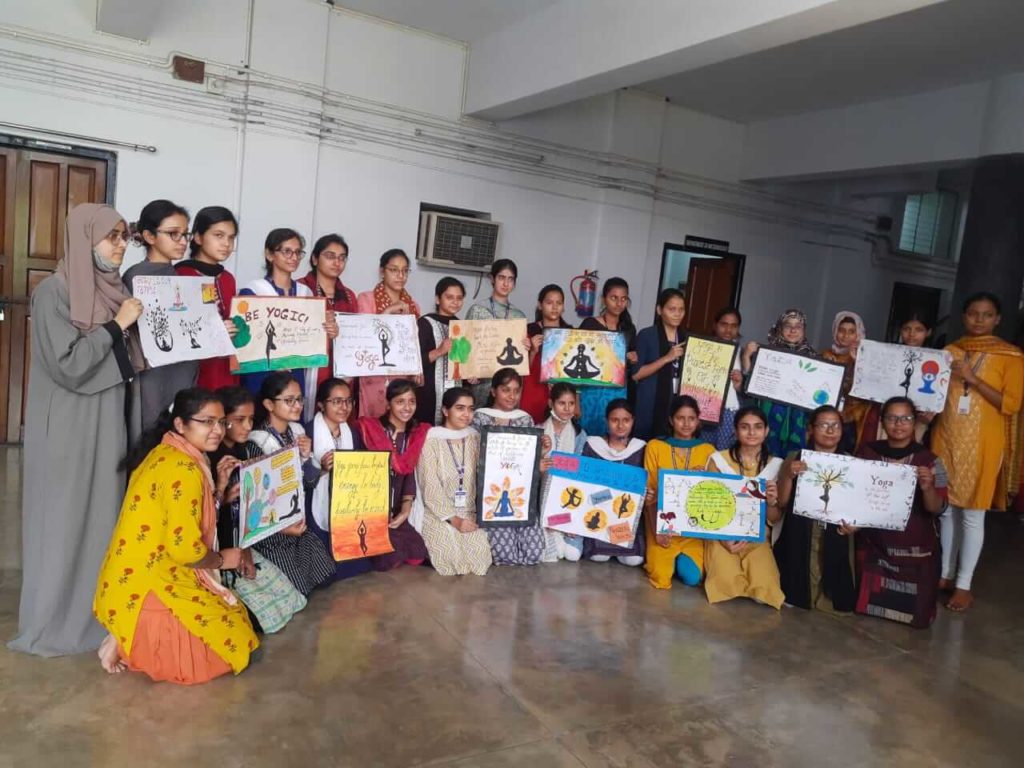
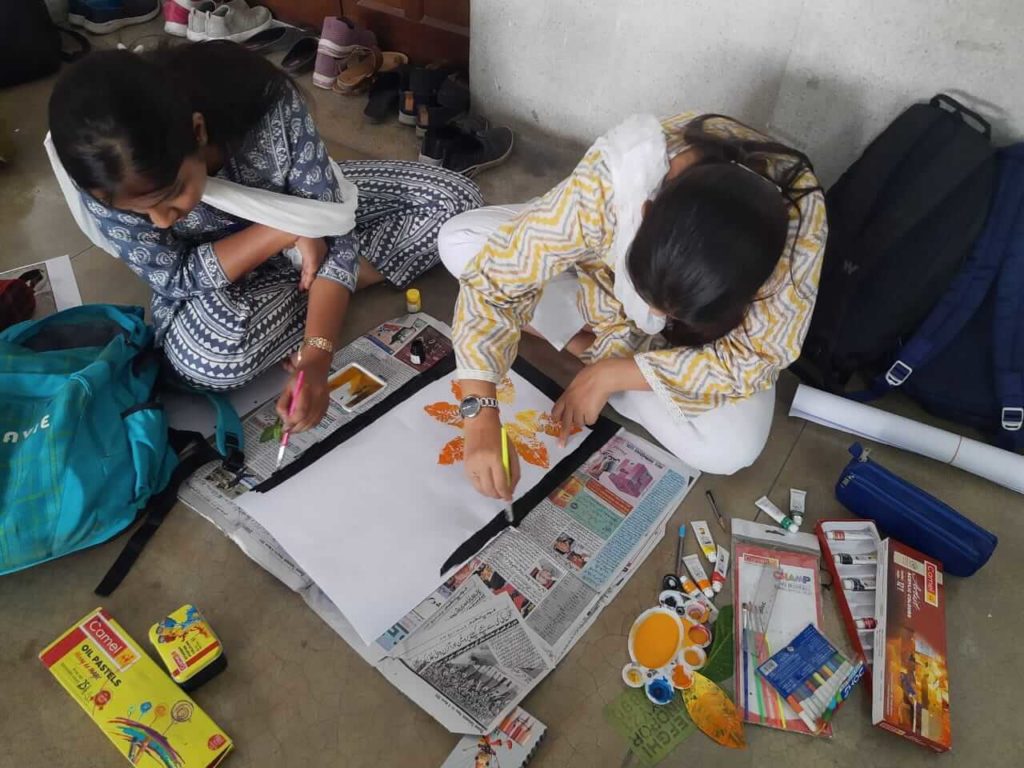
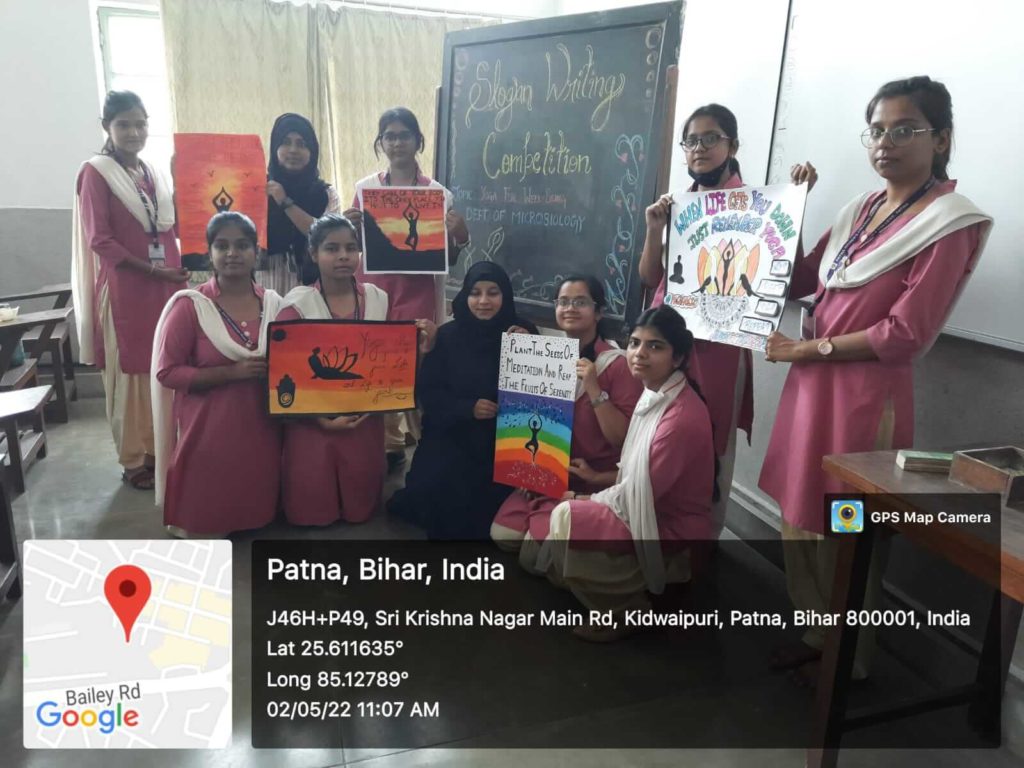
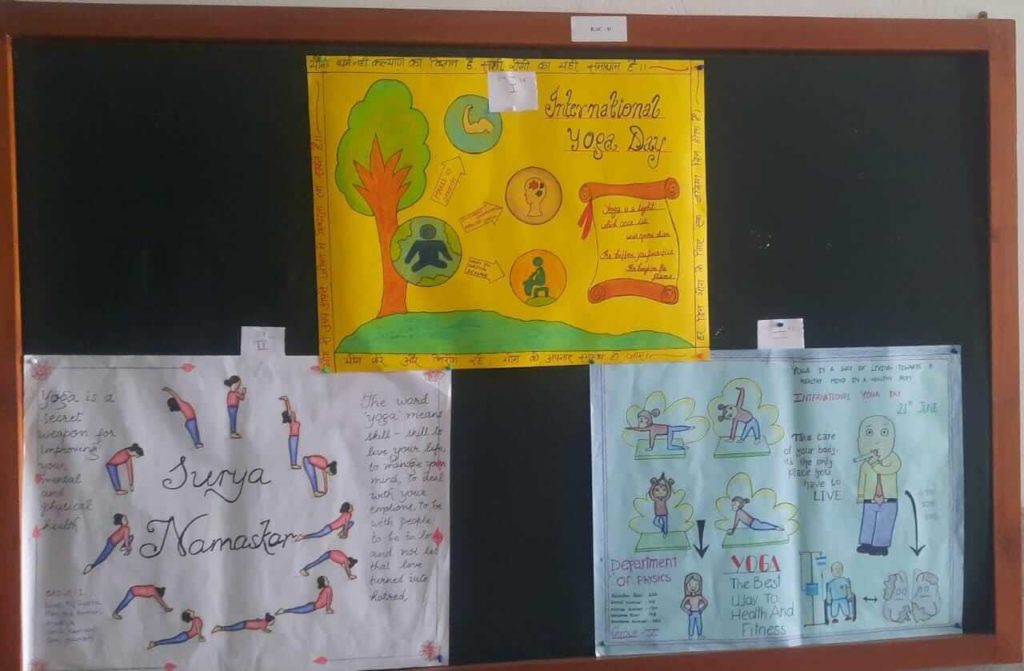
A Slogan Writing Competition on the topic, “Yoga for Well-being” was organised by the Department of Microbiology on 2nd May, 2022 for the students of 2nd semester from 9:00 a.m – 11:00 a.m and for the students of 4th semester from 11:00 a.m – 1:00 p.m.
Nearly 60 students participated in the contest. The participants exhibited their artistic skills by displaying physical and mental benefits of Yoga with slogan to motivate the practice of Yoga for better health.
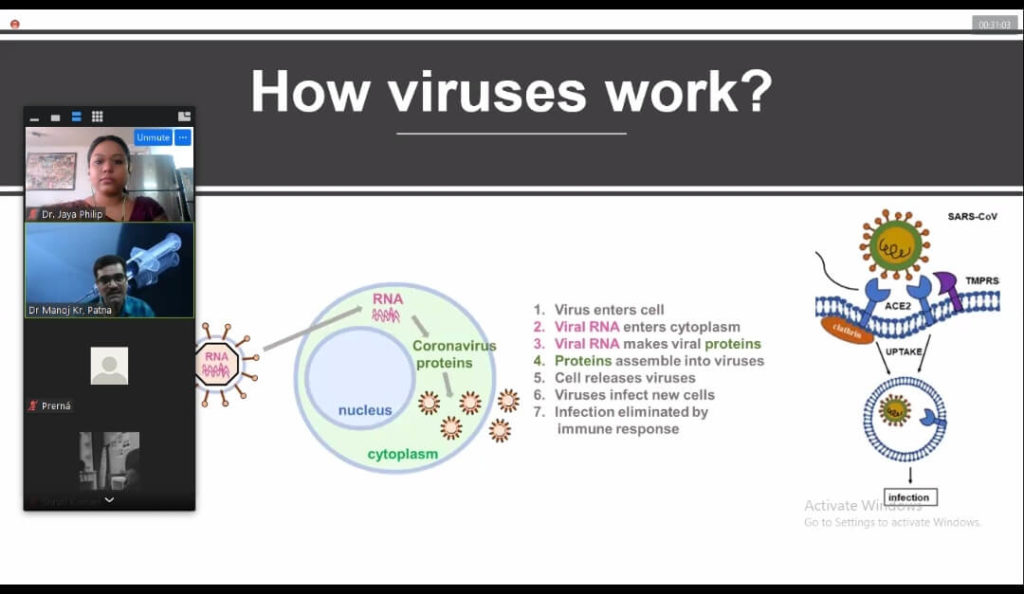
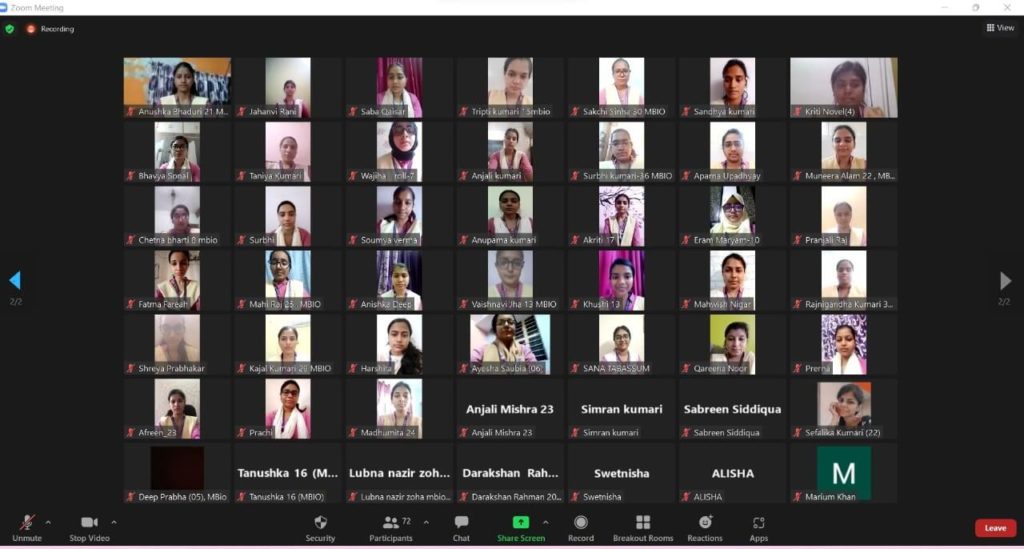
An online guest lecture was organised by the Department of Microbiology on the topic “Covid 19 Vaccine: The Science Behind It” on 28.04.2022 from 01:00 PM onwards. Dr. Manoj Kumar, Head, Department of Veterinary Microbiology, Bihar Animal Sciences University, Patna was the resource person. Nearly eighty students attended the lecture. The event started with welcome address by Dr. Jaya Philip, Head, Department of Microbiology. Dr. Kumar highlighted the basic structure of SARS CoV-2 virus and its mode of infection and also elucidated its importance in designing the coronavirus vaccine. He highlighted the different strategies involved in designing and delivery of vaccine with special reference to coronavirus vaccine. He explained his contribution in controlling bird flu at Patna Zoo and shared his views on his first hand experience in handling this virus. At the end students put forth their questions and got their queries and doubts regarding the coronavirus cleared. Vote of thanks was proposed by Dr. Preeti Swarupa. Dr. Niti Yashvardhini was the moderator of the event.




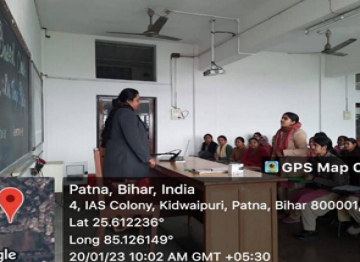
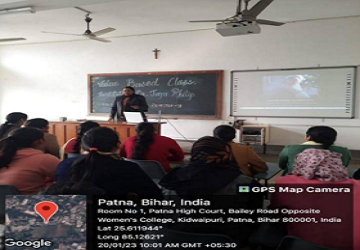
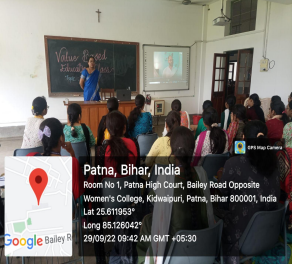
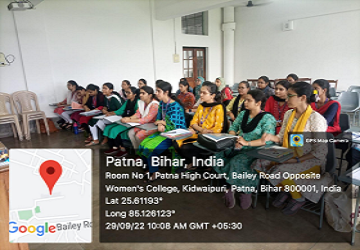
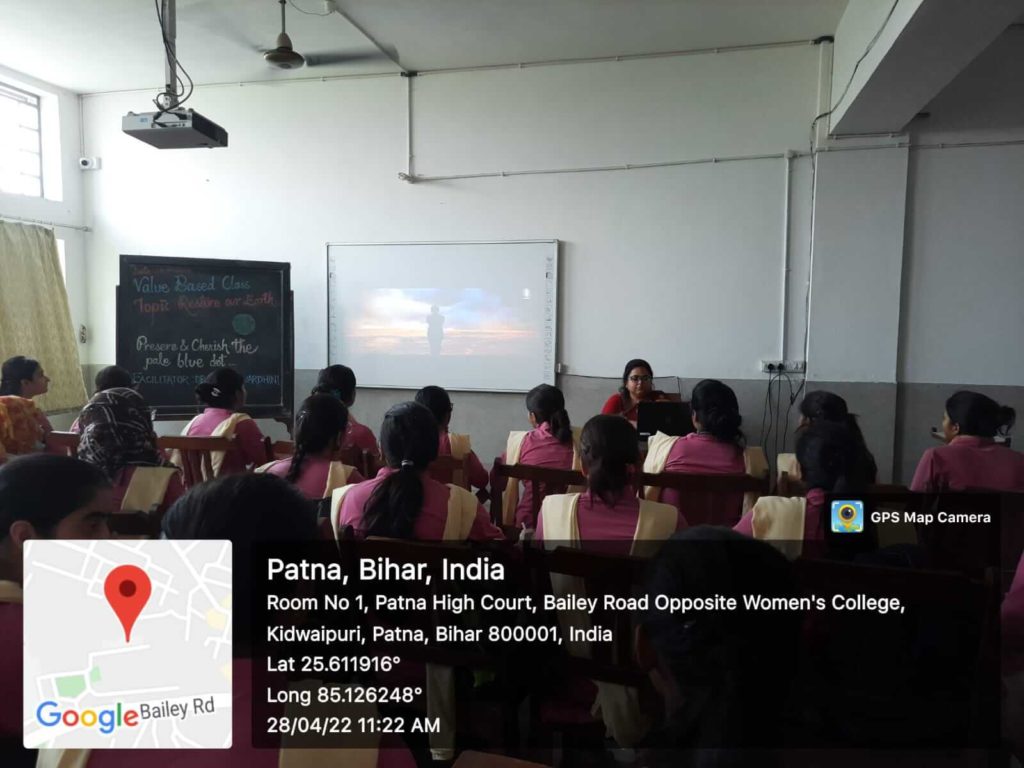
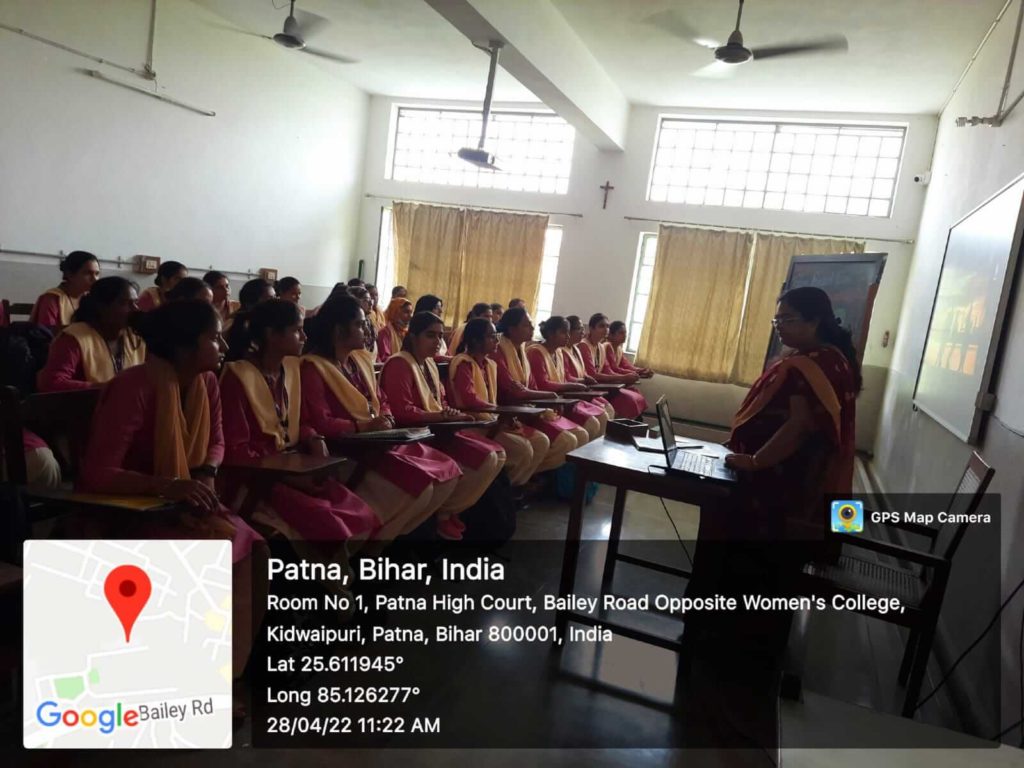
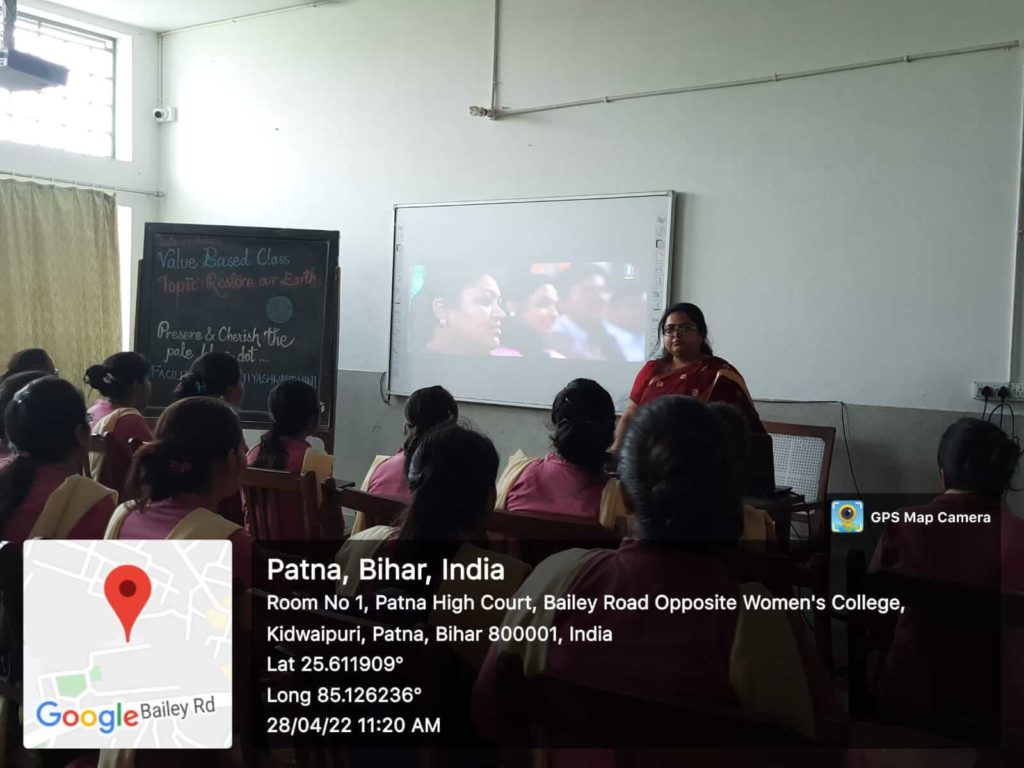
The Dept. of Microbiology organized a value based education class on the topic “Save the Earth” for the students of semester II on 28th April, 2022. The facilitator for the class was Dr. Preeti Swarupa, Assistant Professor, Department of Microbiology, Patna Women’s College.
Earth Day is celebrated annually on 22nd of April, to demonstrate support for environmental protection.The message included celebrating our shared home by learning how to best protect it and create a brighter, healthier future for all. Let’s preserve and cherish the pale blue dot because there is much more to thrive and much more to show.
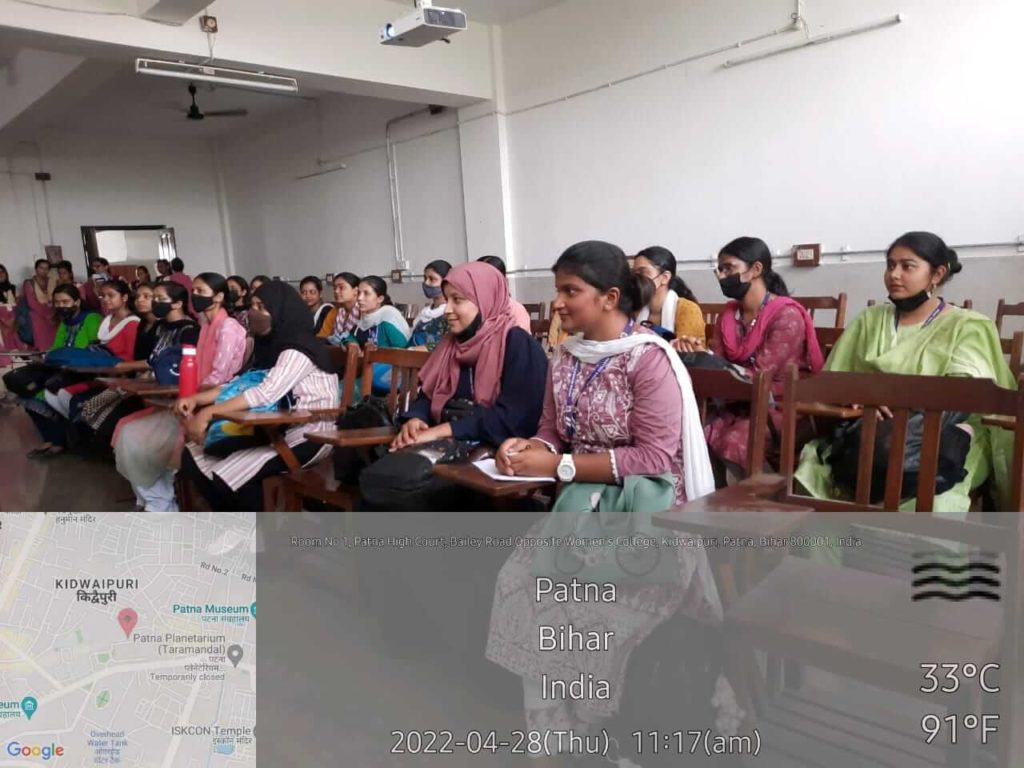
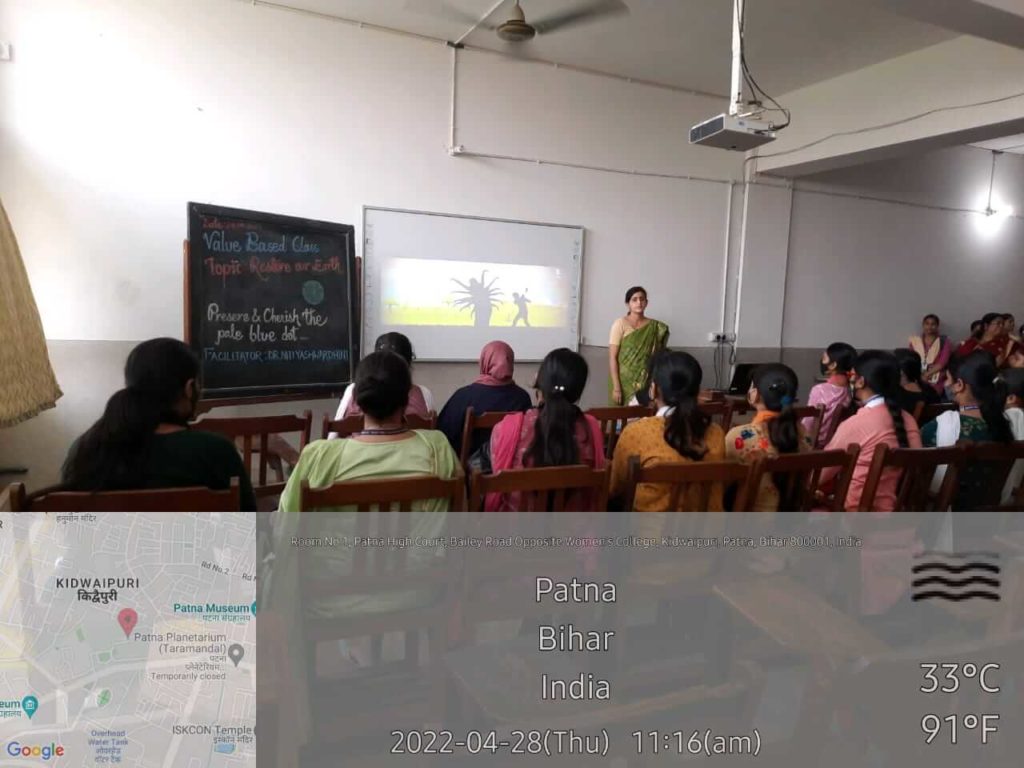
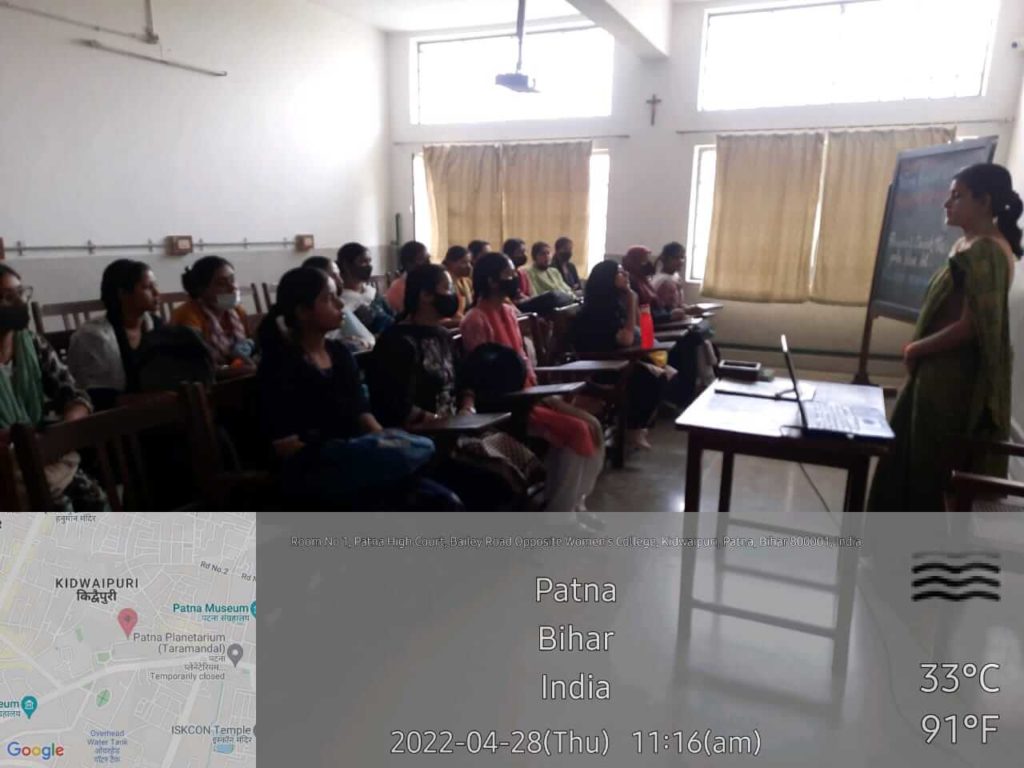
The Dept. of Microbiology organized a value based education class on the topic “Save the Earth” for the students of semester IV on 28th April, 2022. The facilitator for the class was Dr. Niti Yashvardhini, Assistant Professor, Department of Microbiology, Patna Women’s College.
Students were taught about the consequences & impact of human activities on the ecosystem.
Emphasis were laid on the importance and ways to protect the Earth through small videos and discussion.
Altogether, it was an interactive class where students also shared their ideas and notions.
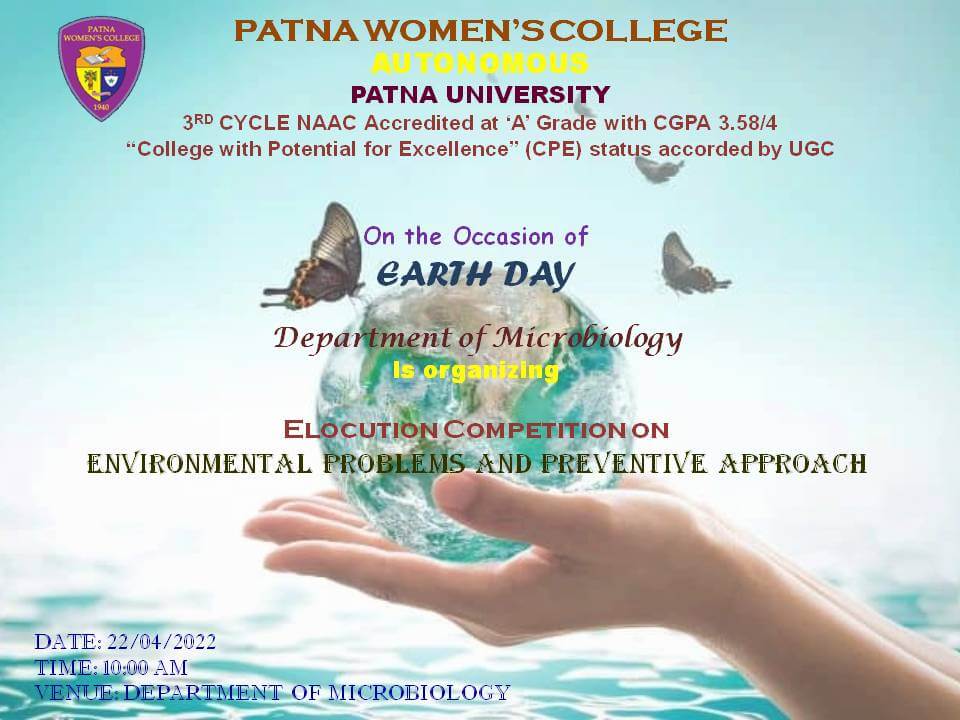
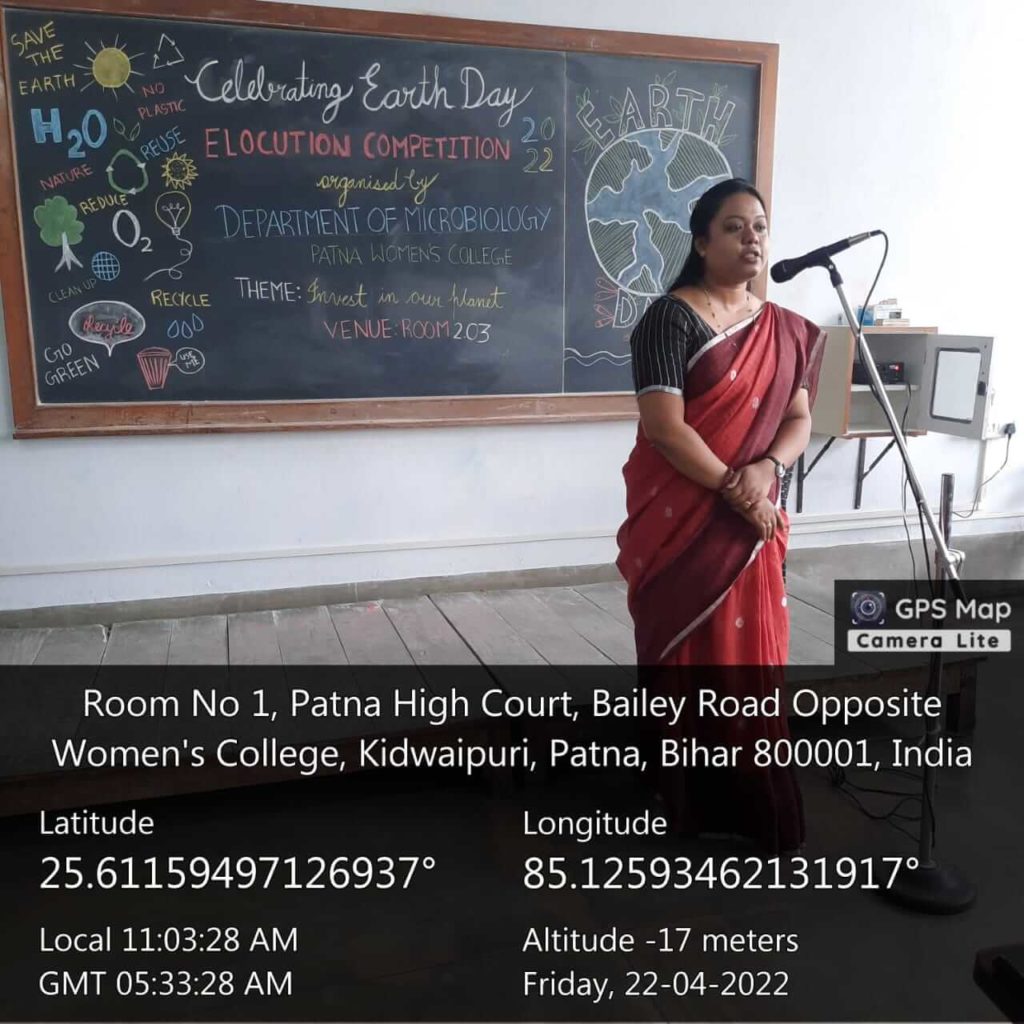
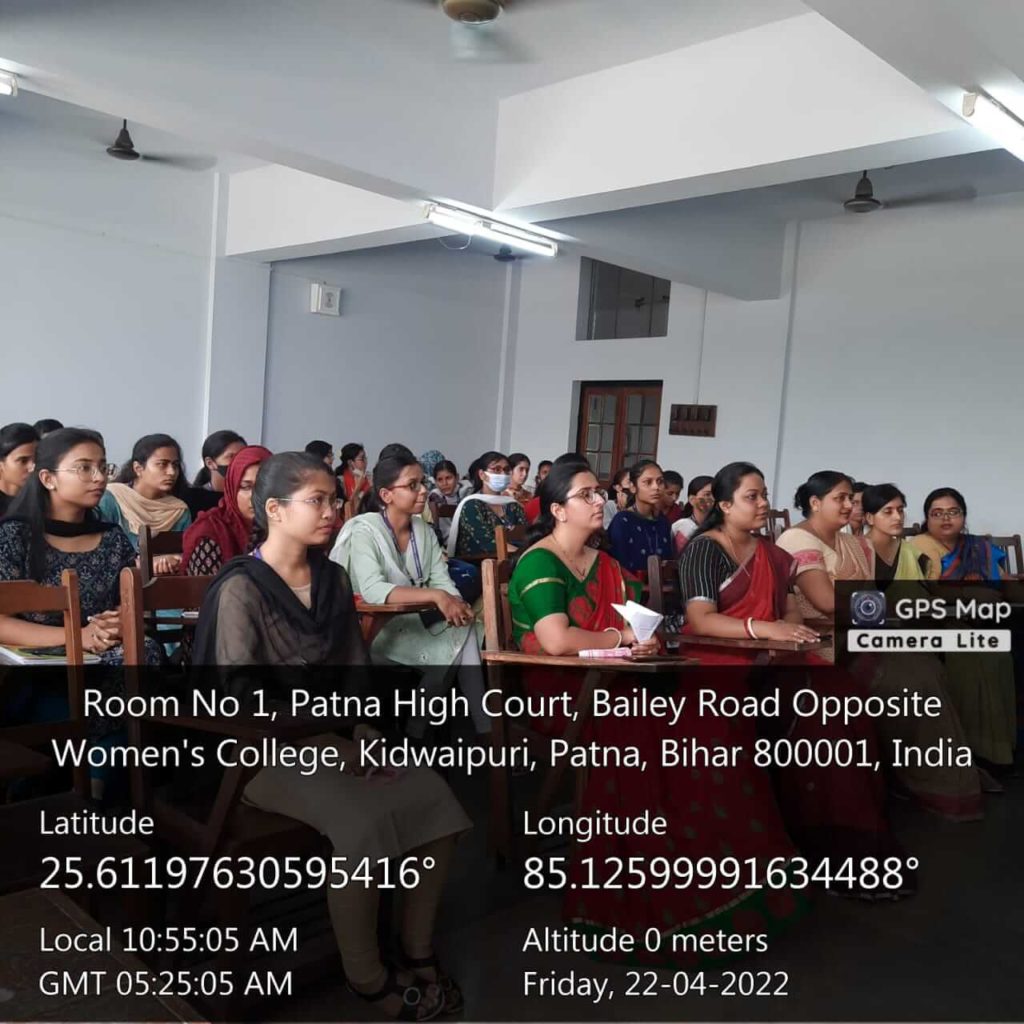
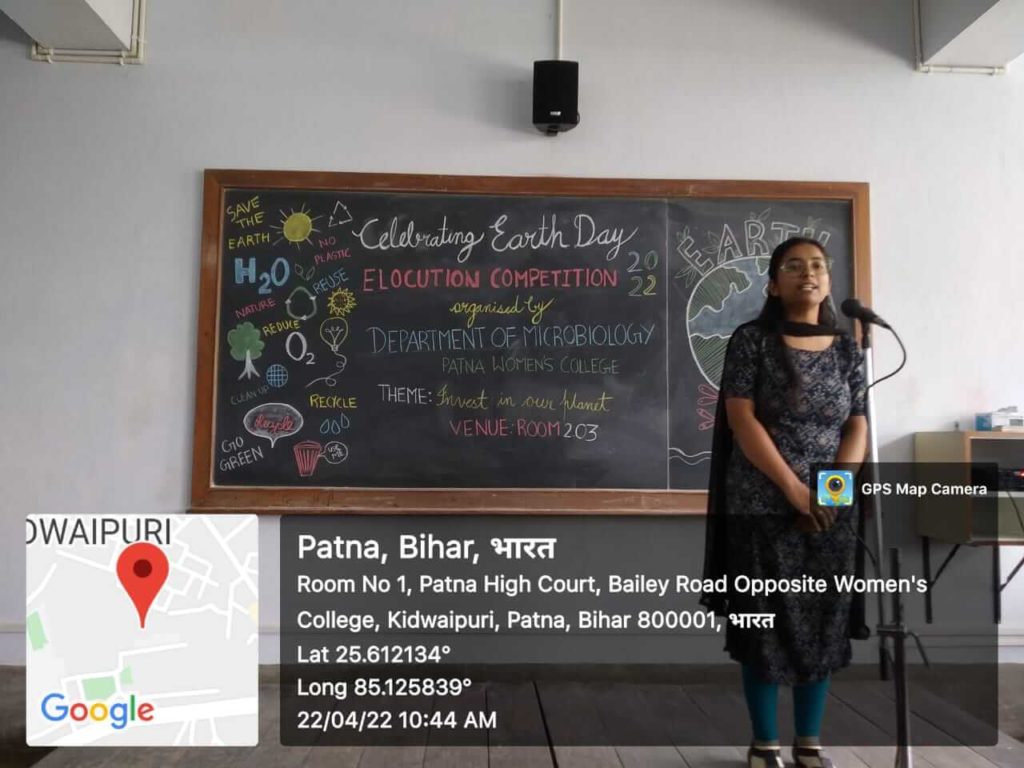
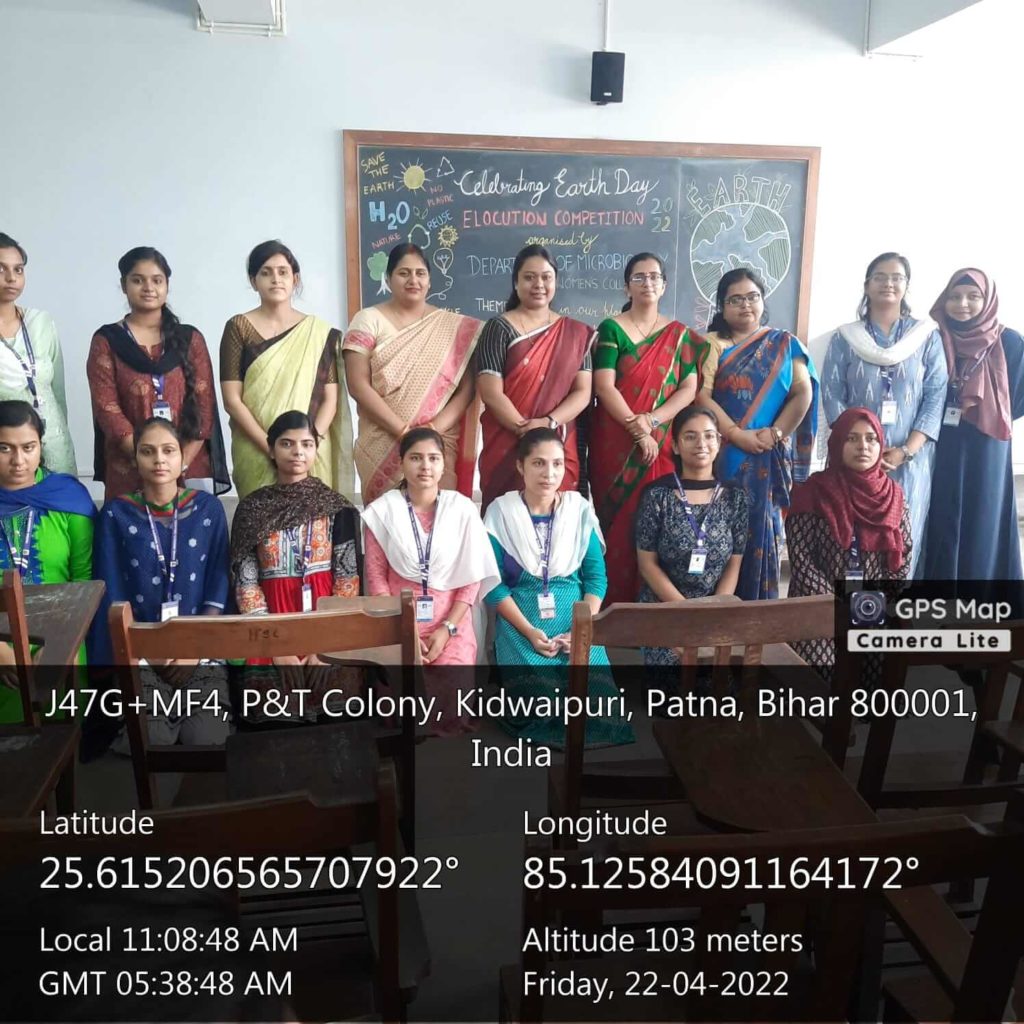
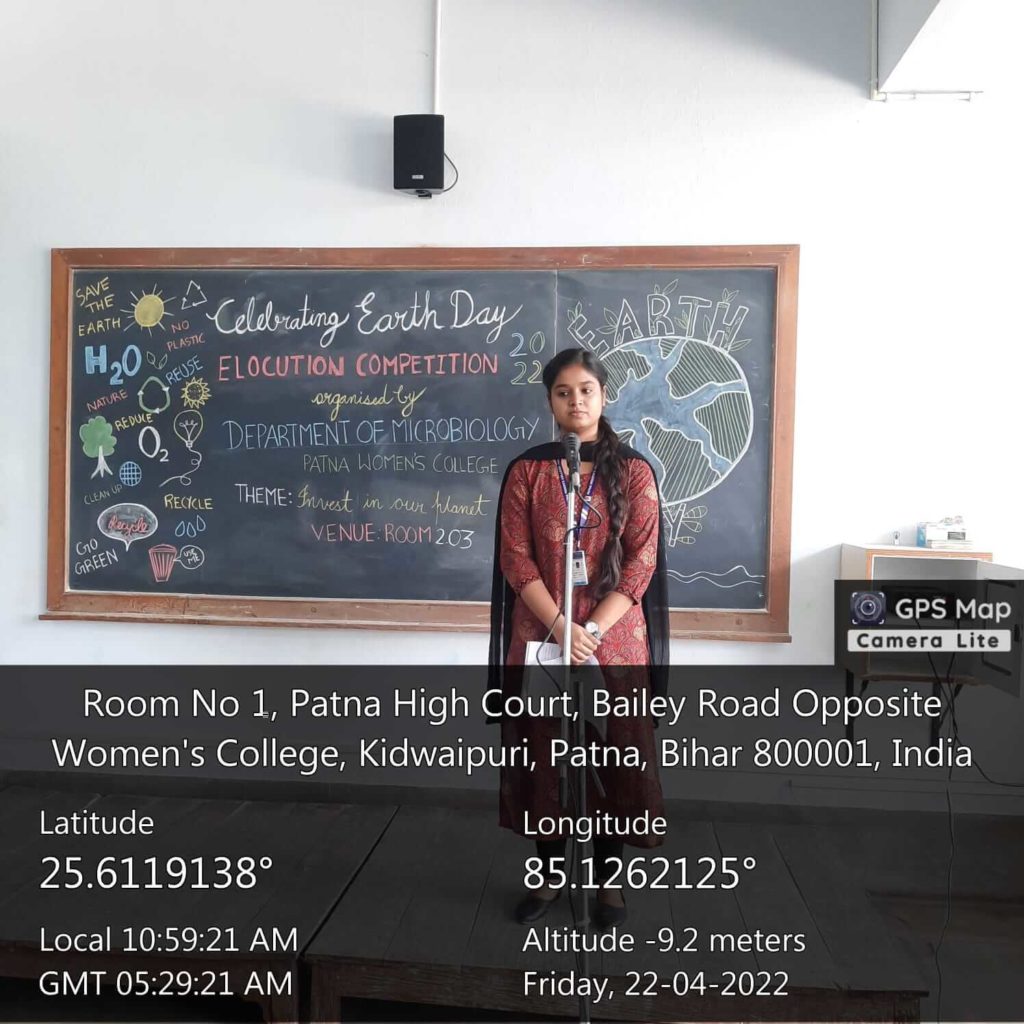
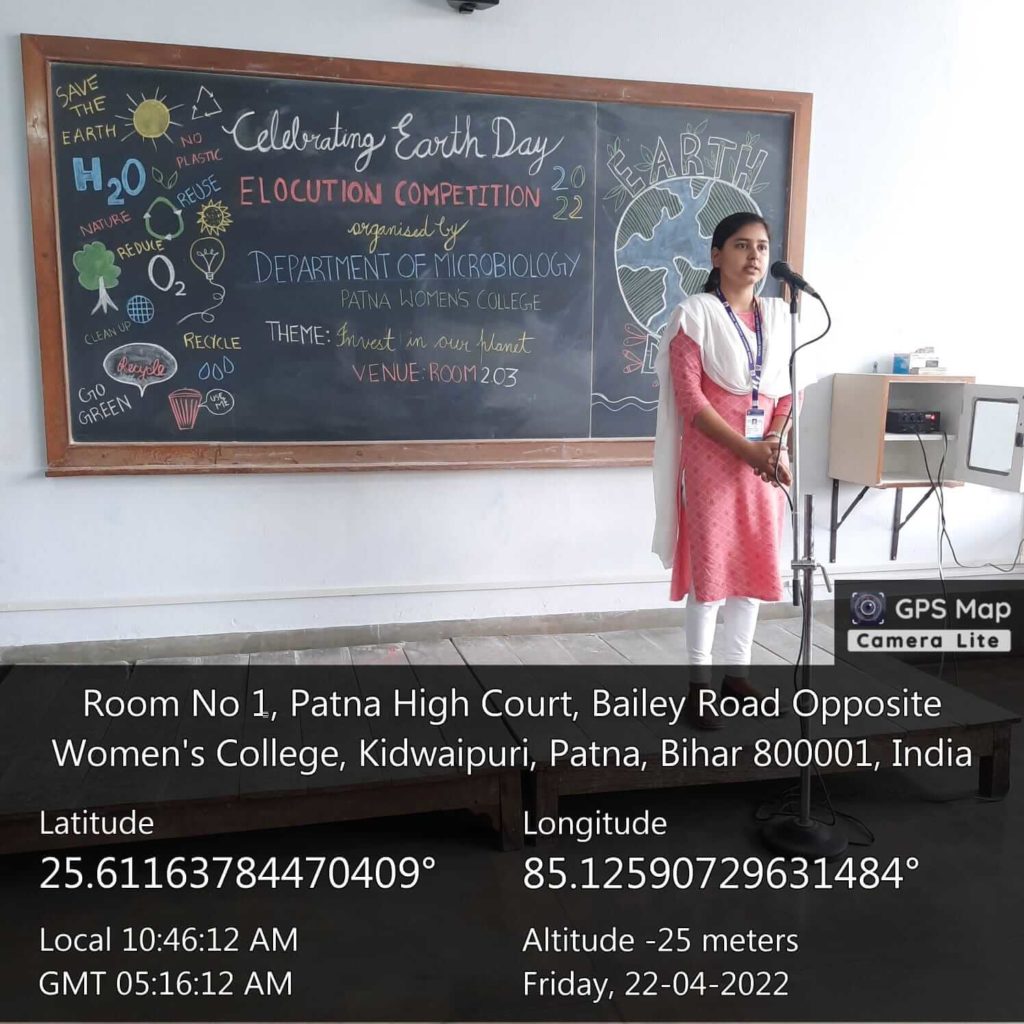
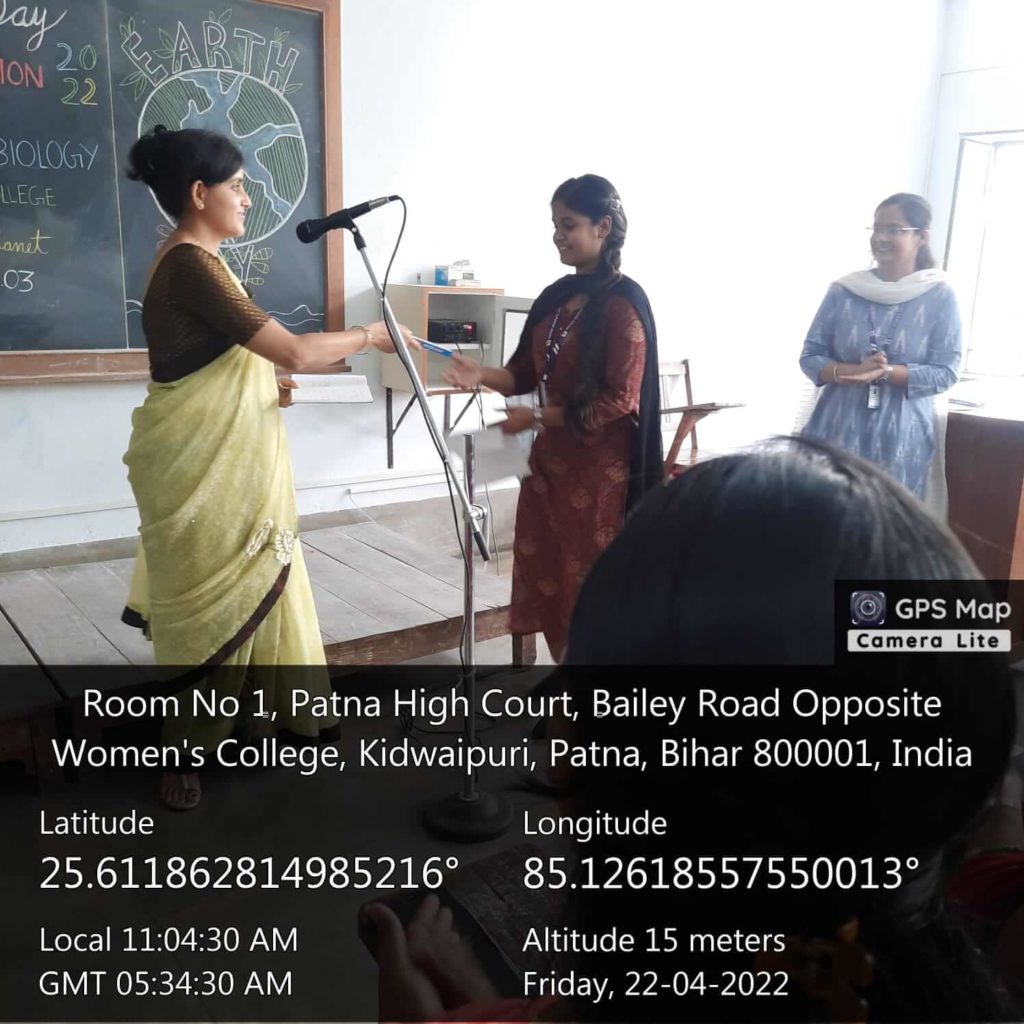
The Department of Microbiology, Patna Women’s College organized an Elocution Competition on the occasion of Earth Day on 22.04.2022 on the theme “Invest in our Planet.” The platform was provided in both English and Hindi. The topic of the competition was- “Environmental Problems and Preventive Approach.” The event was judged by Dr. Preeti Swarupa, Dr. Niti Yashvardhini and Dr. Swetnisha, Assistant Professor, Department of Microbiology. Jeny, Esha Garg and Diksha Kaushik were awarded first, second and third prizes respectively. The event was attended by all the students of Semester IV and Semester II along with all the faculty members. The concluding remarks and suggestions were given by Dr. Jaya Philip, Head, Department of Microbiology, Patna Women’s College. This event created awareness among students regarding our planet Earth.
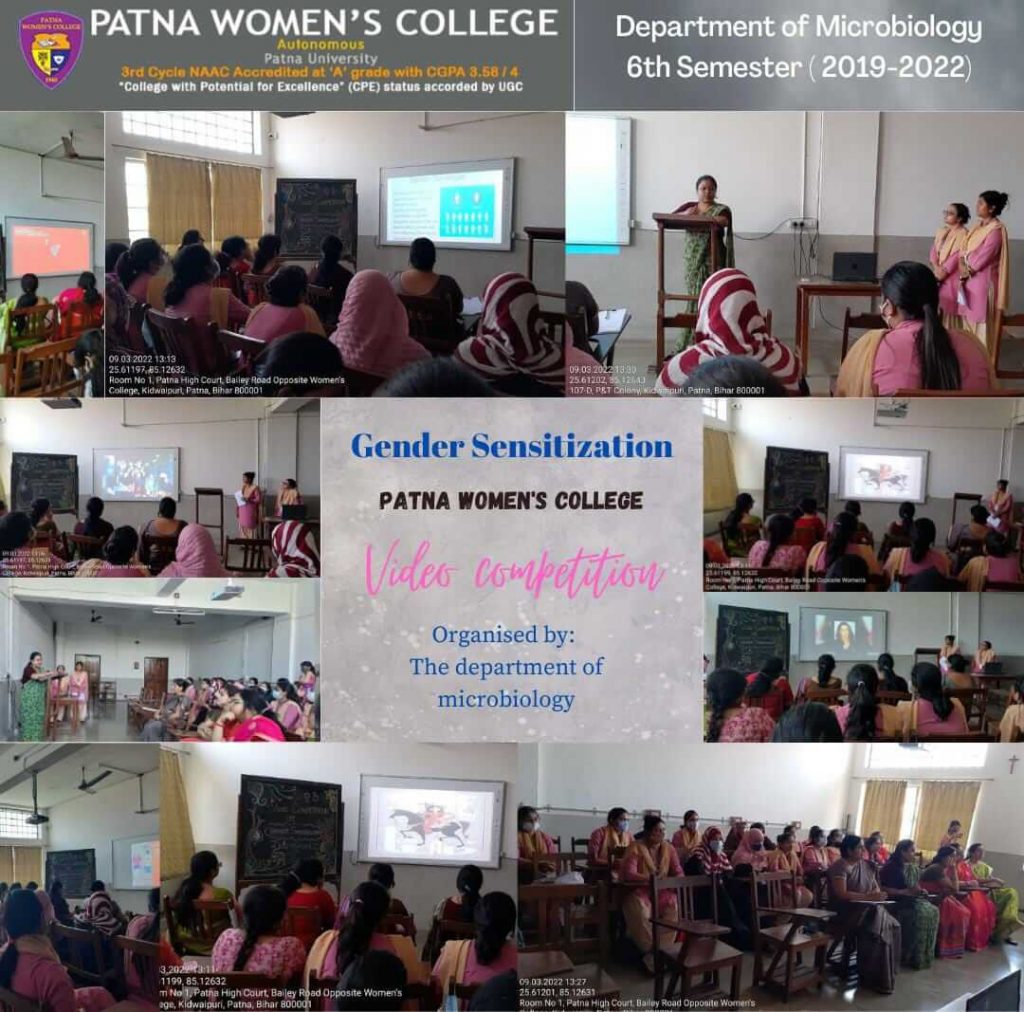
The department of Microbiology organised a Video presentation competition on Gender Sensitization for the students of B.Sc Microbiology semester VI on 9.3.2022 from 12:30 to 1:30 pm.
A total of Eight videos were presented by the students. These videos highlighted the idea of equality among gender in opportunity and aspects with various perspectives of the students. The event converged multiple notions of Gender sensitization through the videos.
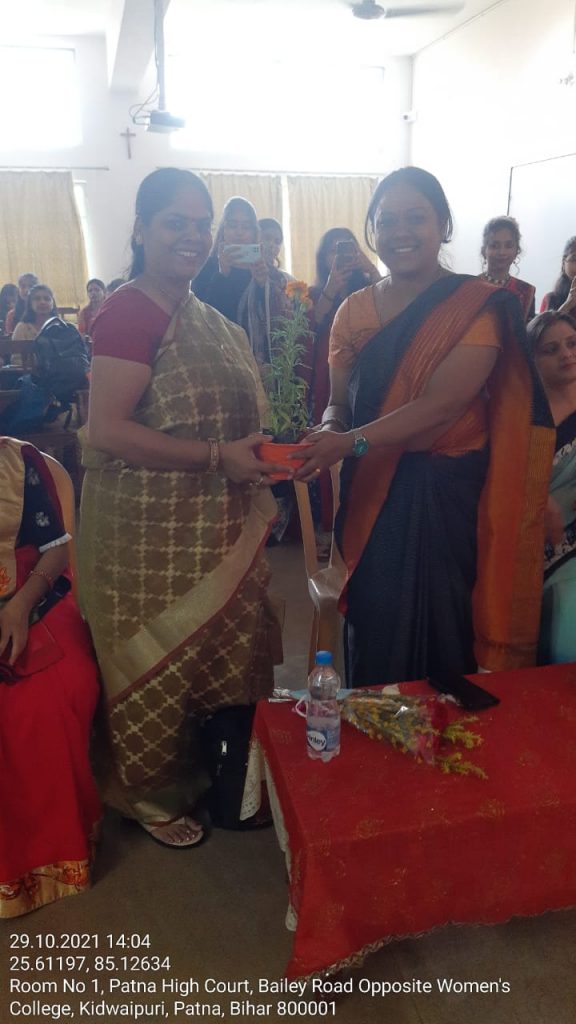
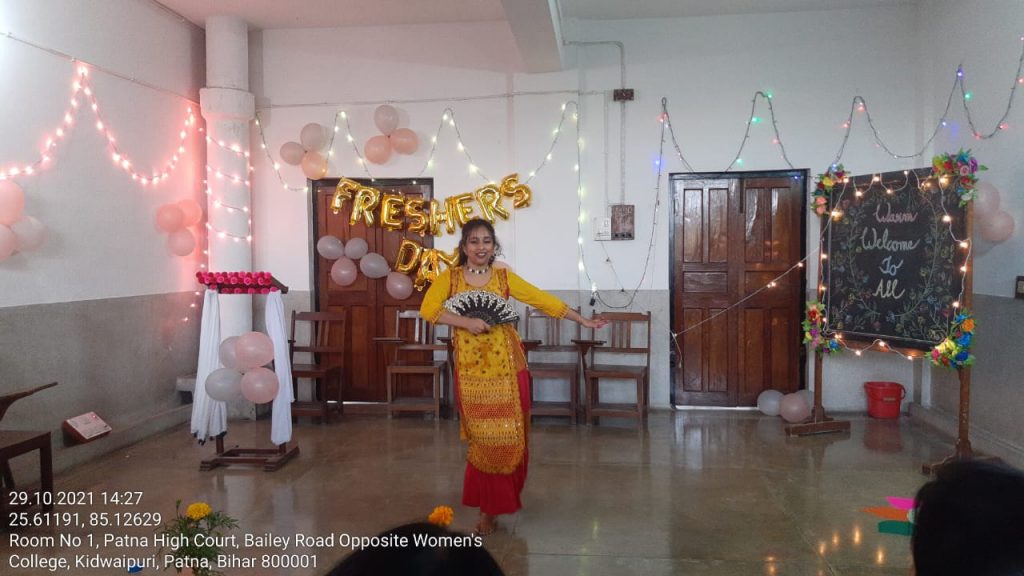
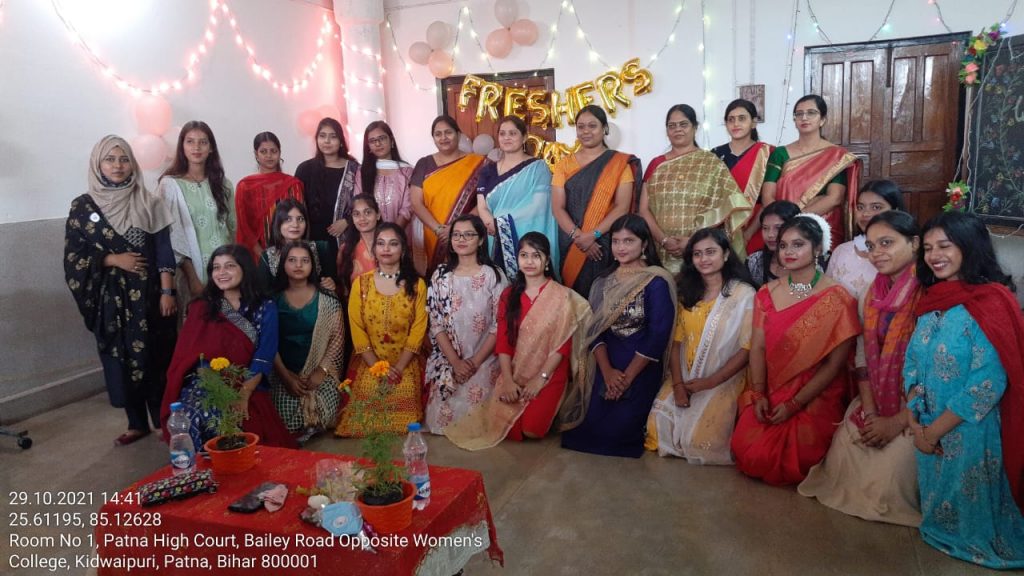
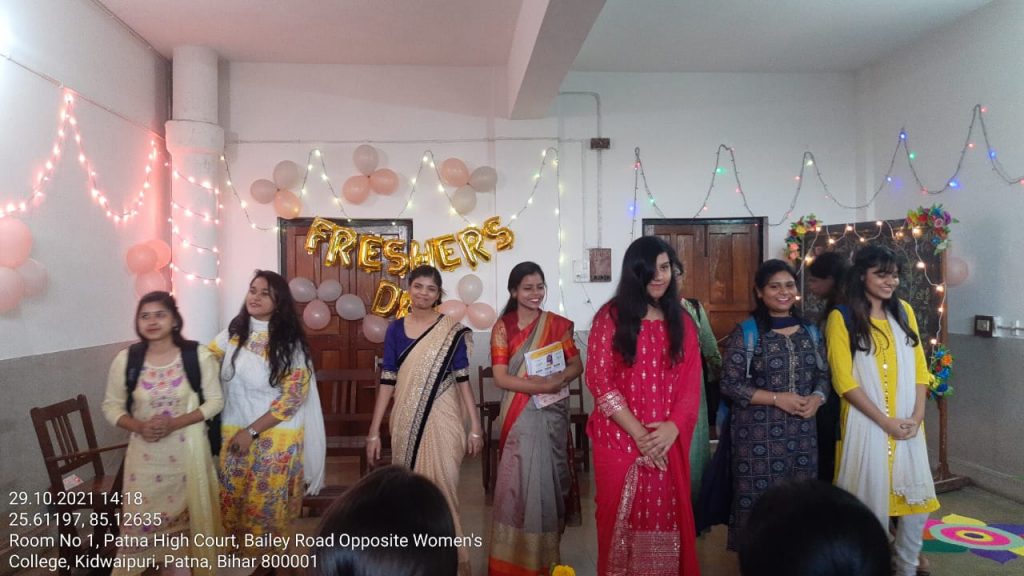
Fresher’s Day
Department of Microbiology
Date- 29/10/2021
Time- 2:00 pm- 2:30 pm
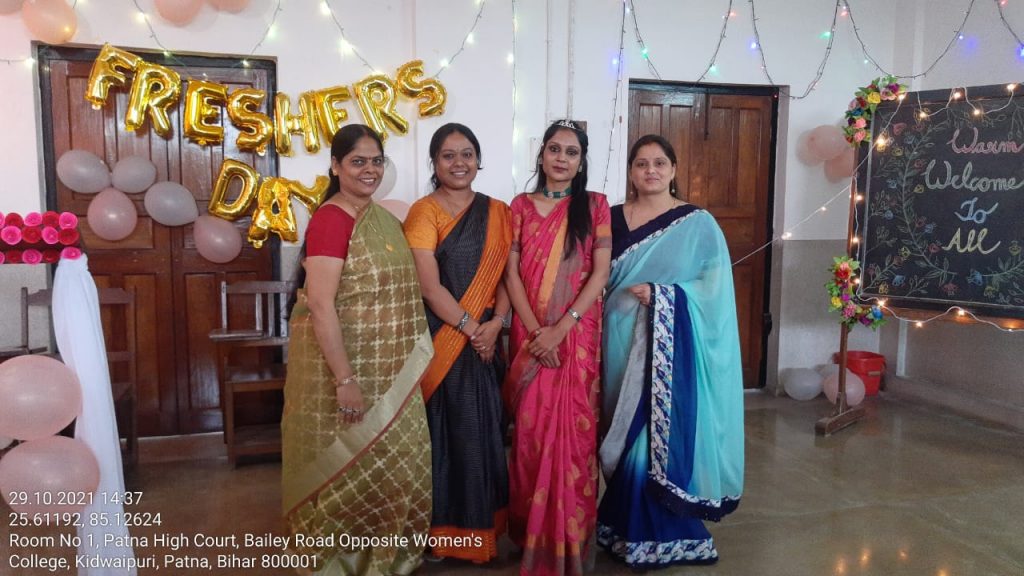
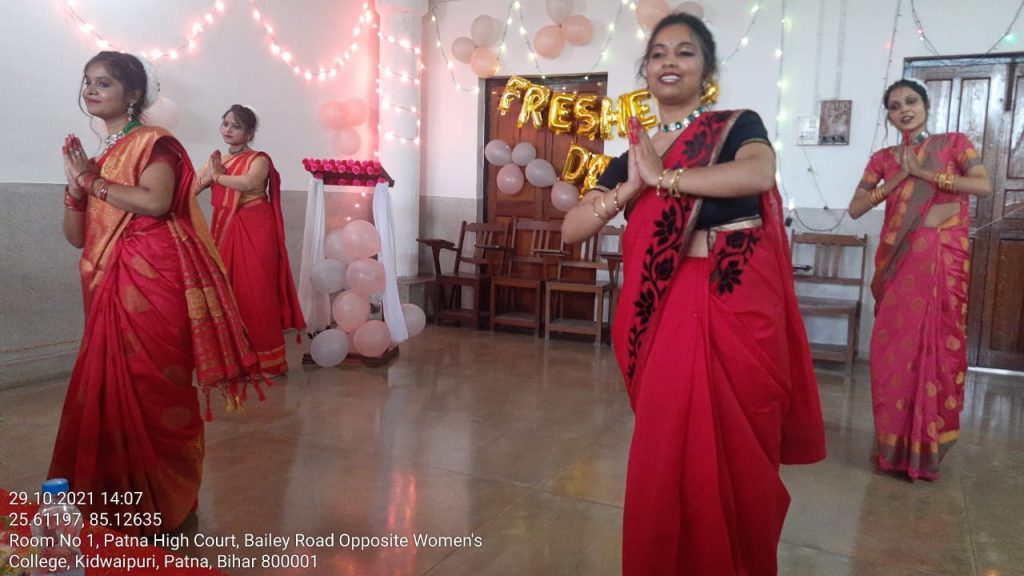
The Department of Microbiology, Patna Women’s College celebrated the Fresher’s Day on 29th October, 2021 to welcome it’s new batch of B.Sc Semester I. The cultural committee guest, Ms. Manisha Prasad, Head of the Department of Computer Science and Dr. Rosy Kumari, Assistant Professor, Department of Home Science, Patna Women’s College graced the occasion. The programme started with prayer and a welcome dance performed by Esha Garg, Jeny, Shruti Kumari and Anupama Kumari. Further duet song was performed by Simran and Jigyasa. Poem recitation was done by Ashwini and Tanya. A humorous skit was performed by Anjali, Jahanvi, Surbhi, Anshu, Anam, Prachi and Bhavya. A solo song and solo dance performance was given by Anupama Kumari and Esha Garg respectively. The program was well hosted by Diksha and Pragya. Anupama Kumari was crowned Miss Fresher, Microbiology, 2021 by the Head of the Department, Dr. Jaya Philip. The event was wrapped up with a vote of thanks given by Simran Kumari.



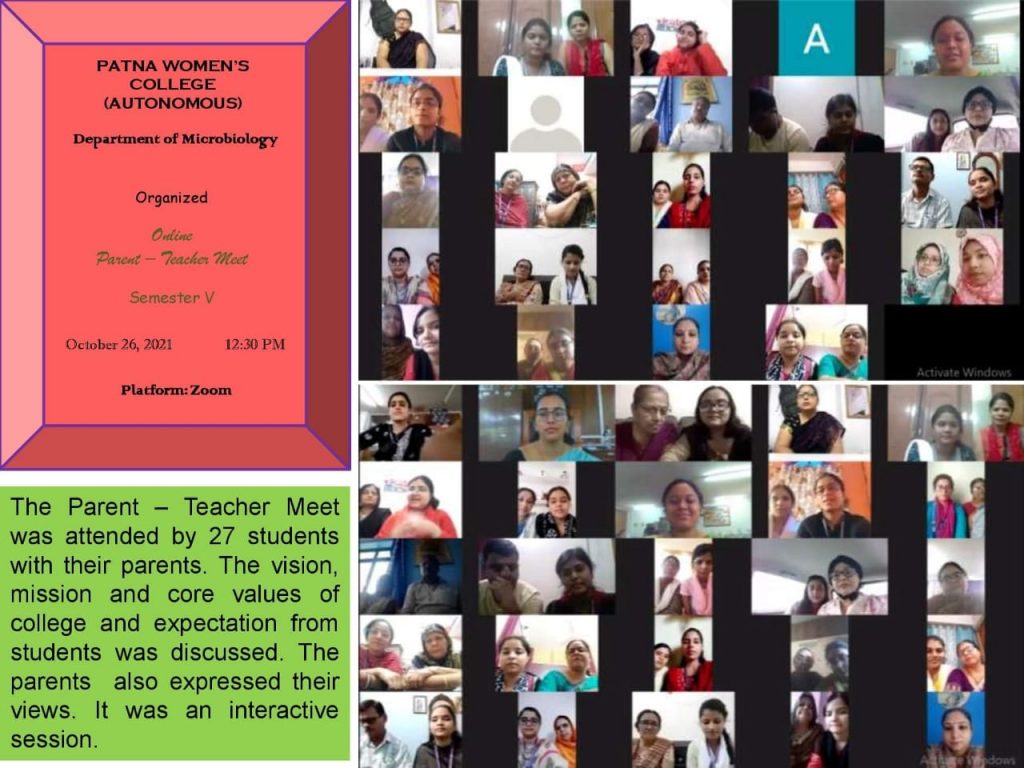
The department of Microbiology organised a Parent – Teacher Meet for the students of B.Sc Semester V on 26.10.2021.
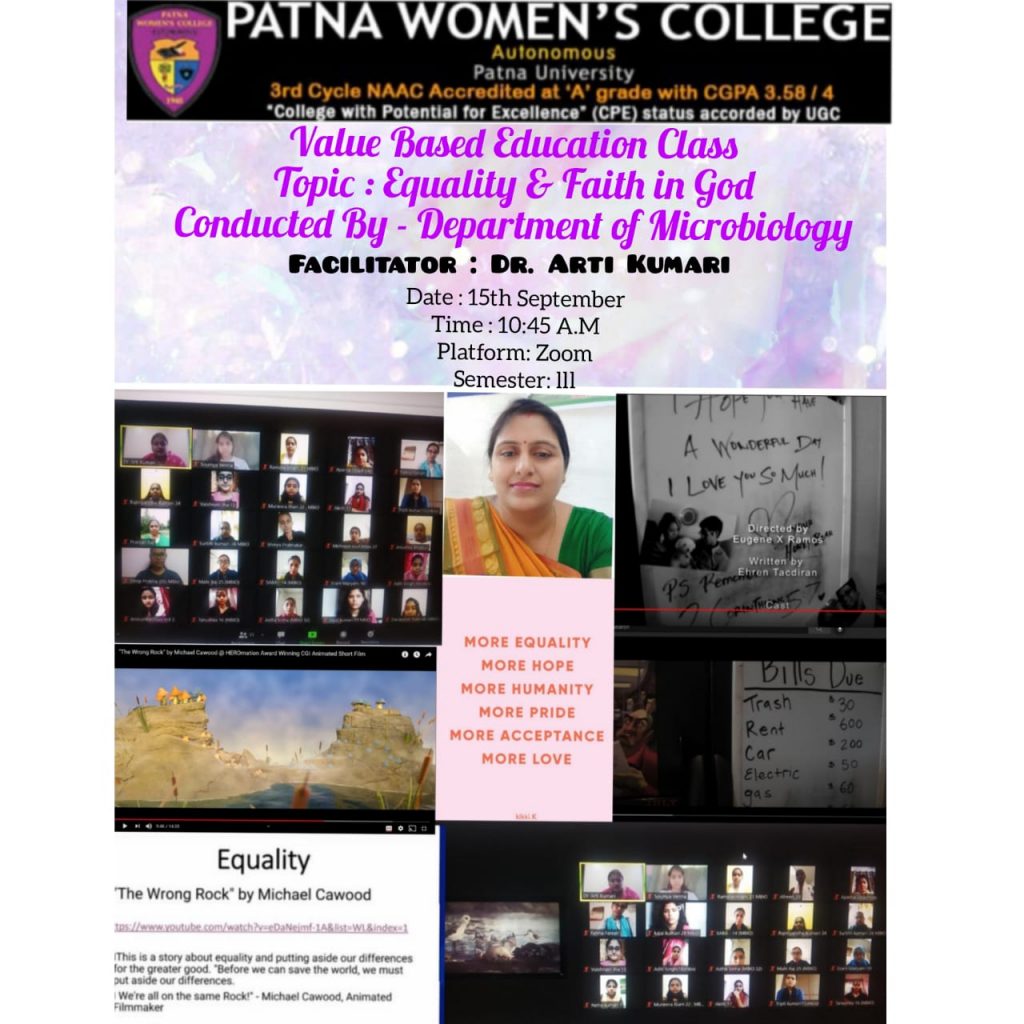
Value Based Class was conducted for students of 3rd semester on the topic “Equality & Faith in God on 15th September 2021 by Dr. Arti Kumari, Assistant Professor, Department of Microbiology of Patna Women’s College.
Students were taught that everyone is equal and everyone should be treated equally for a greater good, with the help of a short film called “The Wrong Rock”.
Also to have Faith in God no matter whatever circumstances surrounds.
The class was an interactive session for Semester 3rd Students that will enhance their values and beliefs.
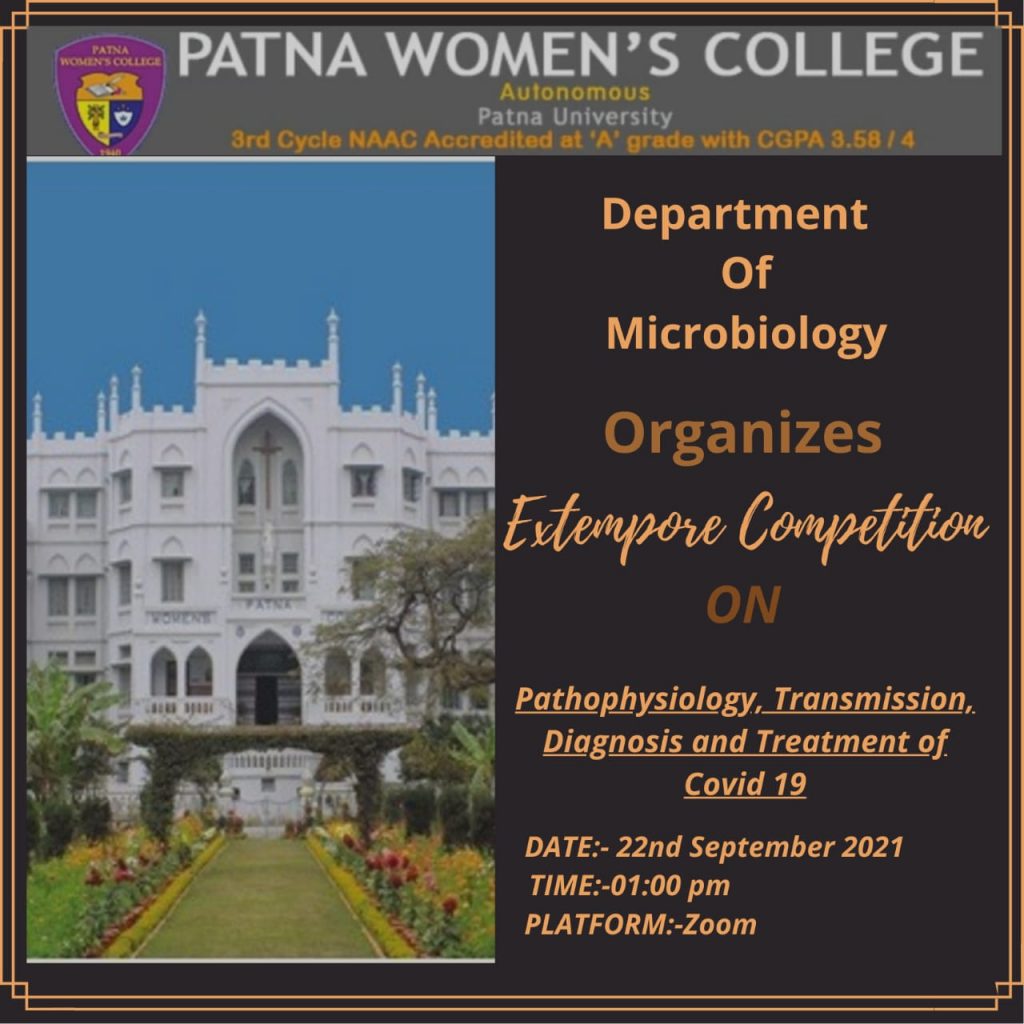
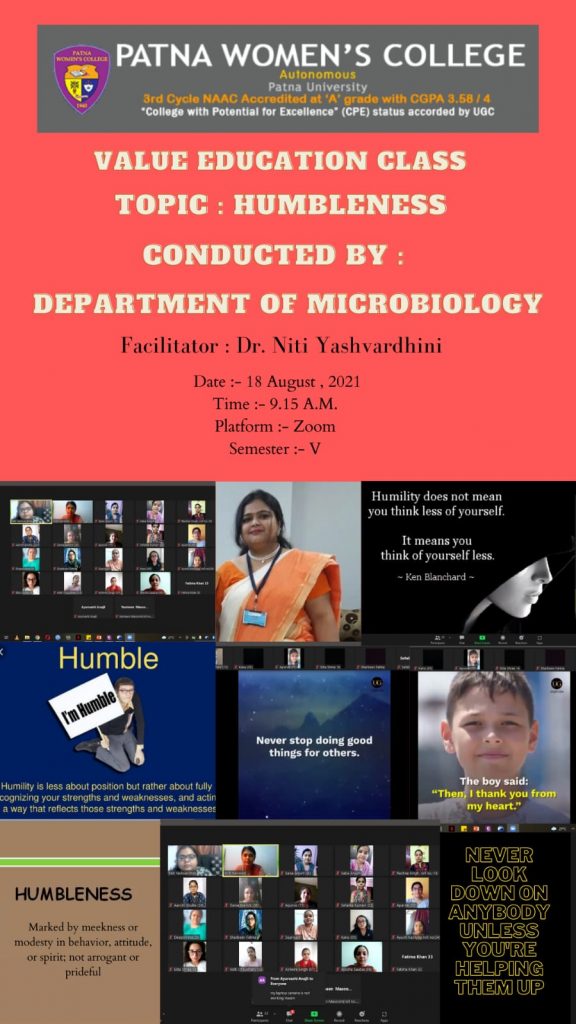
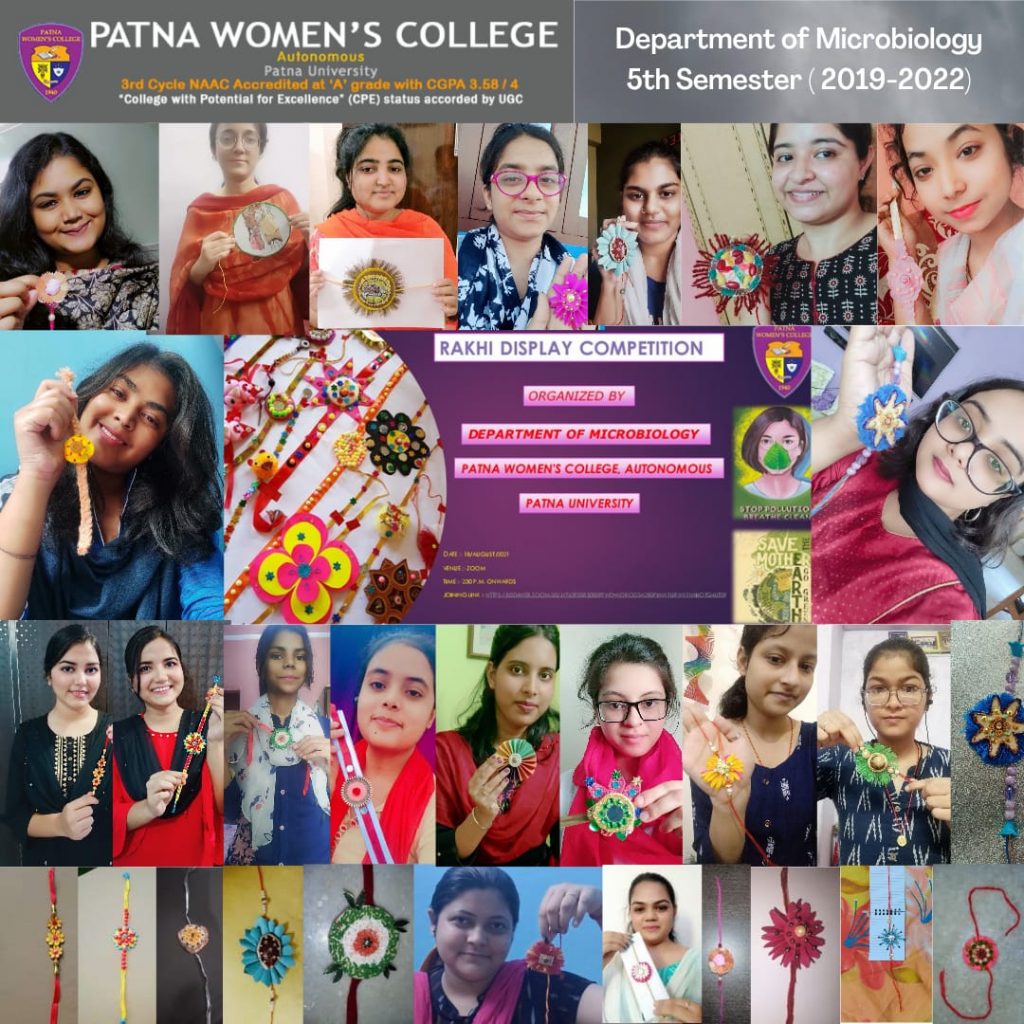
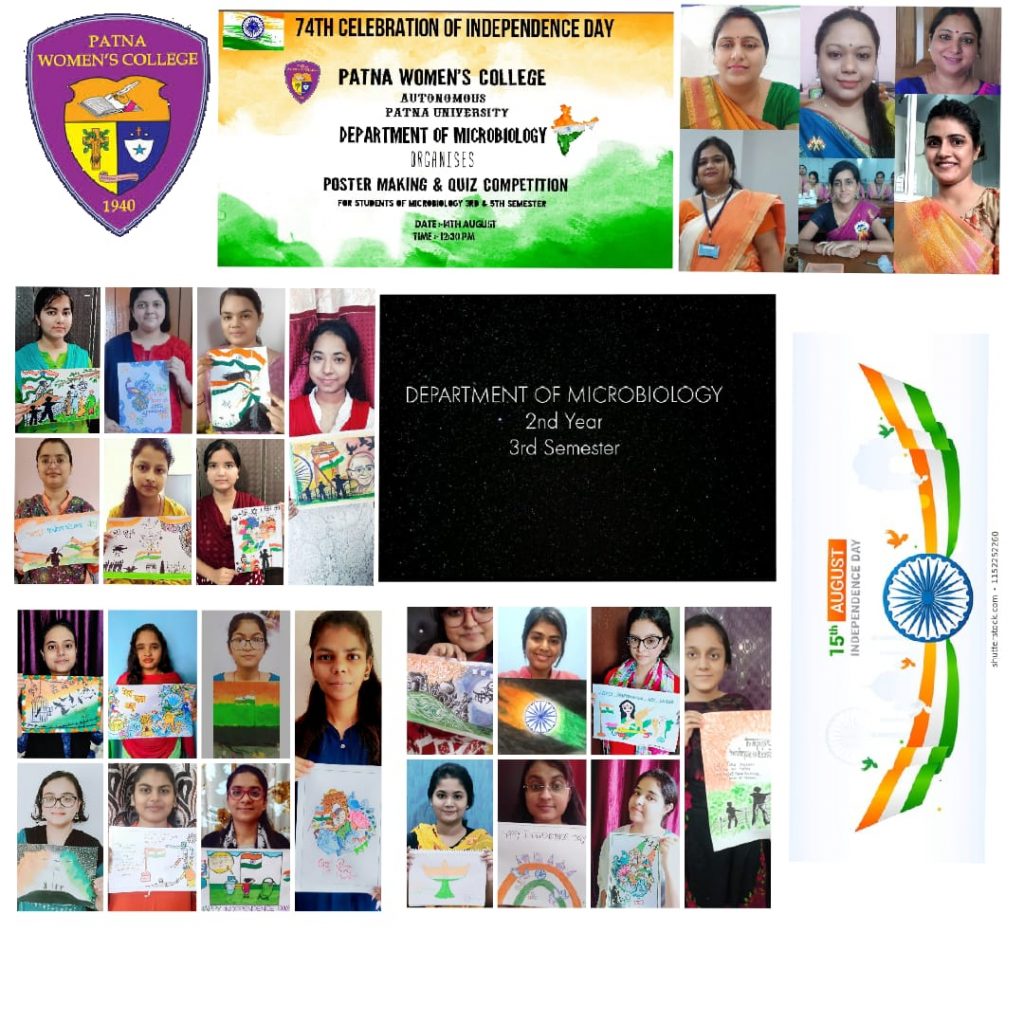
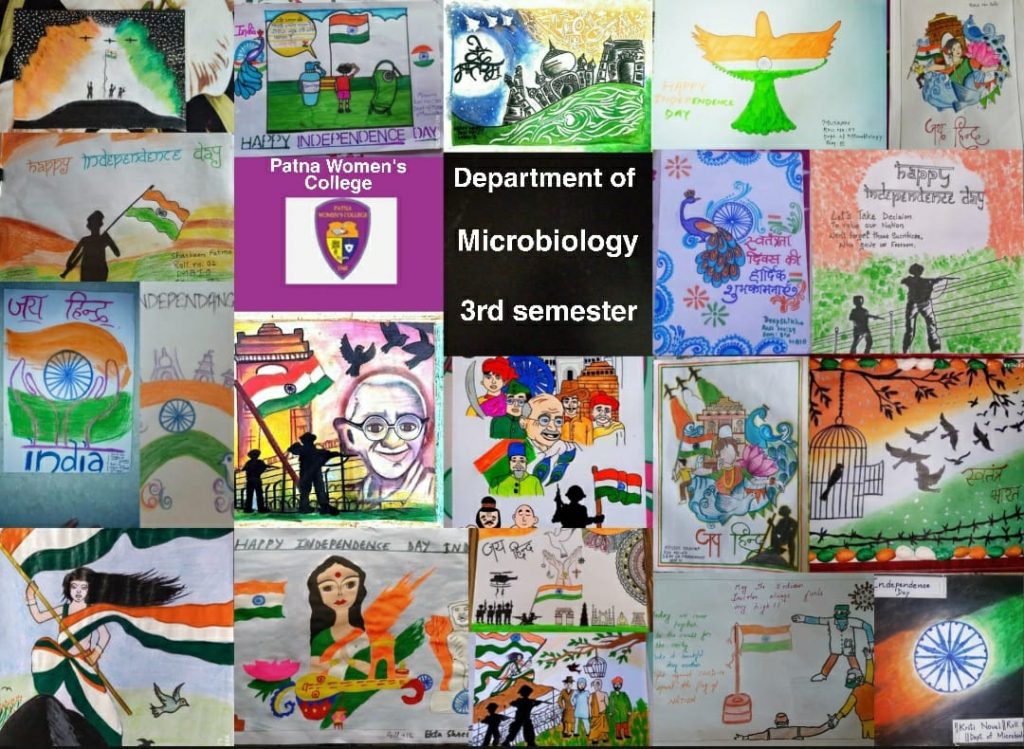
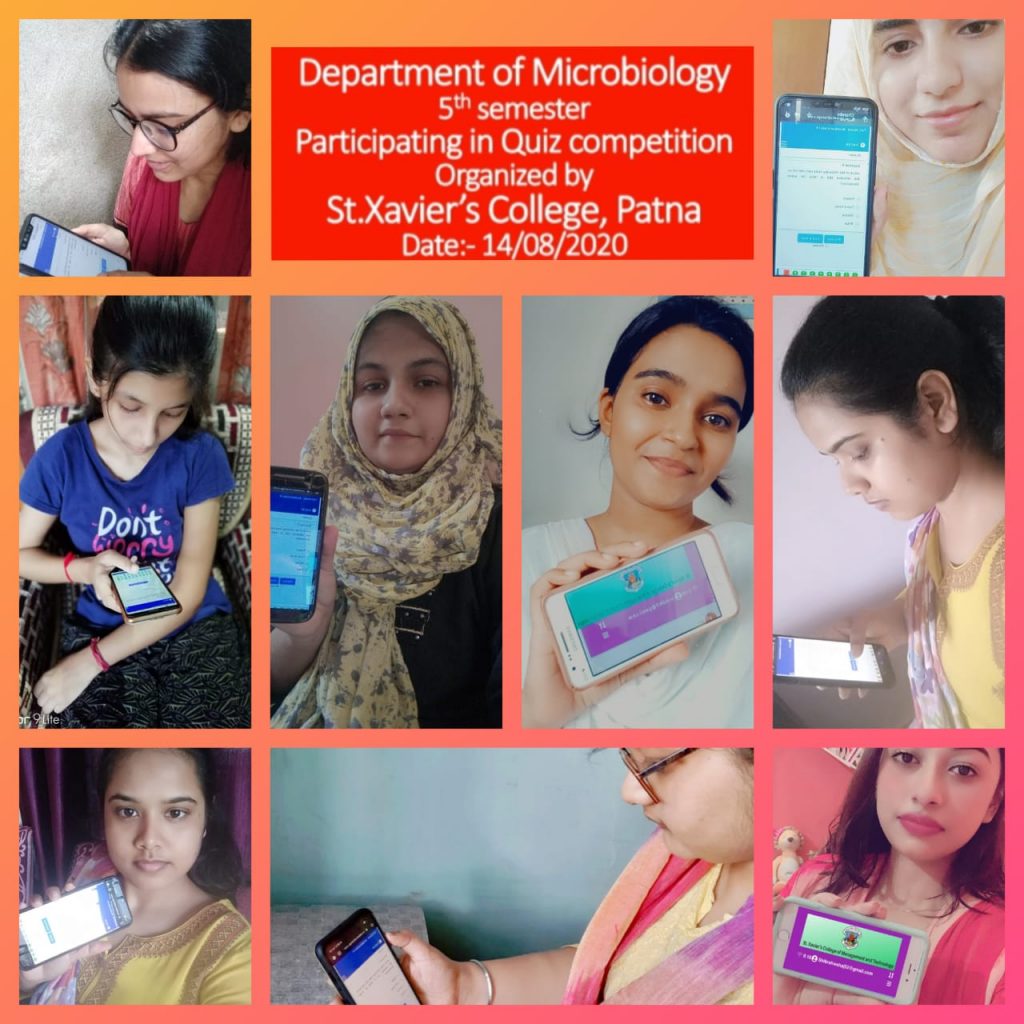

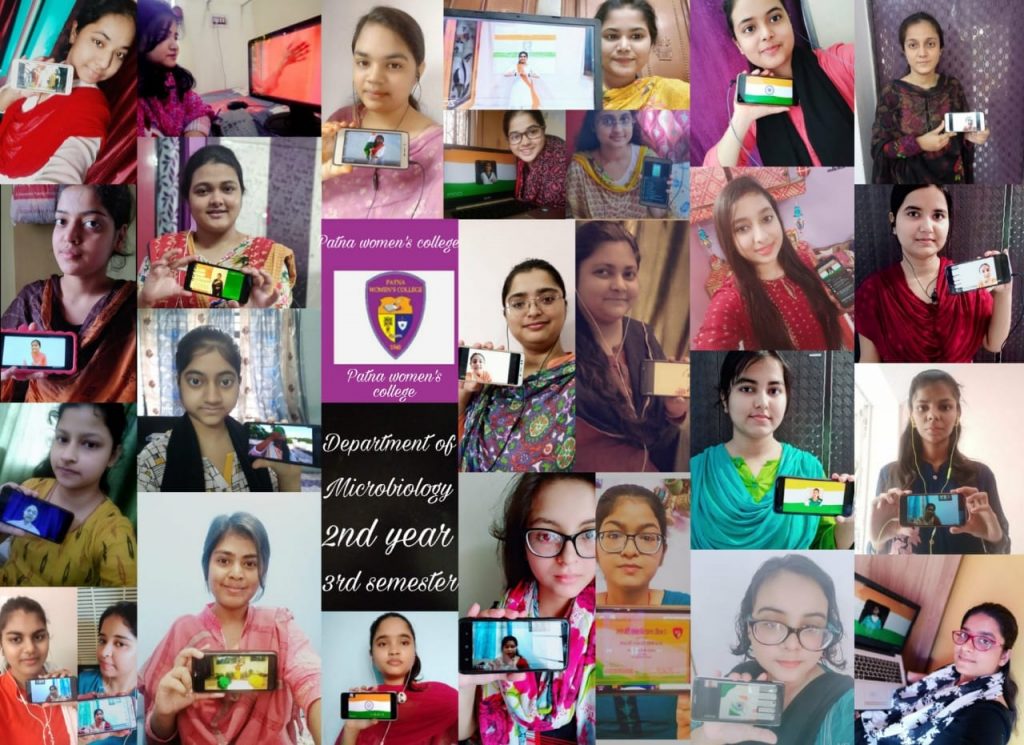
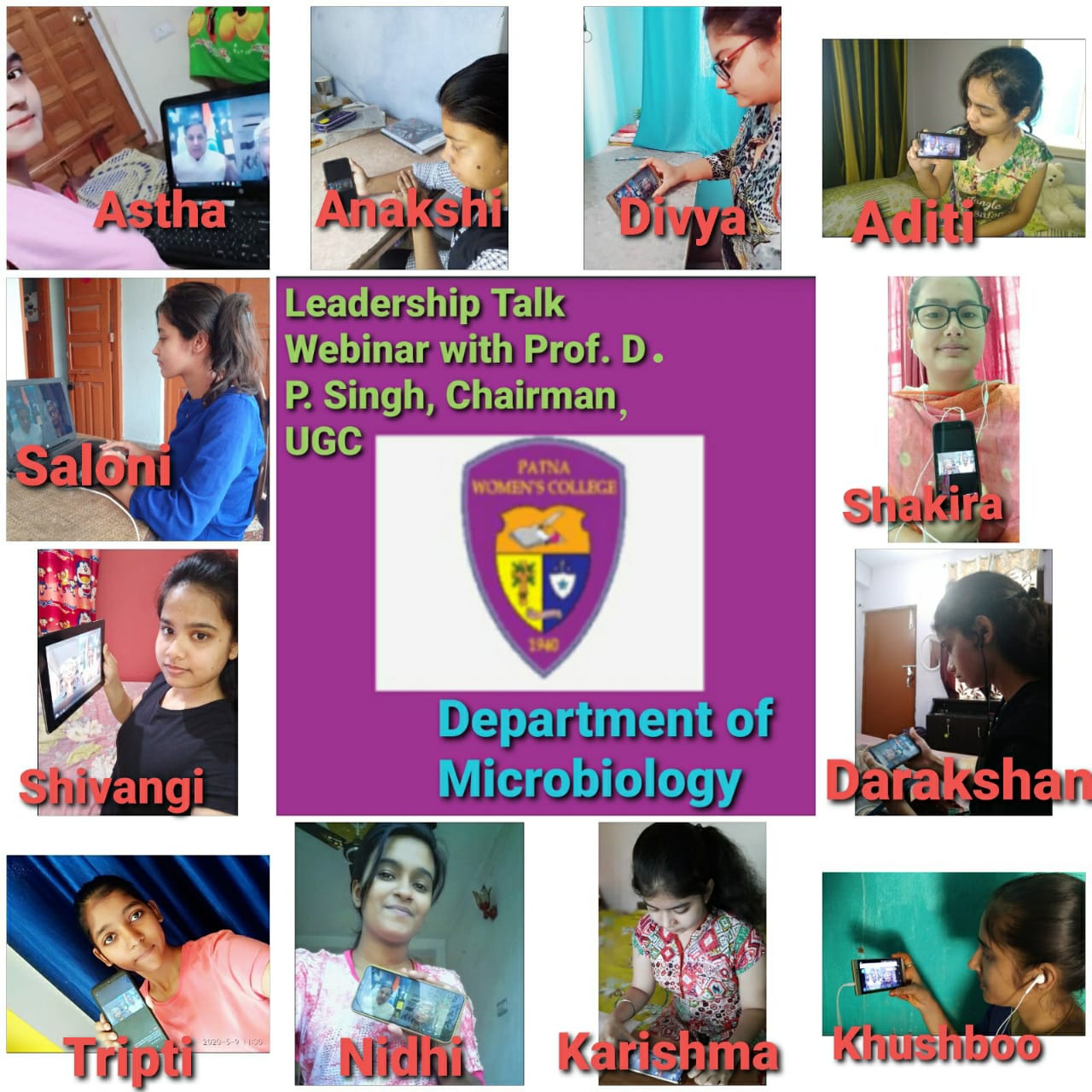
leadership webinar by dept. of microbiology student.

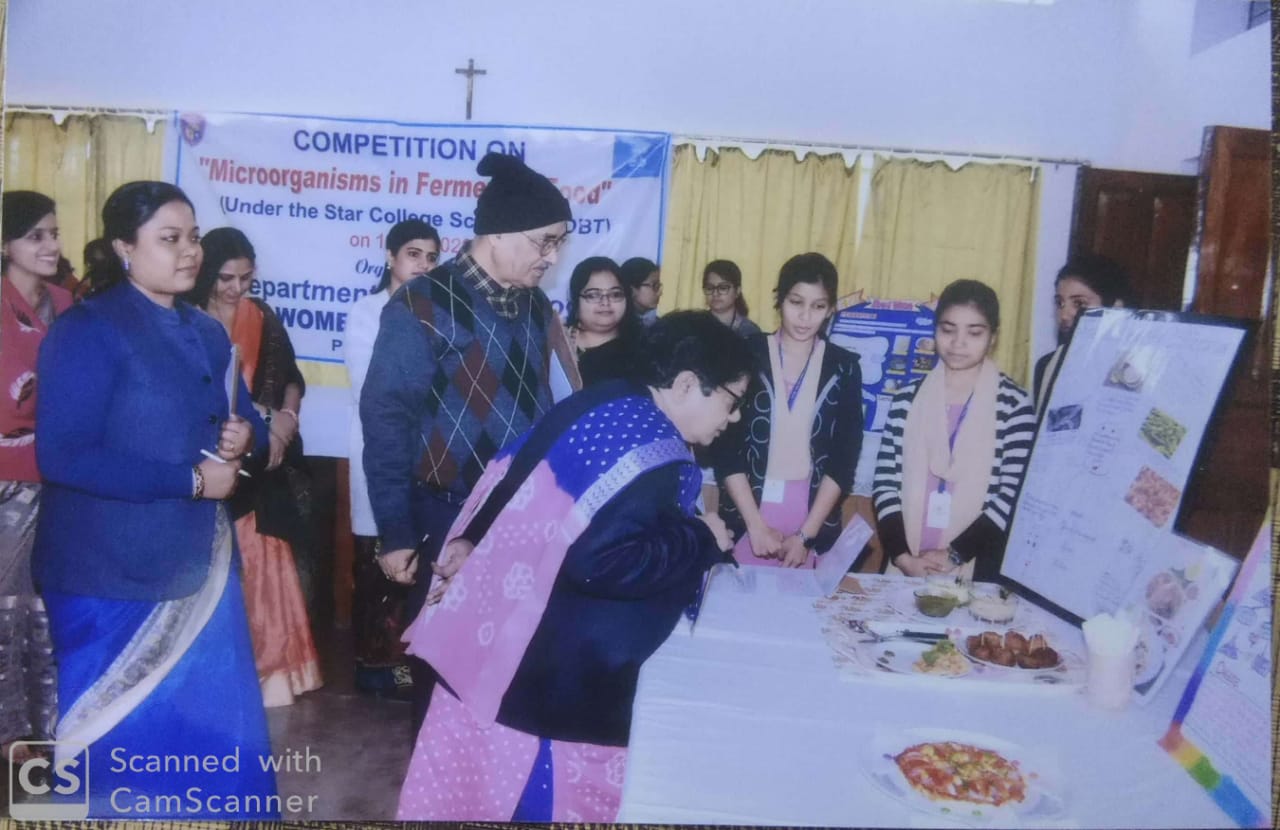
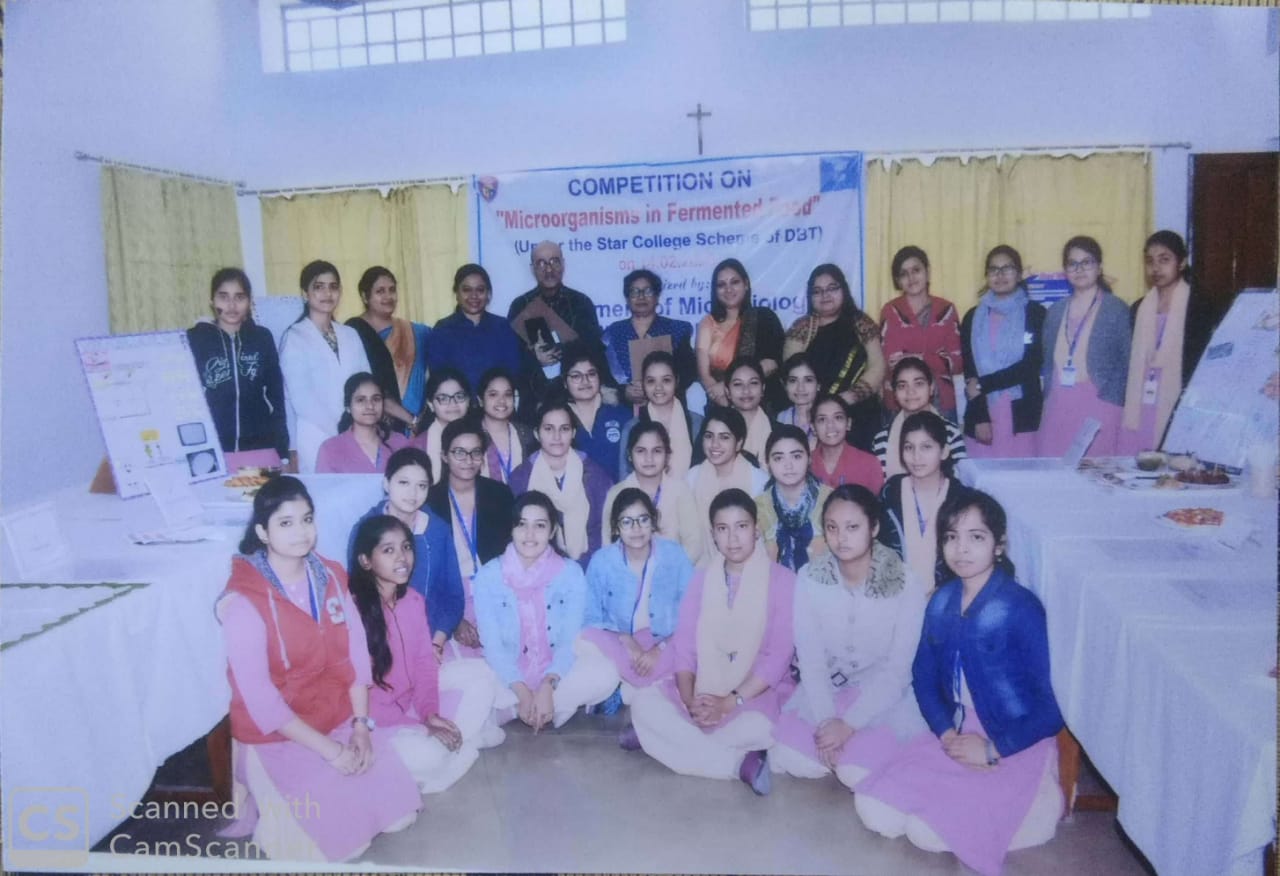
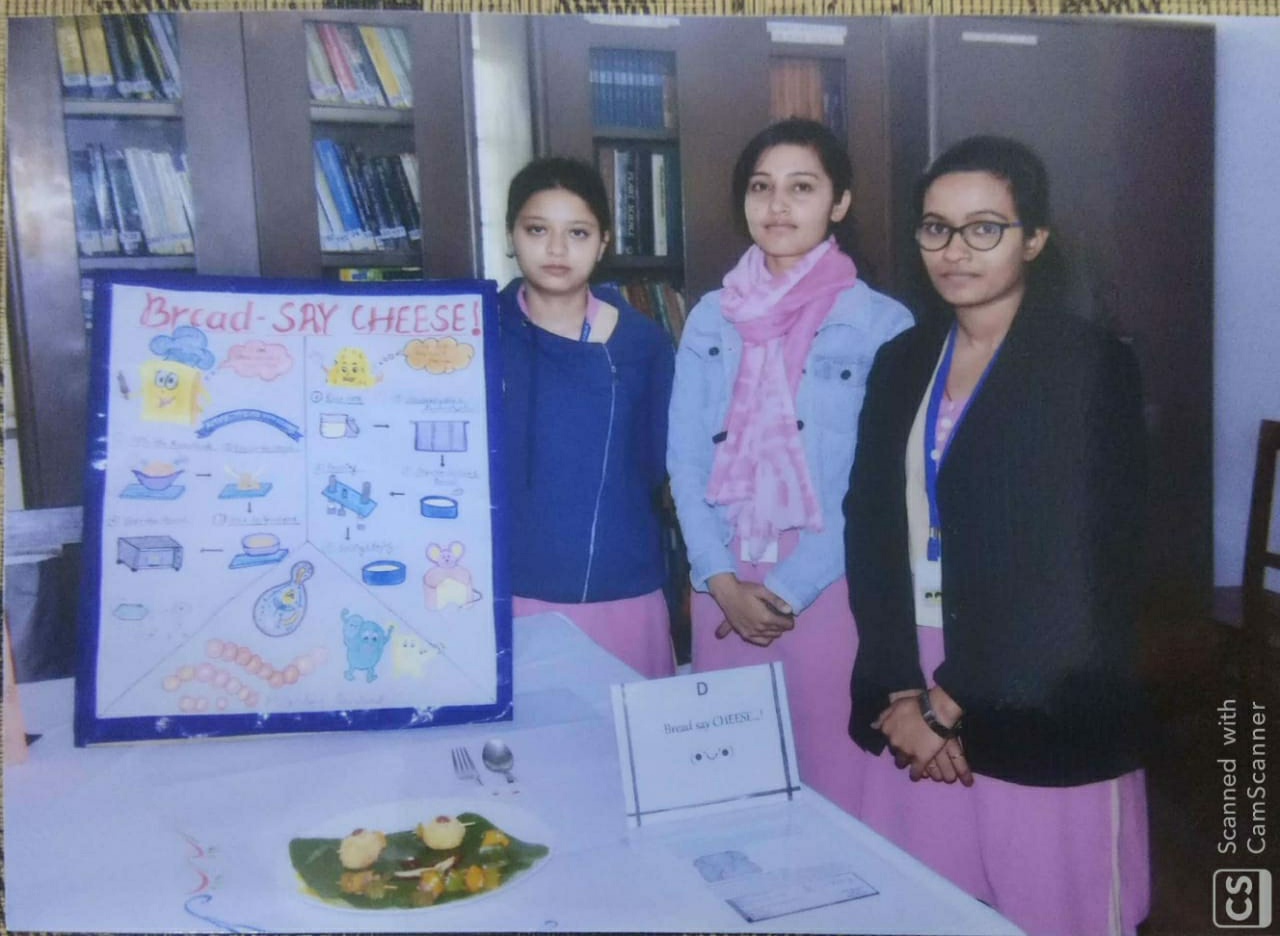
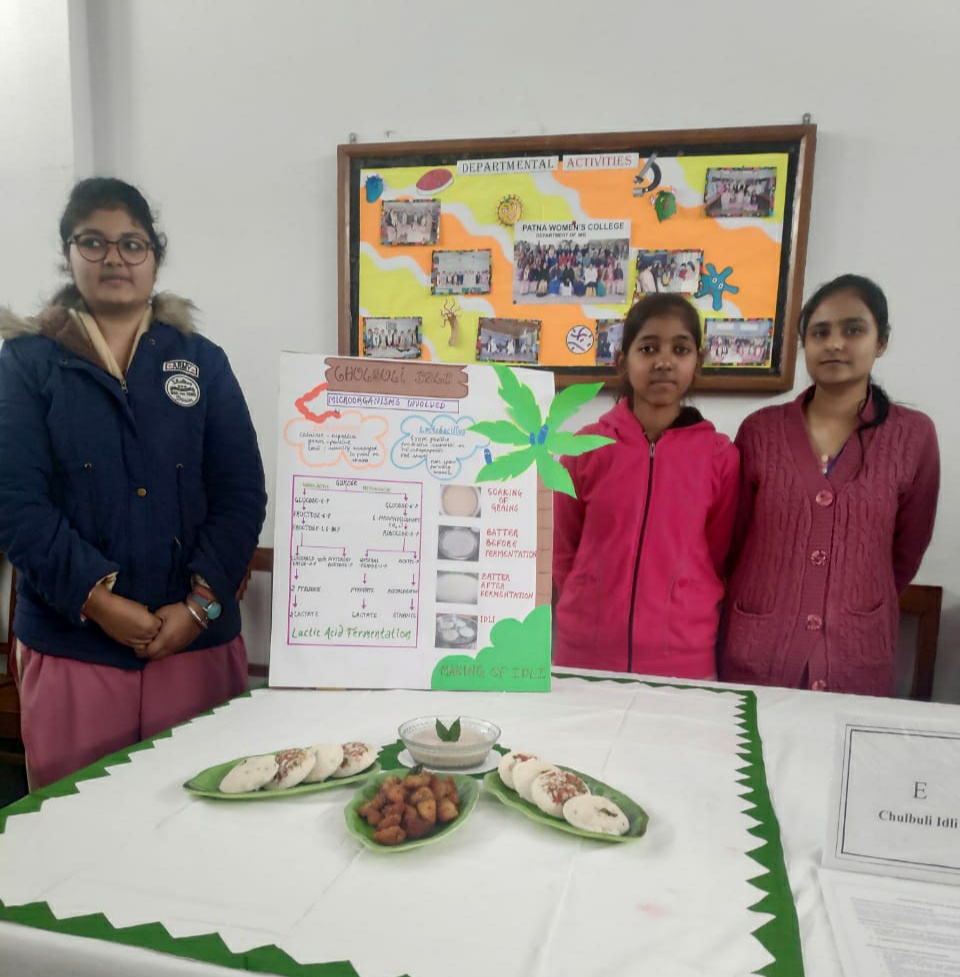
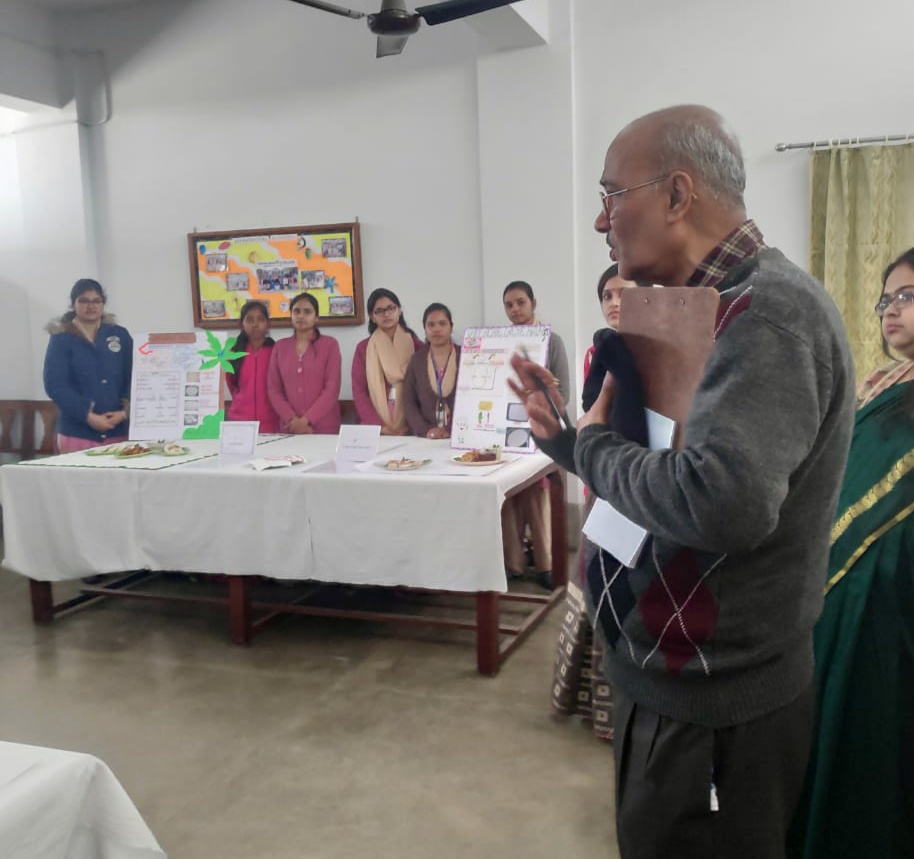
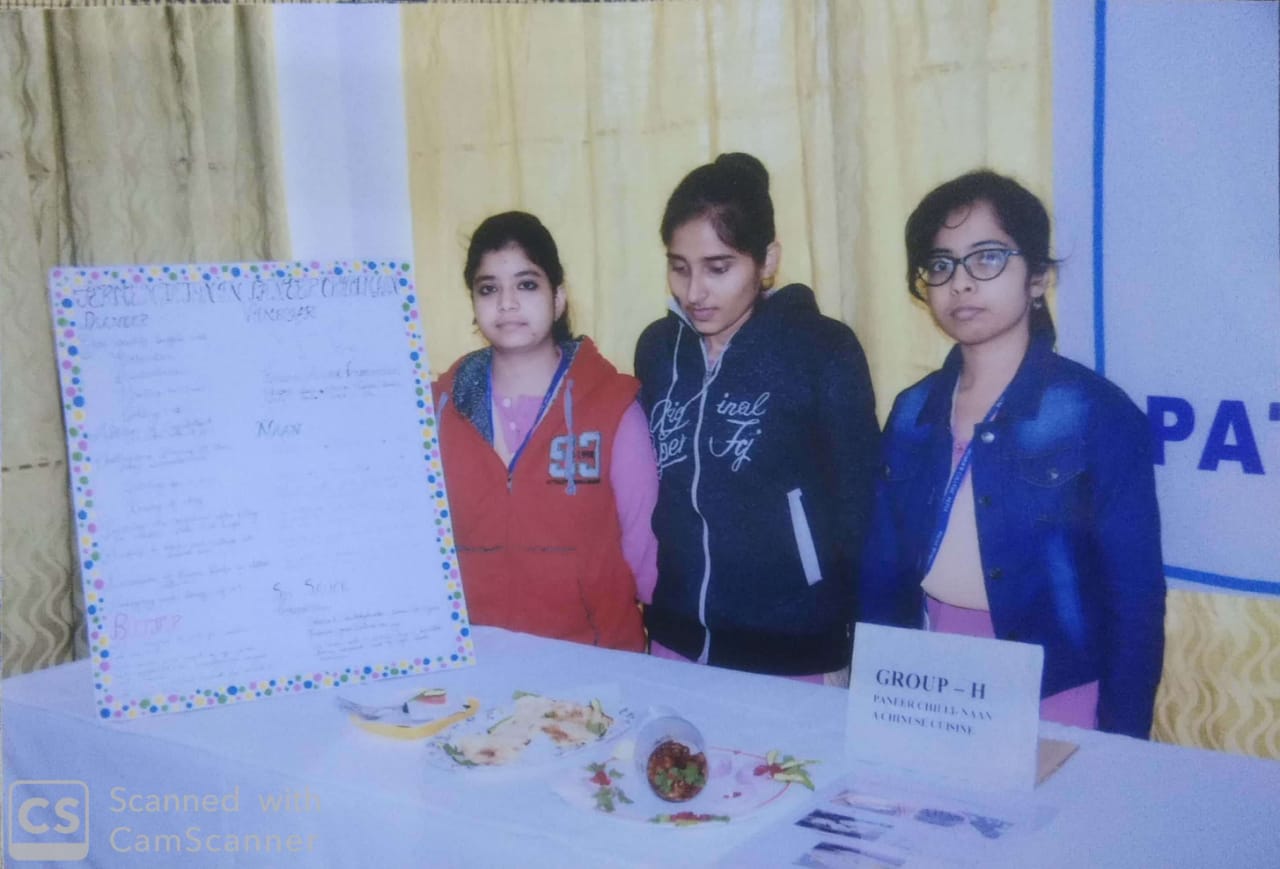
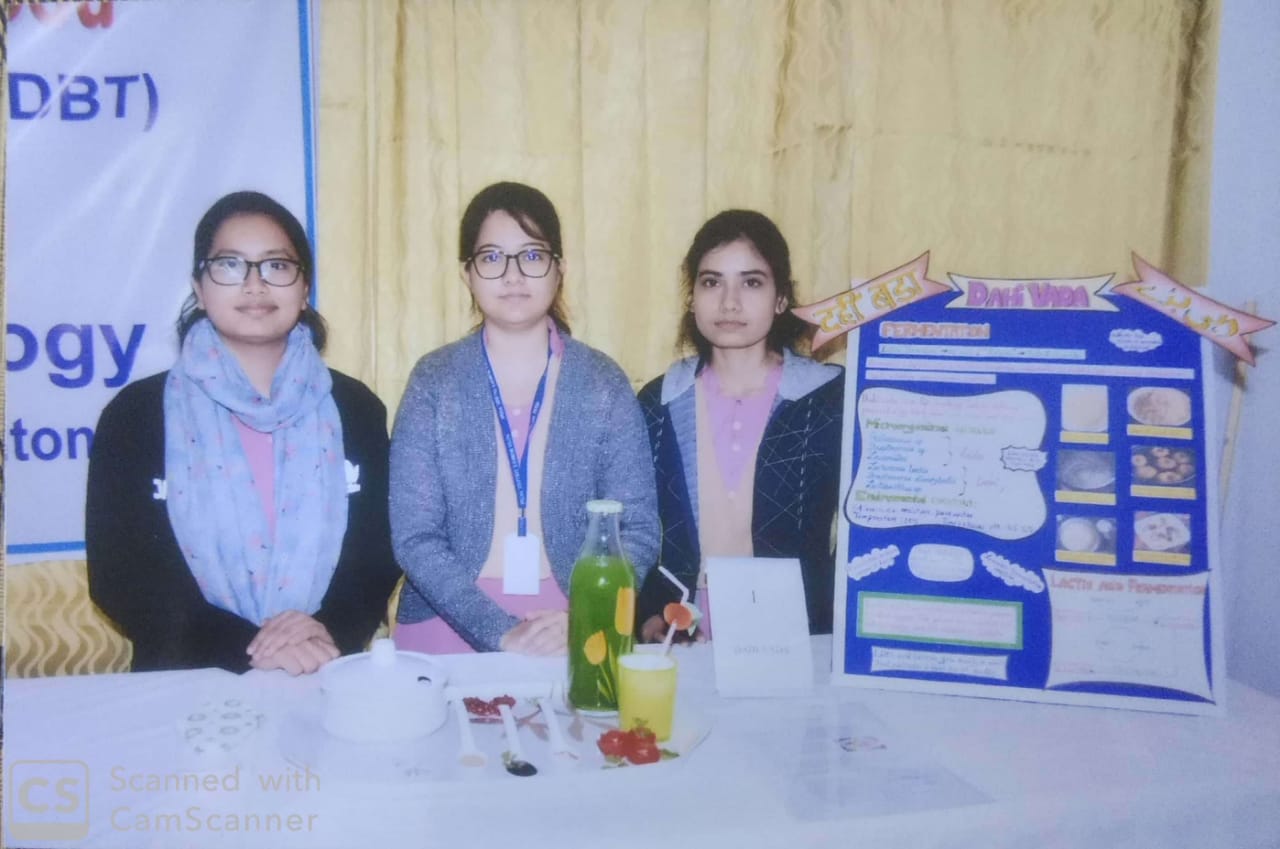
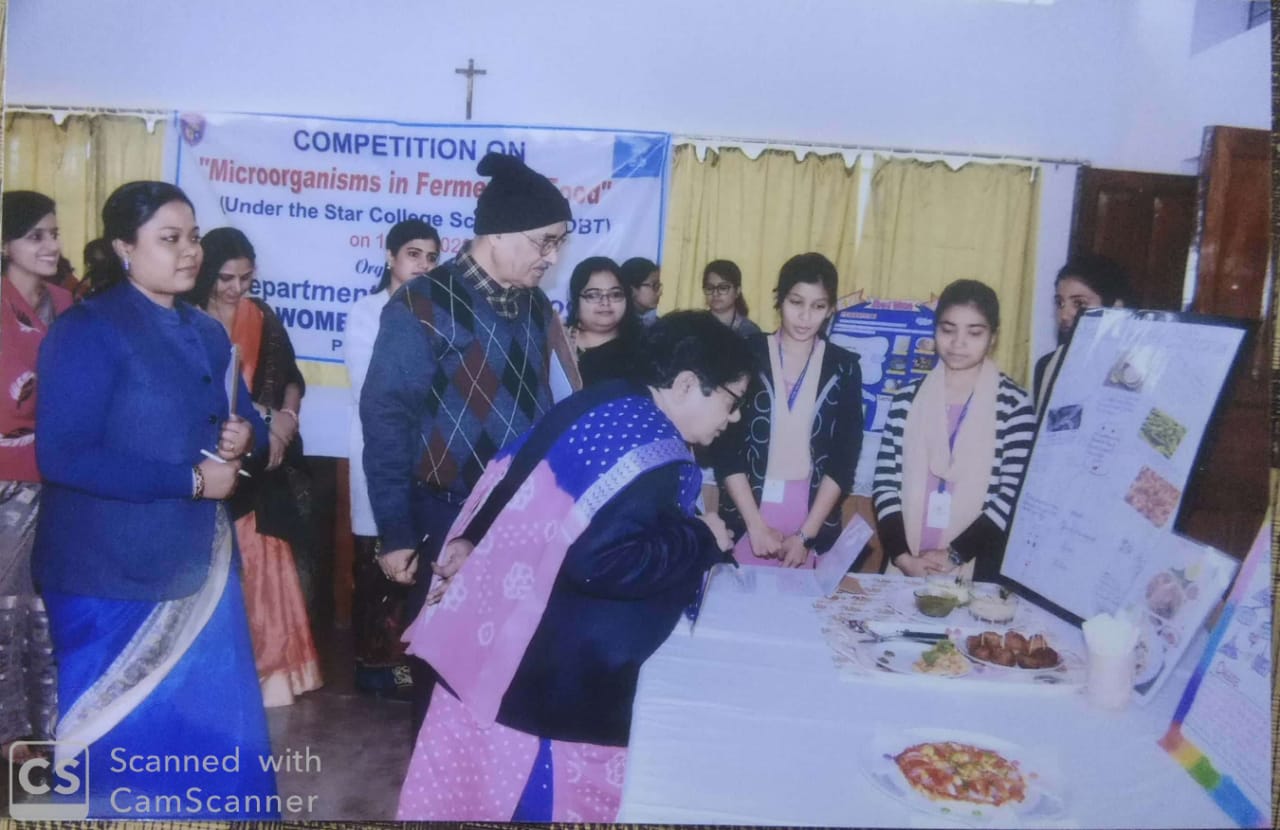
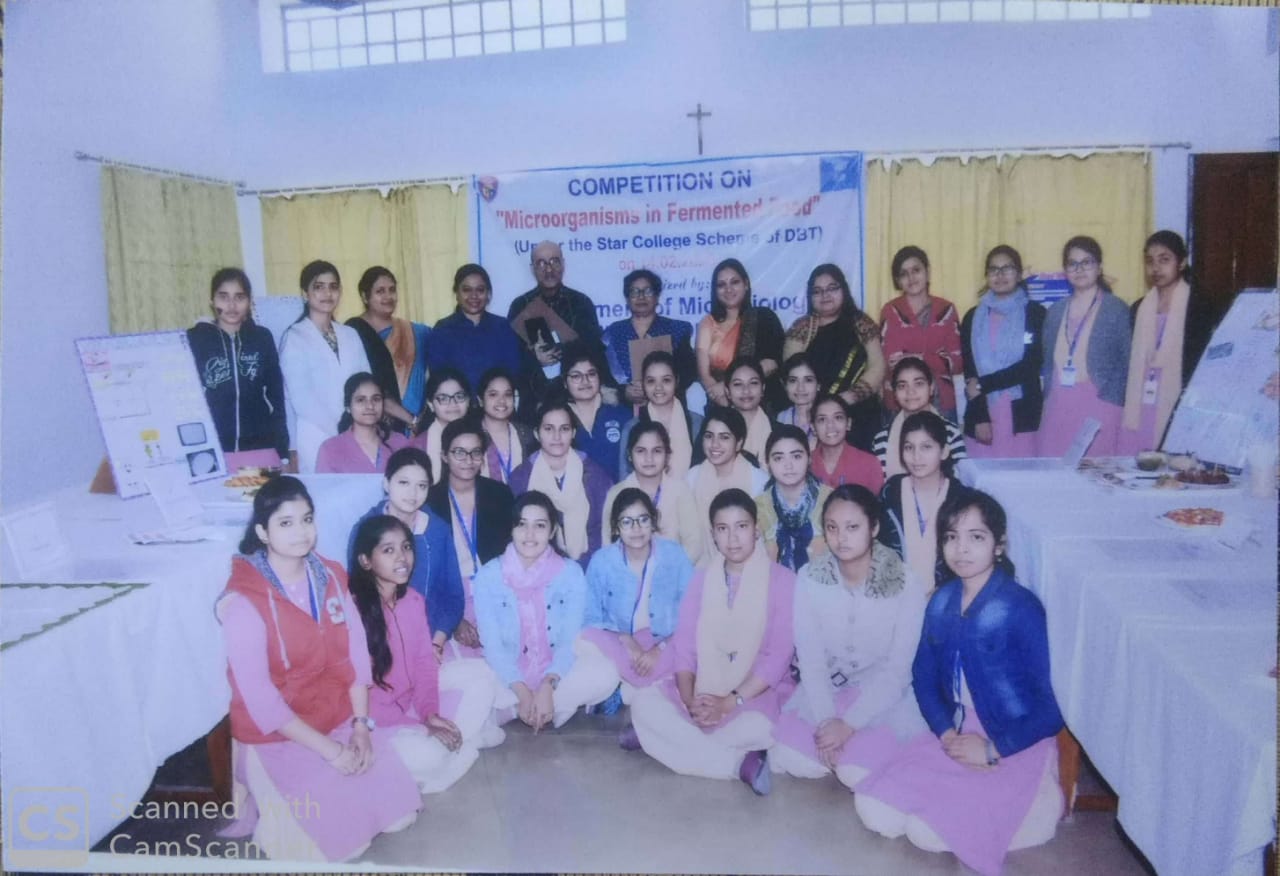
Department of Microbiology organised a competition on ‘ Microorganisms in Fermented Food ‘ on 14.2.2020 for B.Sc II year students under the Star College Scheme of DBT.


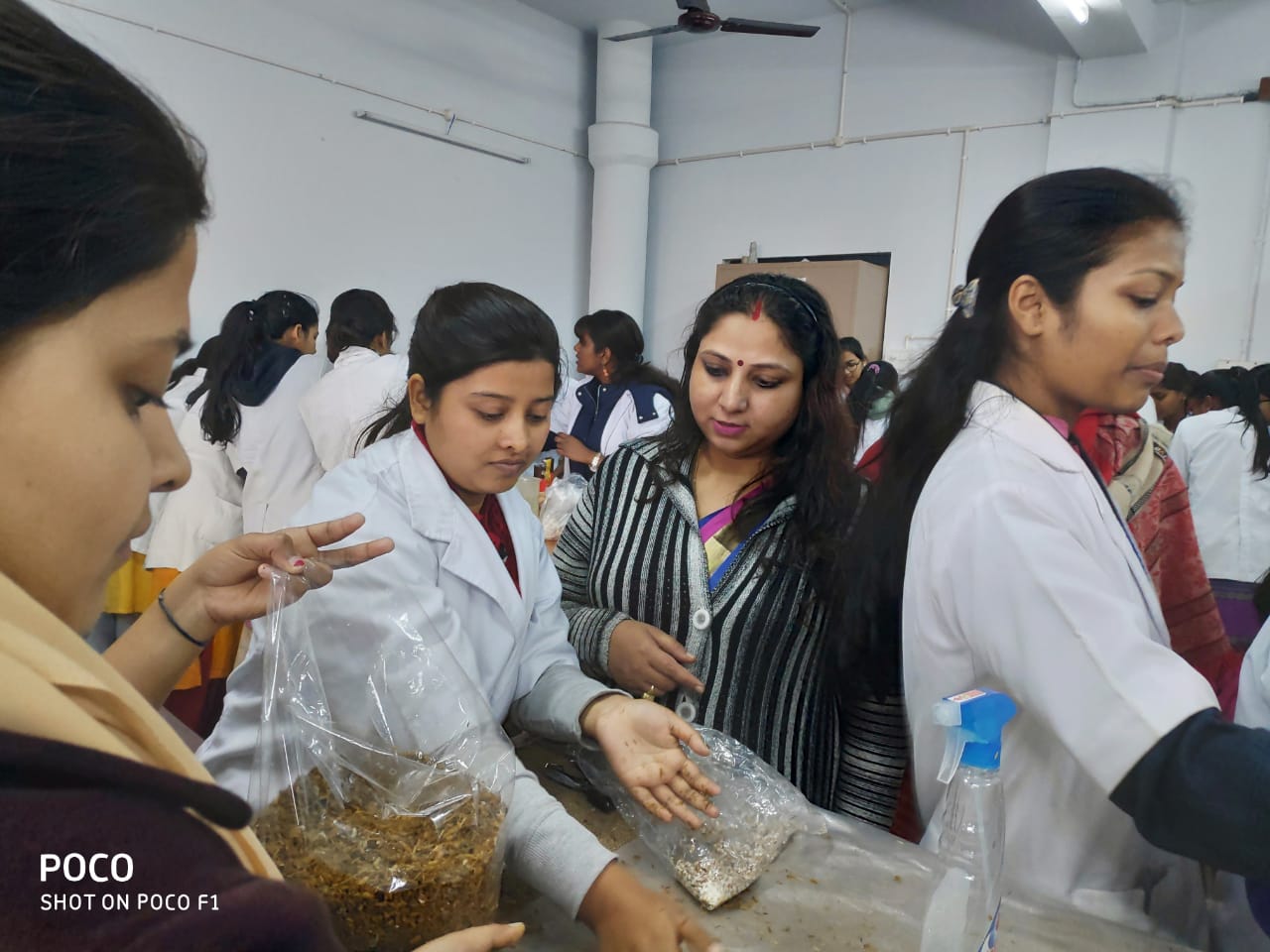
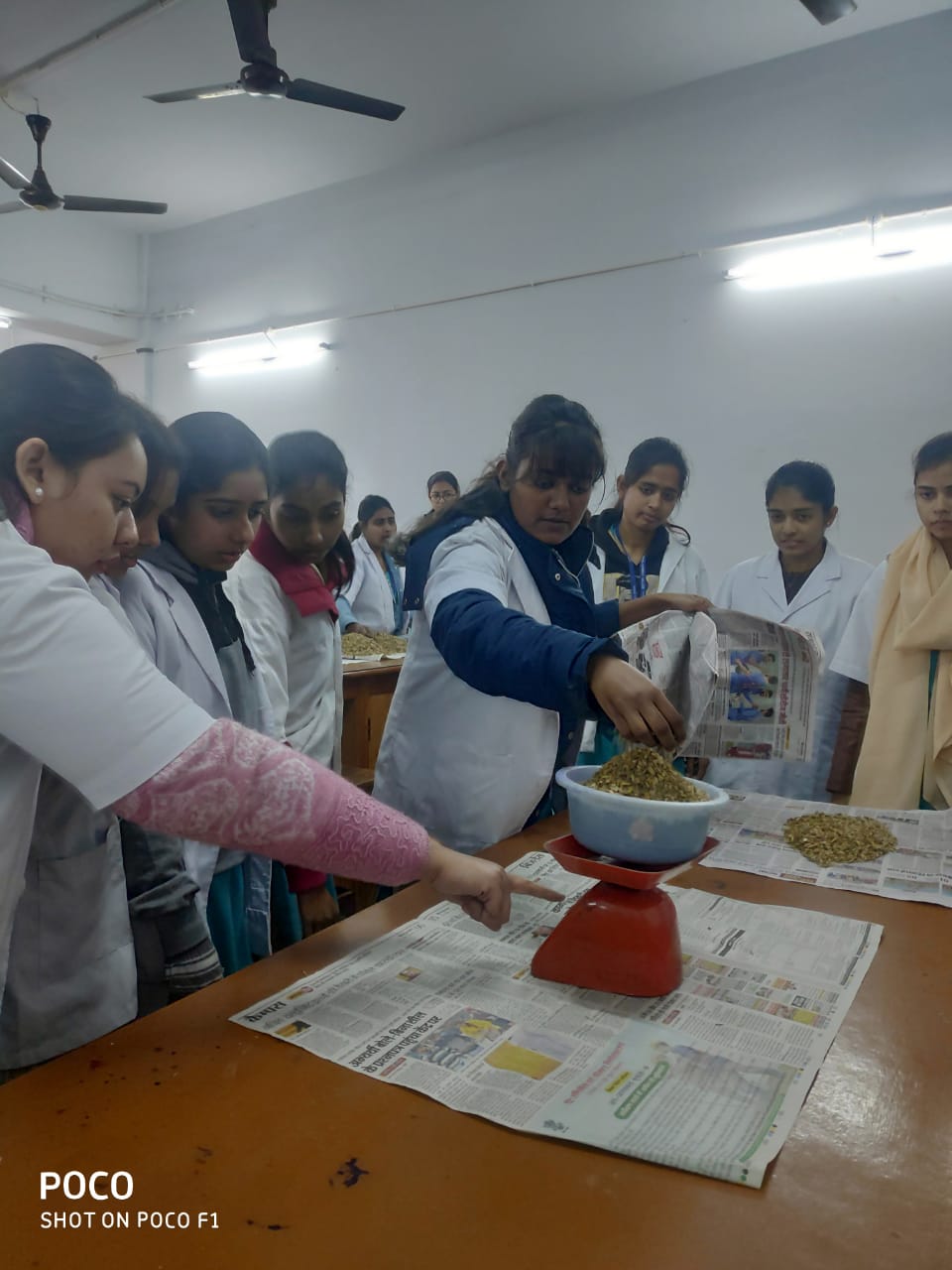
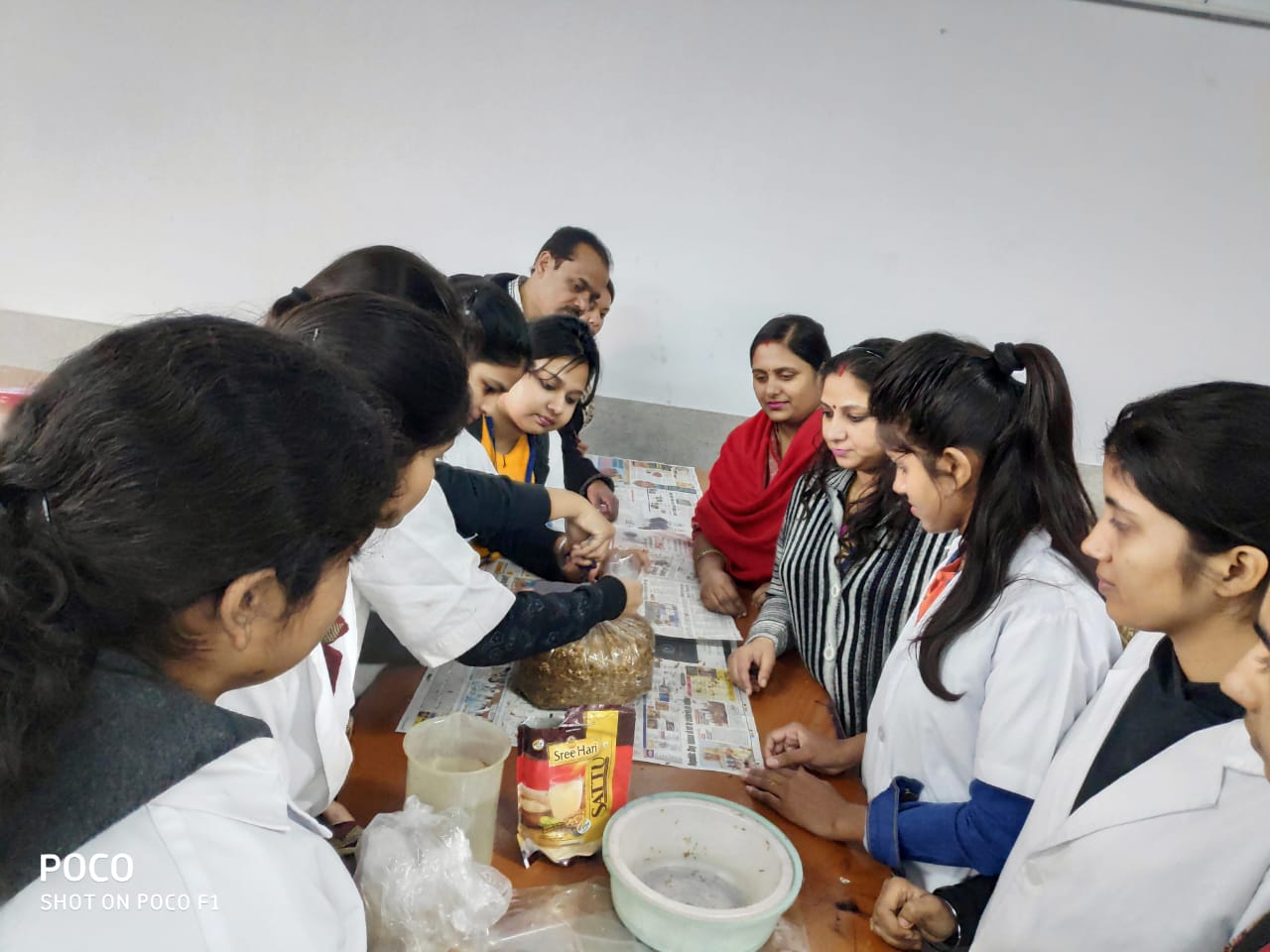
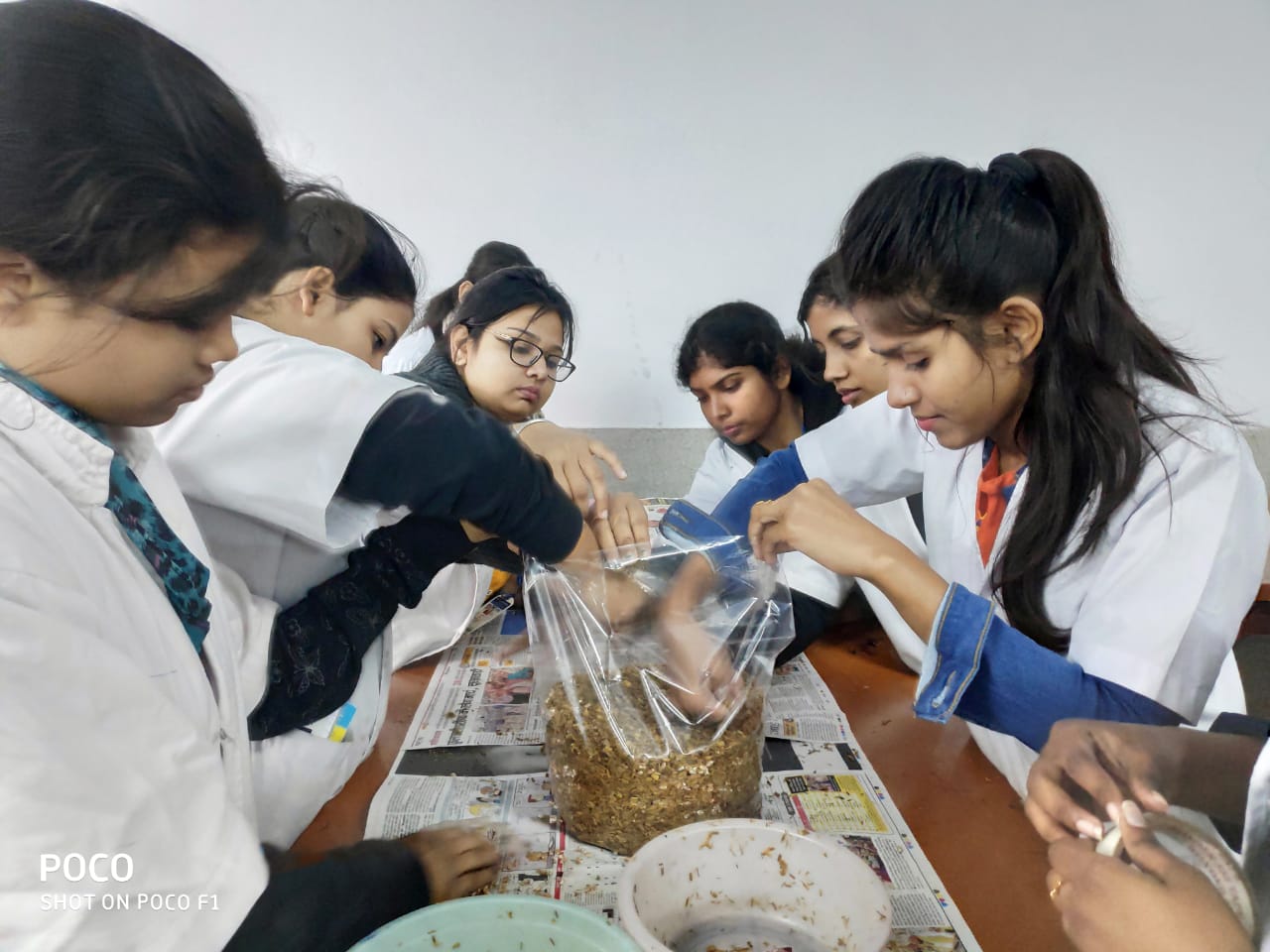
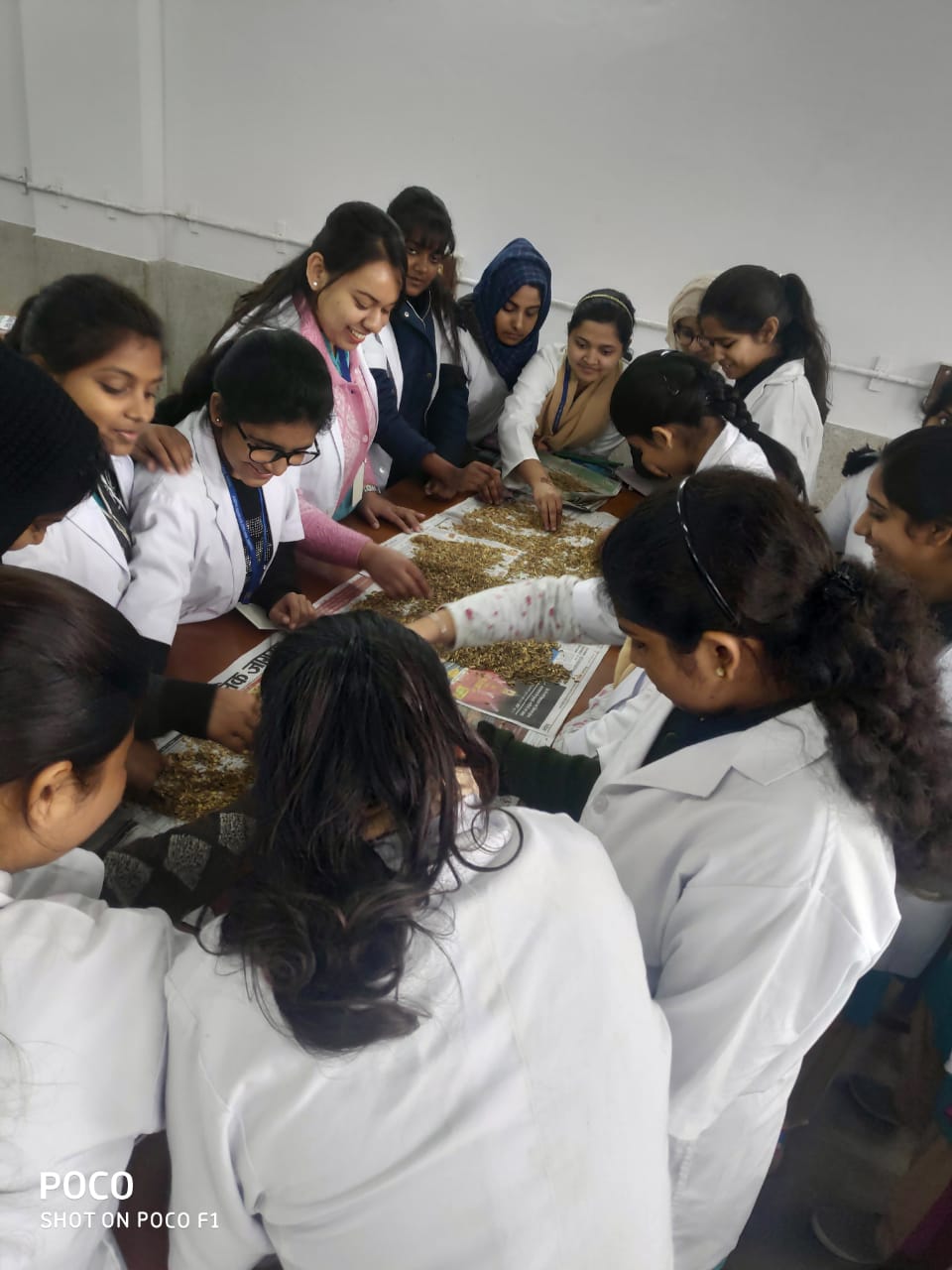
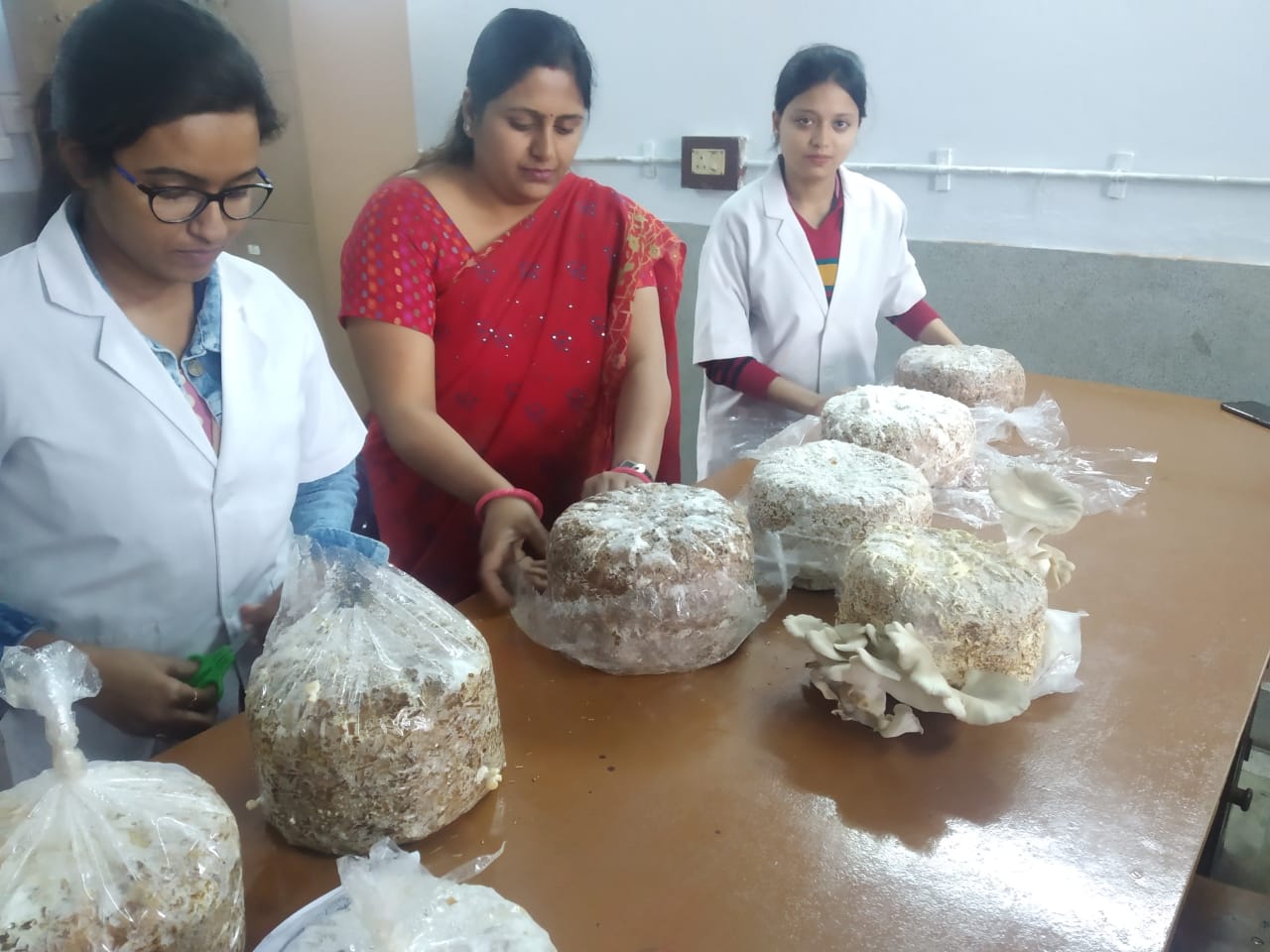
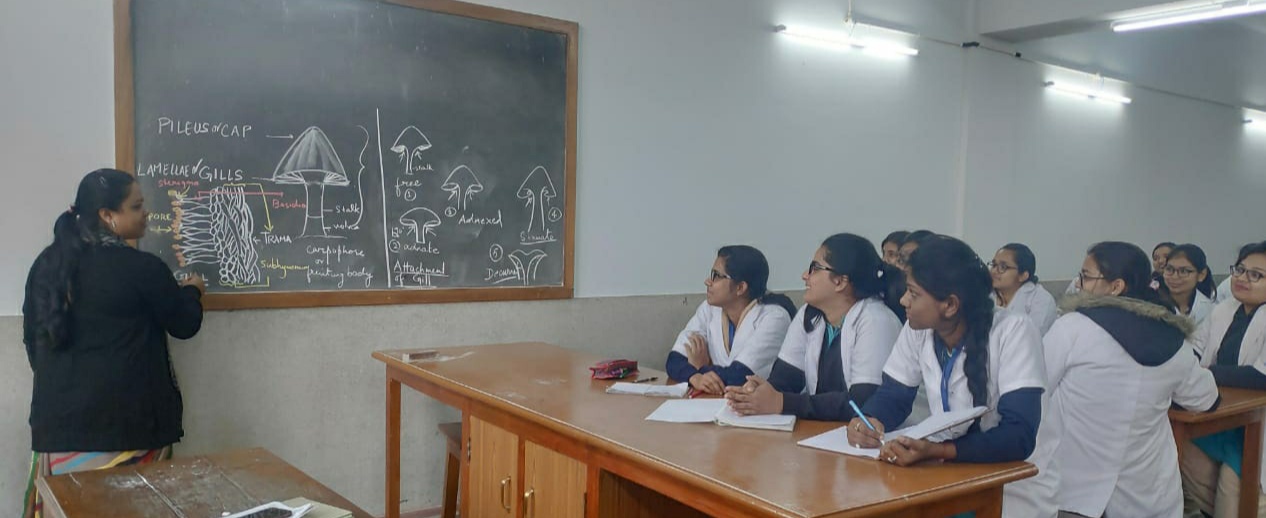
The department of Microbiology organised a two days Workshop on Mushroom Cultivation on 28 th and 29 th of January 2020 for students of B.Sc II year.


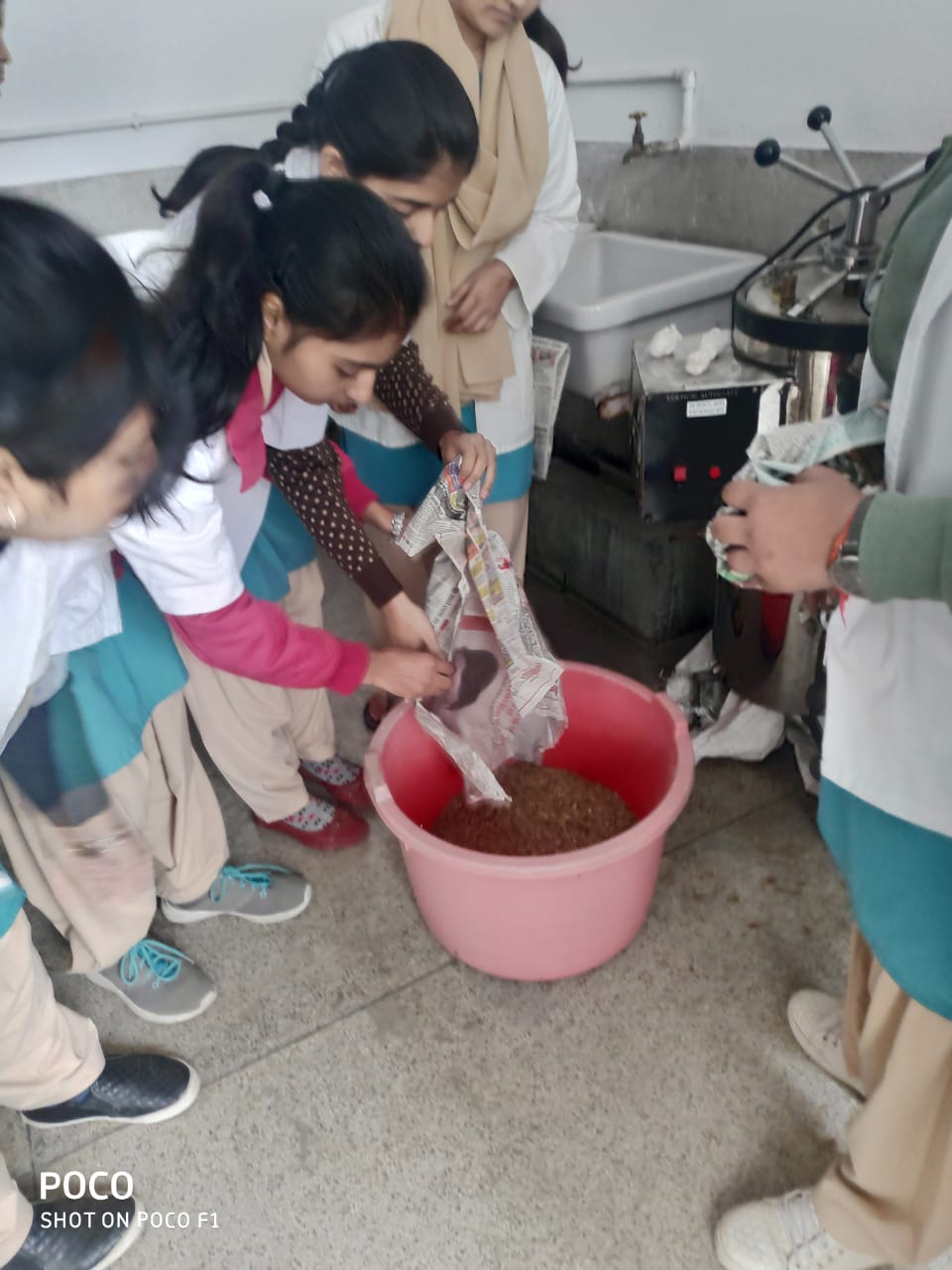
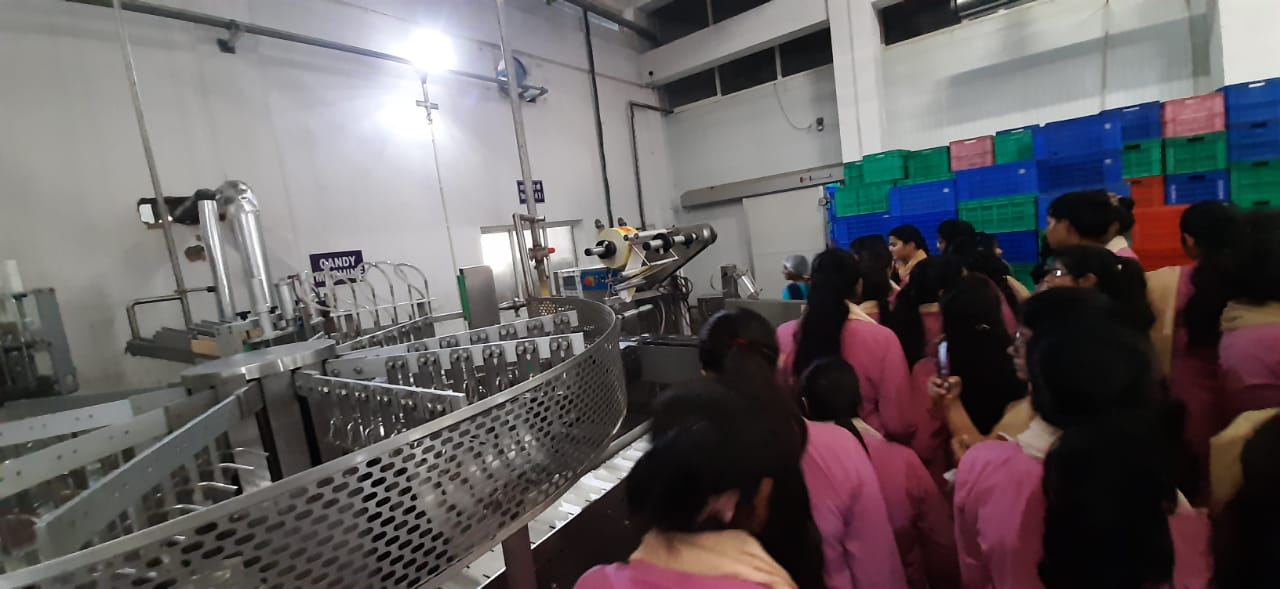
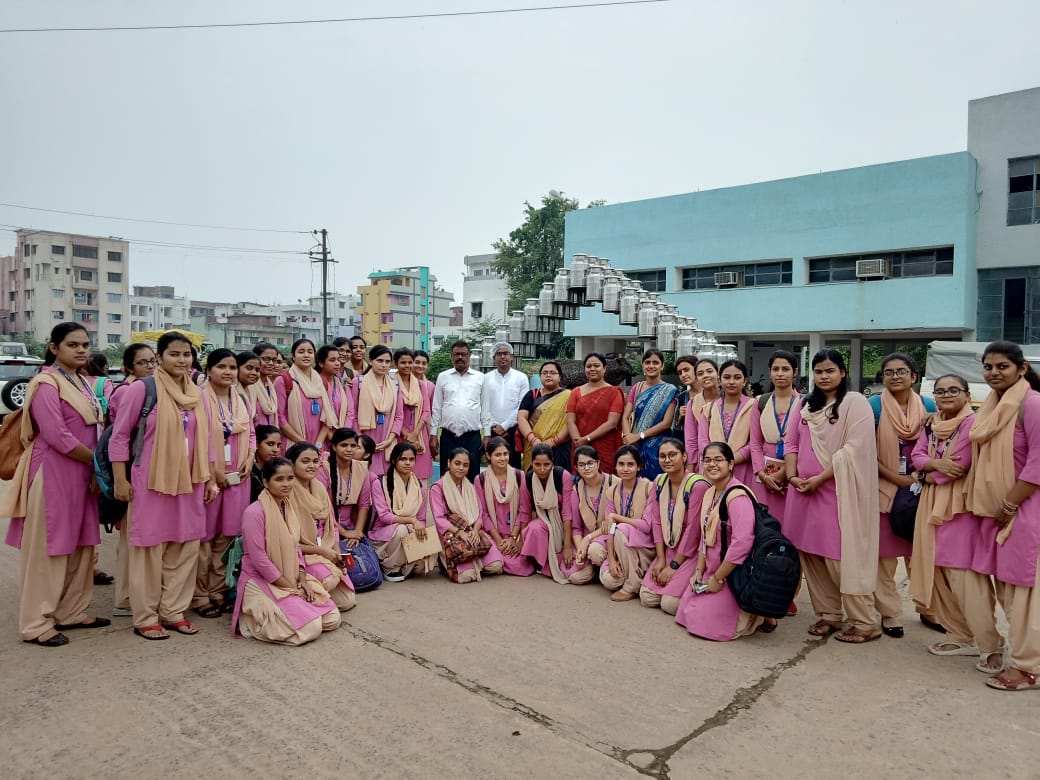
Educational visit to Sudha Dairy, Phulwarisharif, Patna on 21.10.19 organised by the Department of Microbiology.


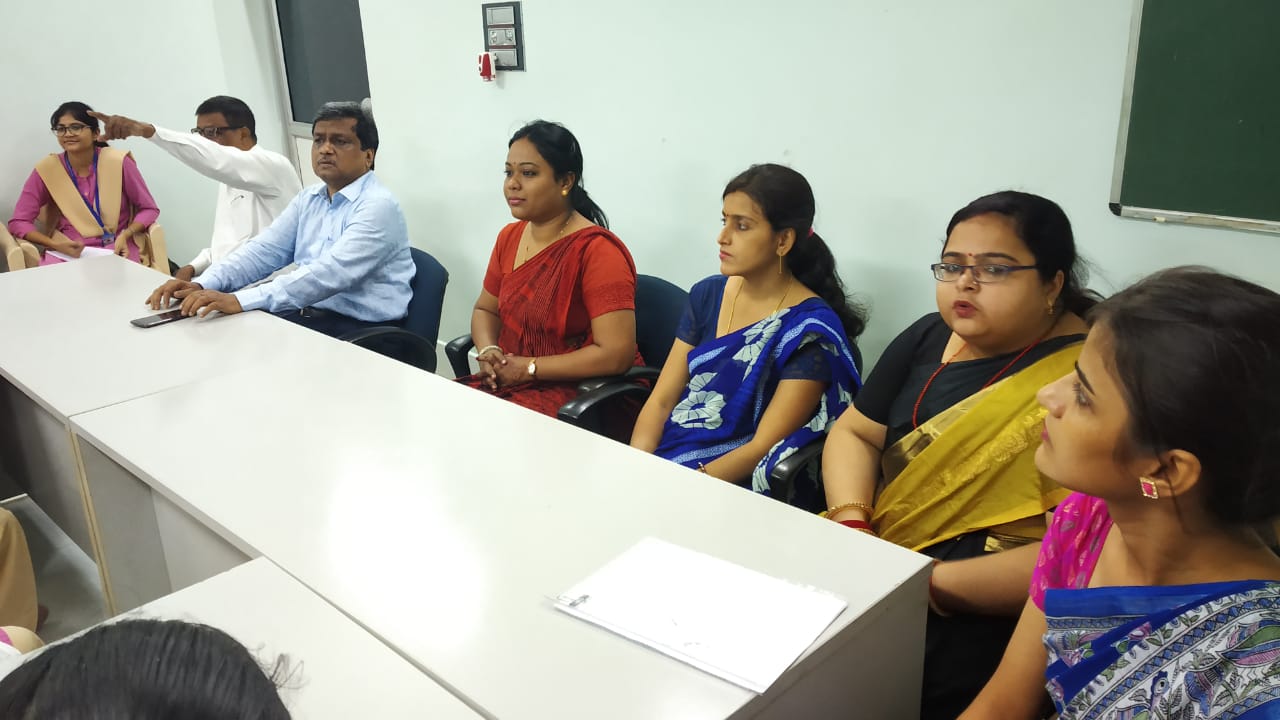
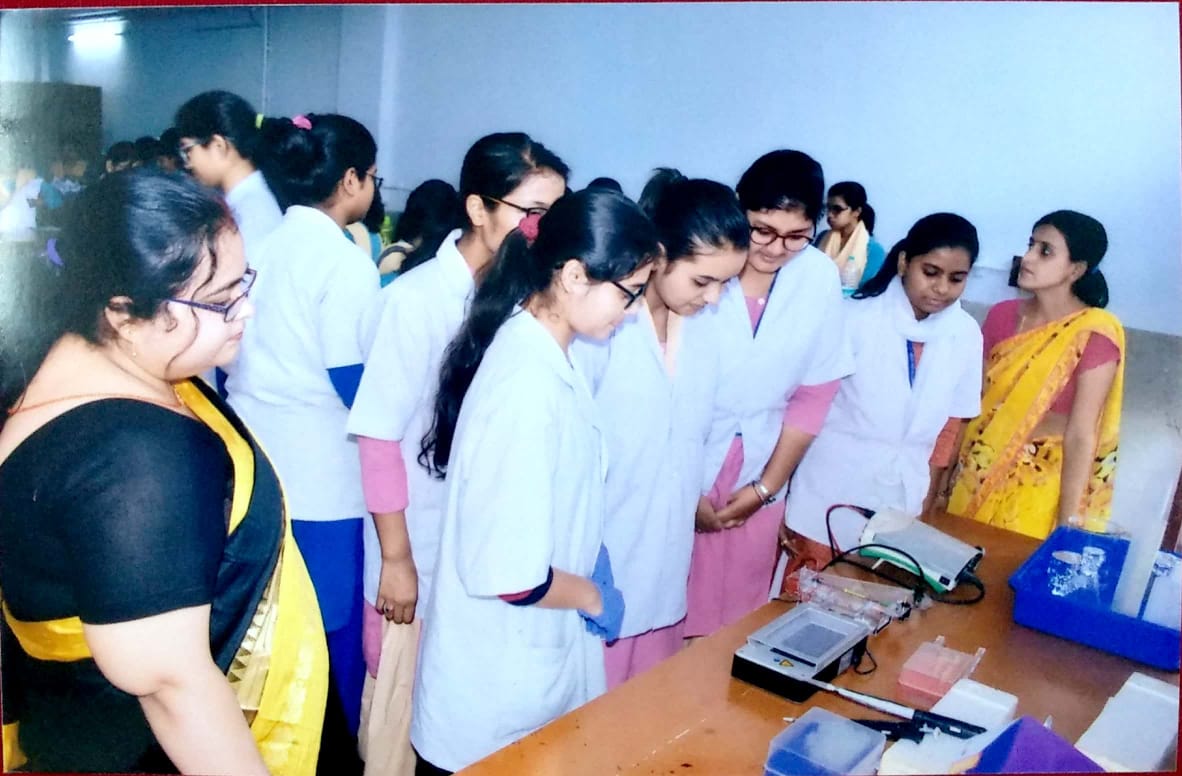
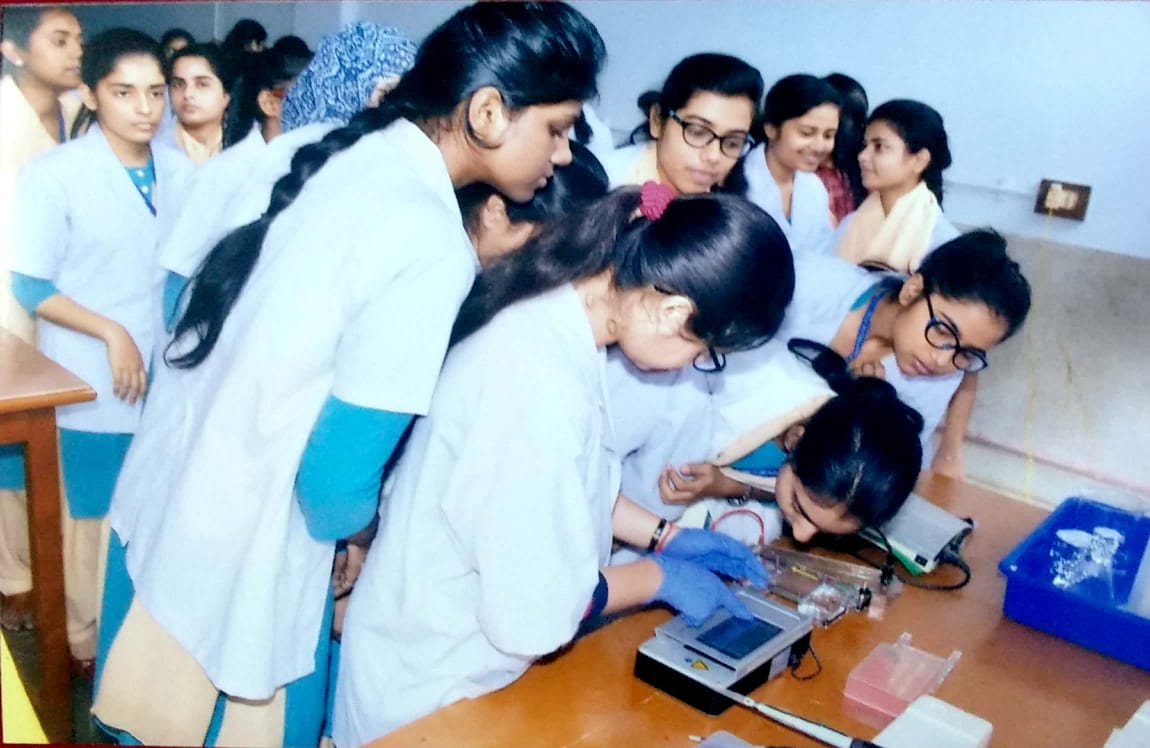
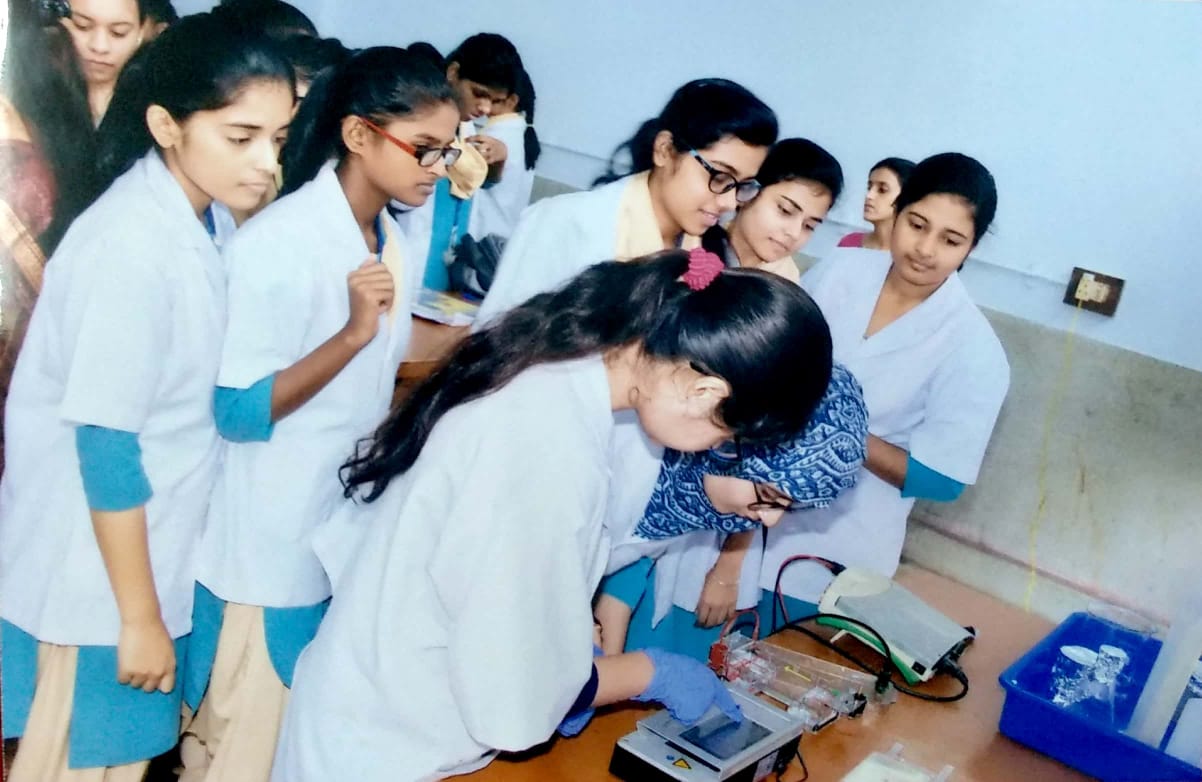
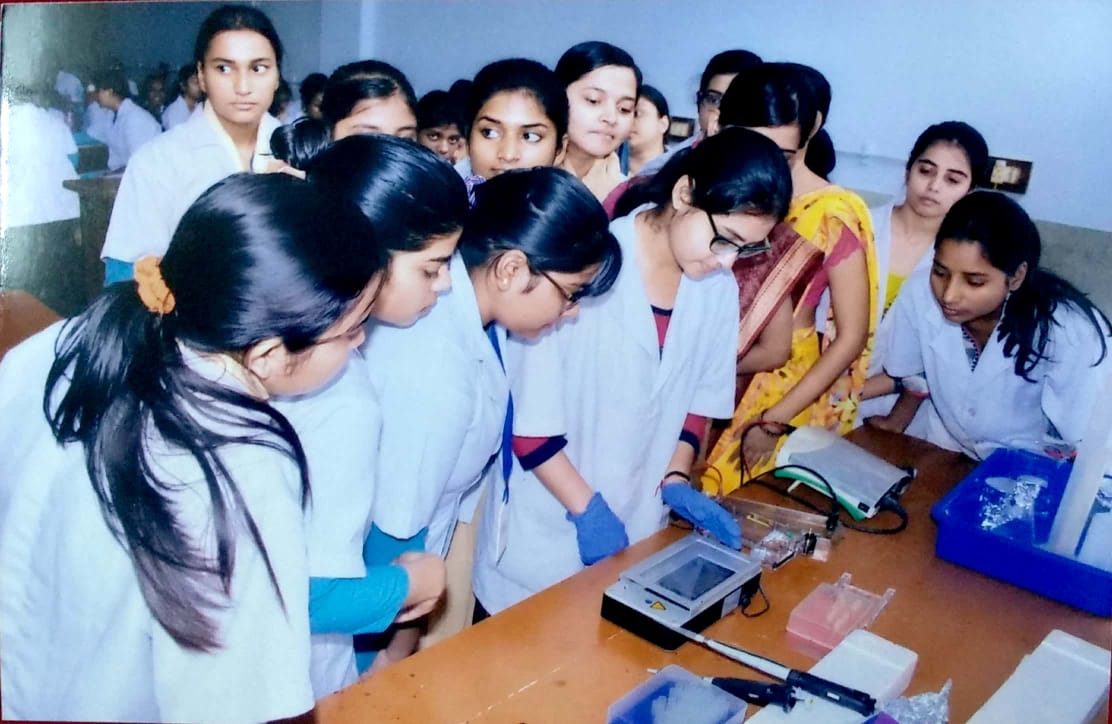
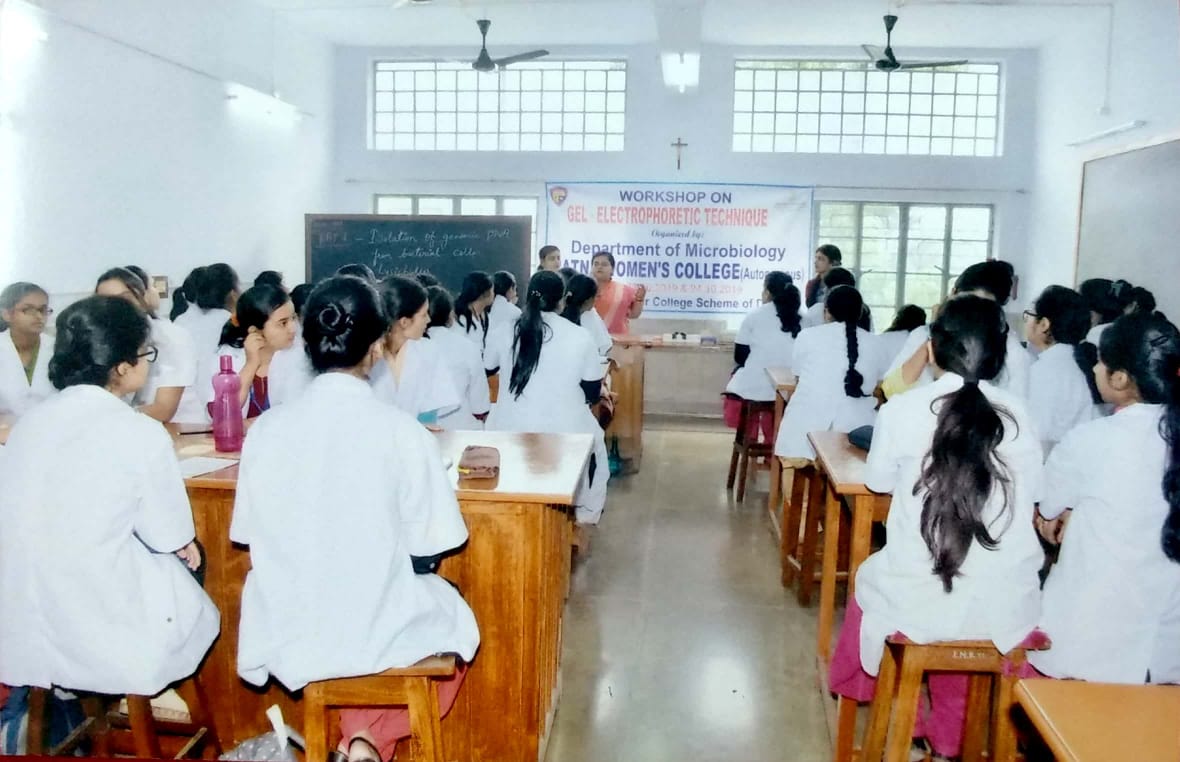
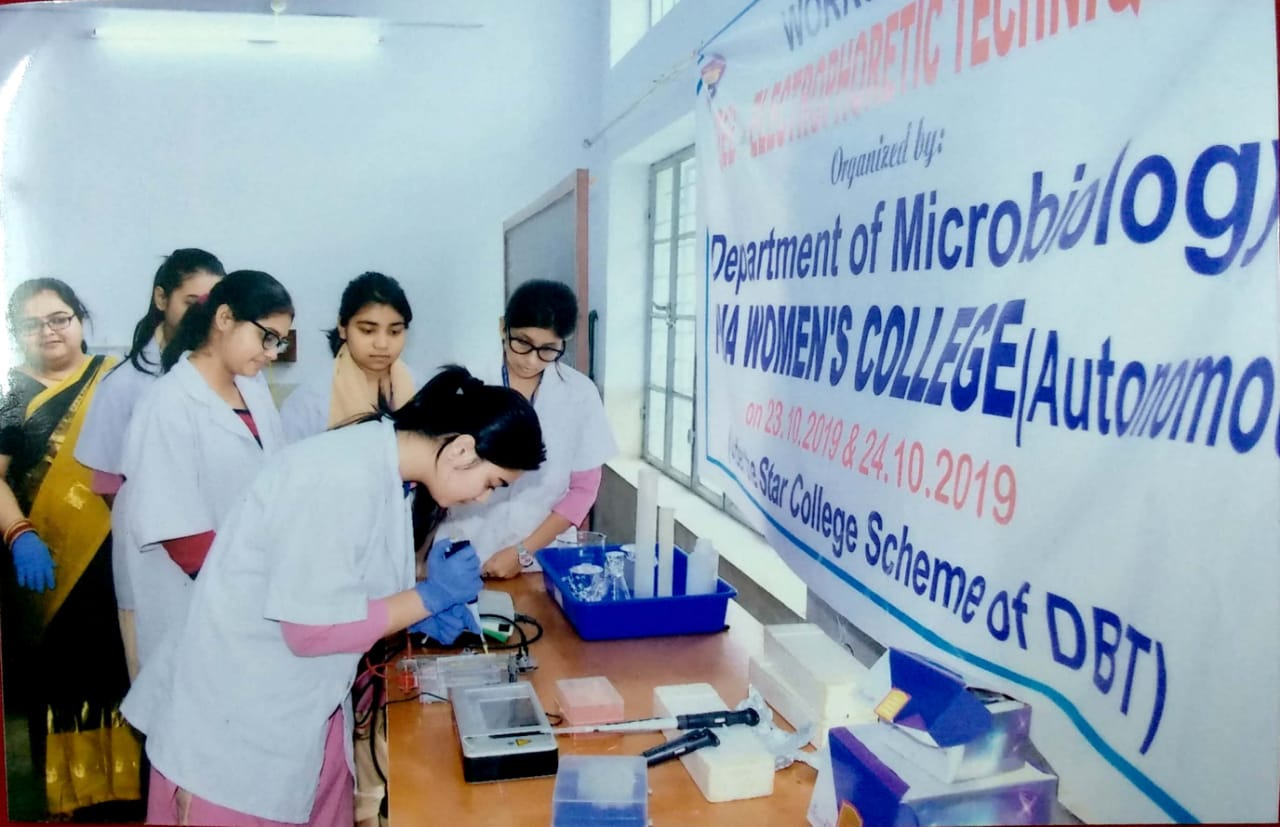
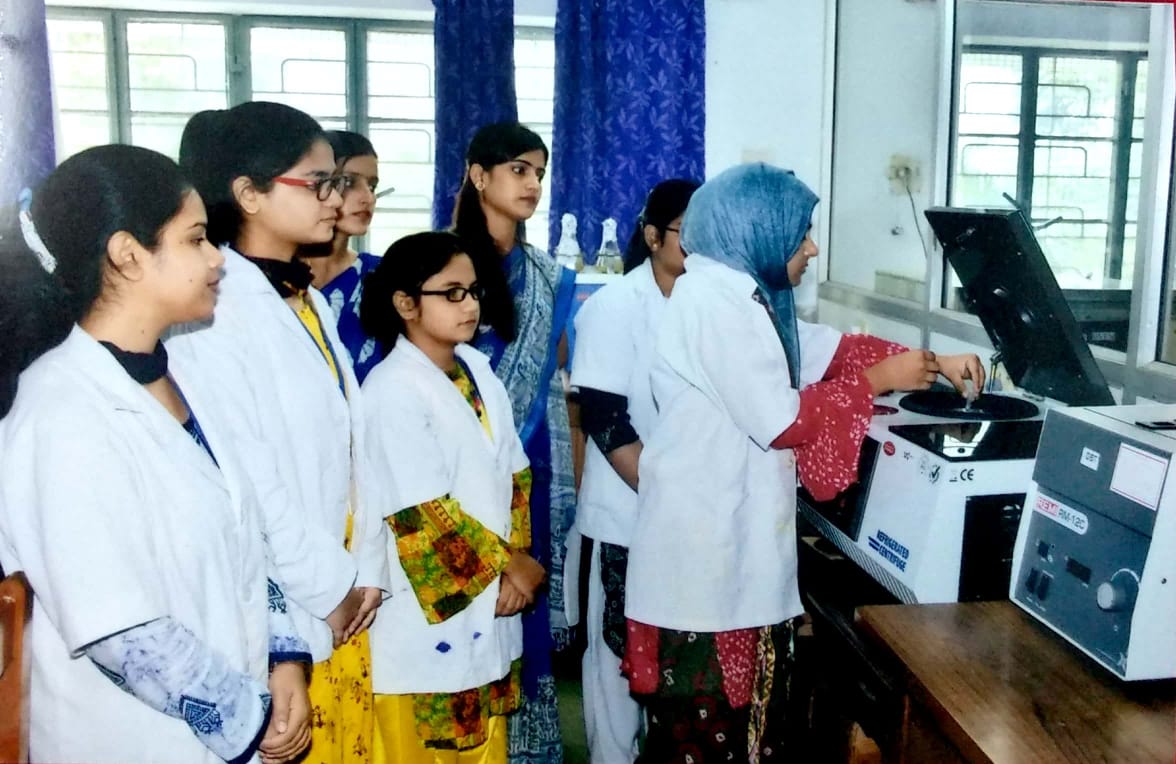
Workshop on Gel Electrophoretic Technique organised by dept of Microbiology on 23.10.2019 and 24.10.2019 under the Star College Scheme of DBT.


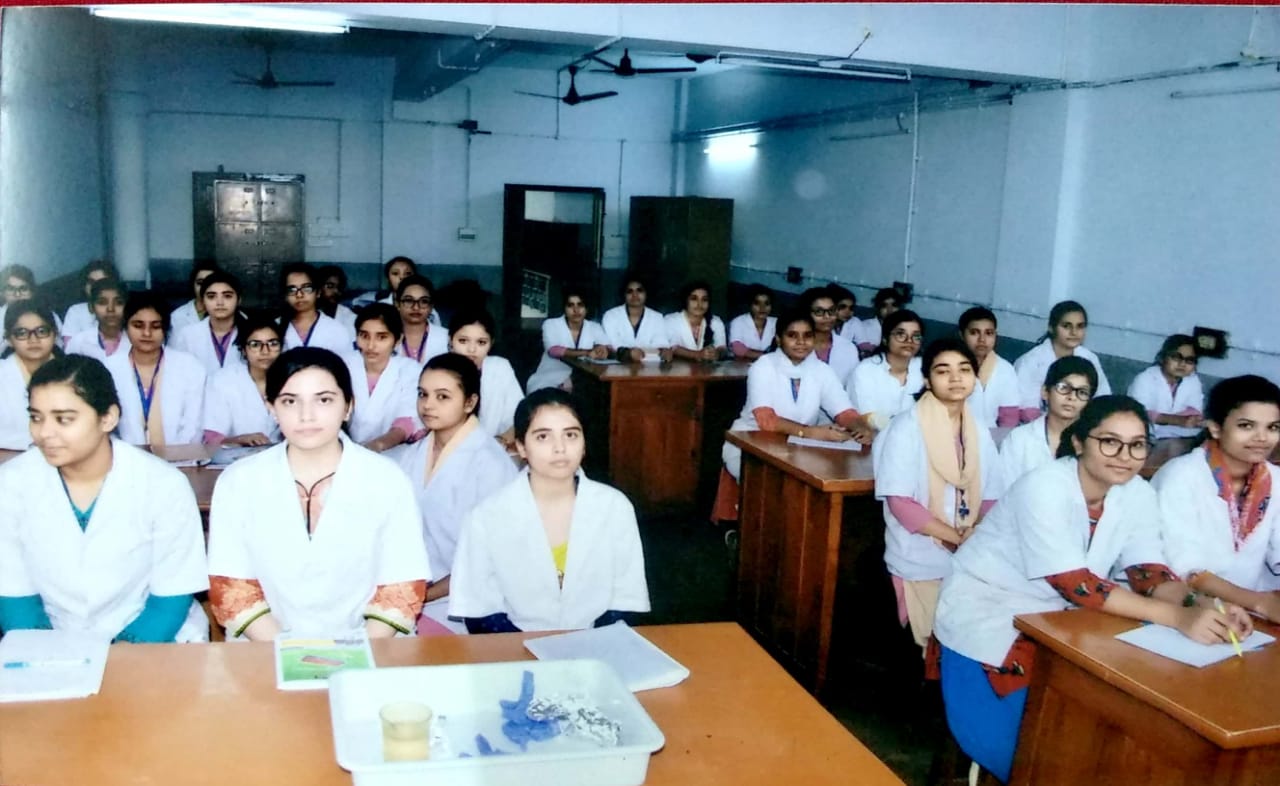
- Research projects taken by students under CPE and BSR scheme of UGC and under DBT star college scheme.
- Major thrust area of research are environmental microbiology agriculture microbiology, Enzyme technology, clinical microbiology and Mushroom cultivation.
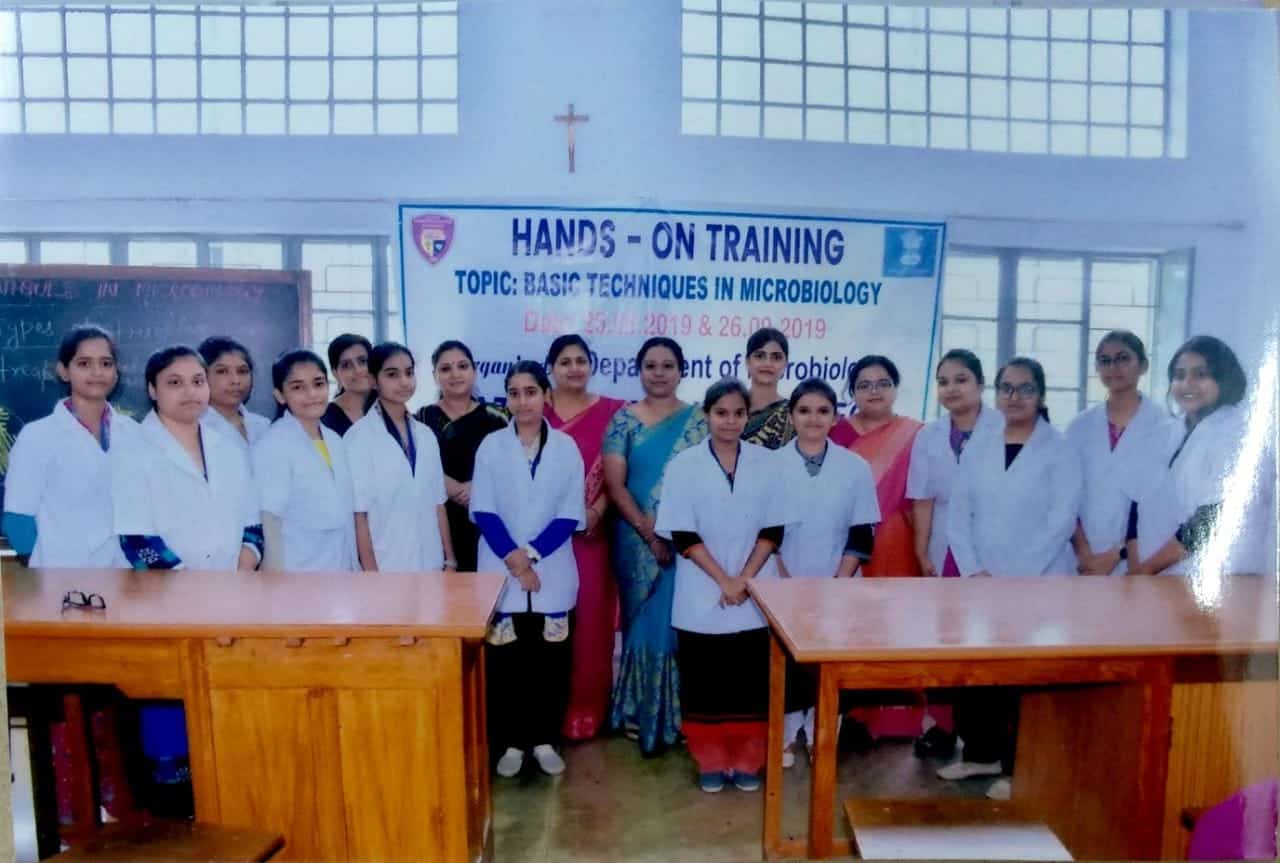
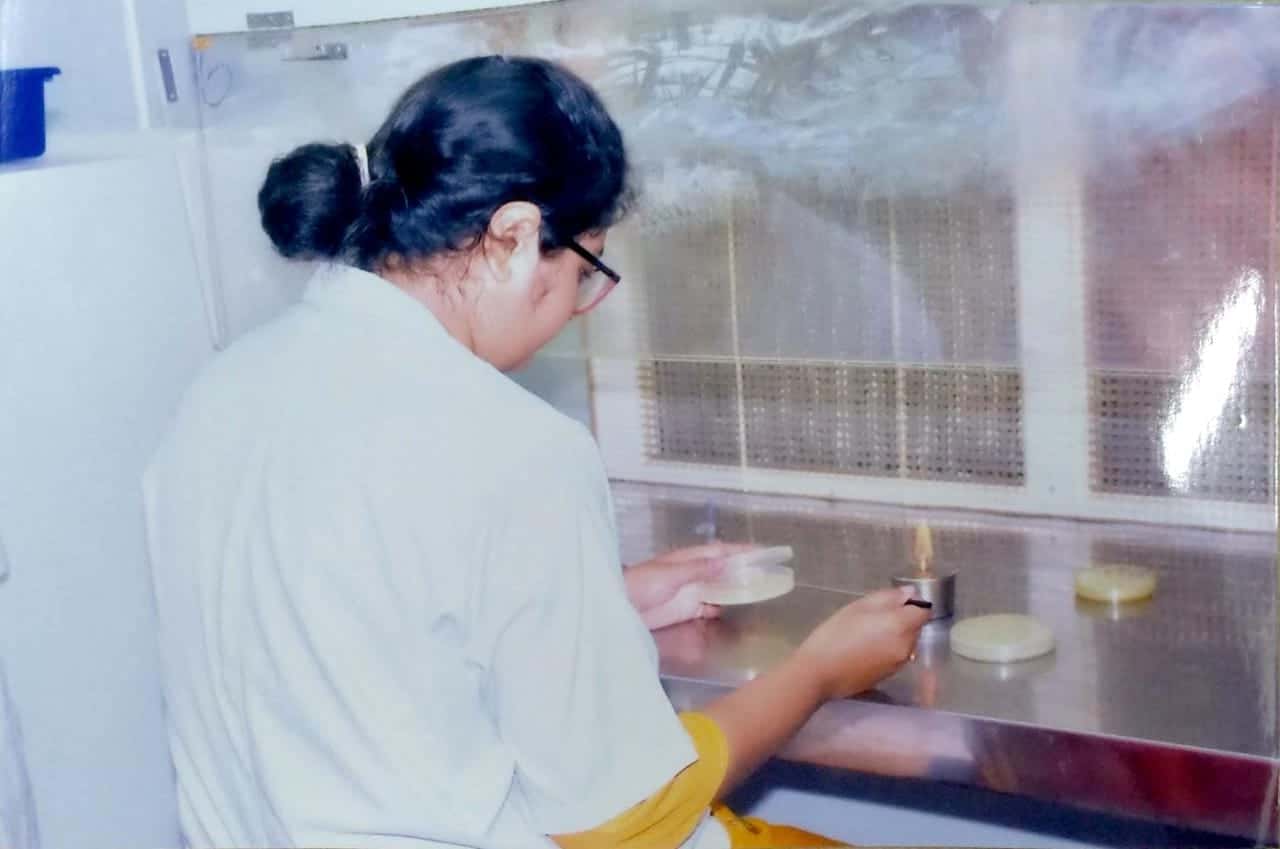
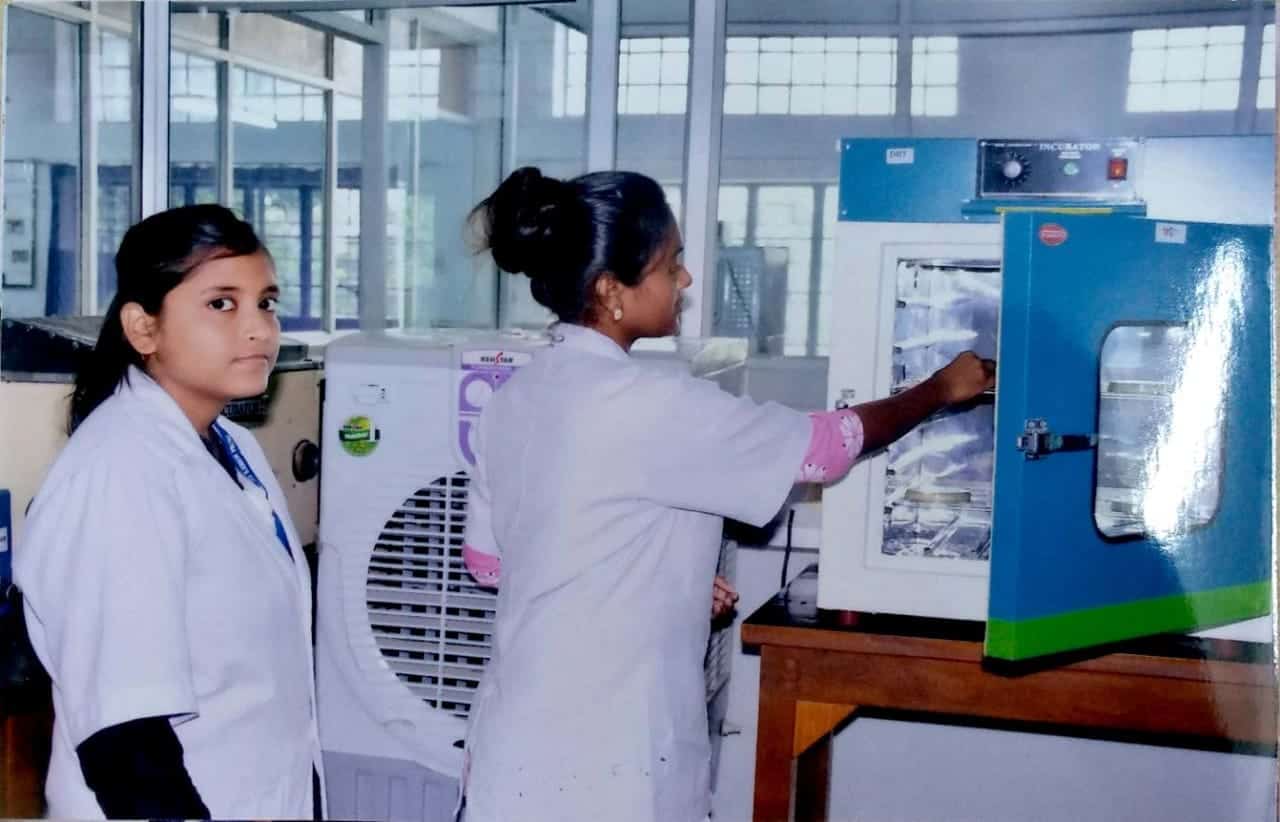
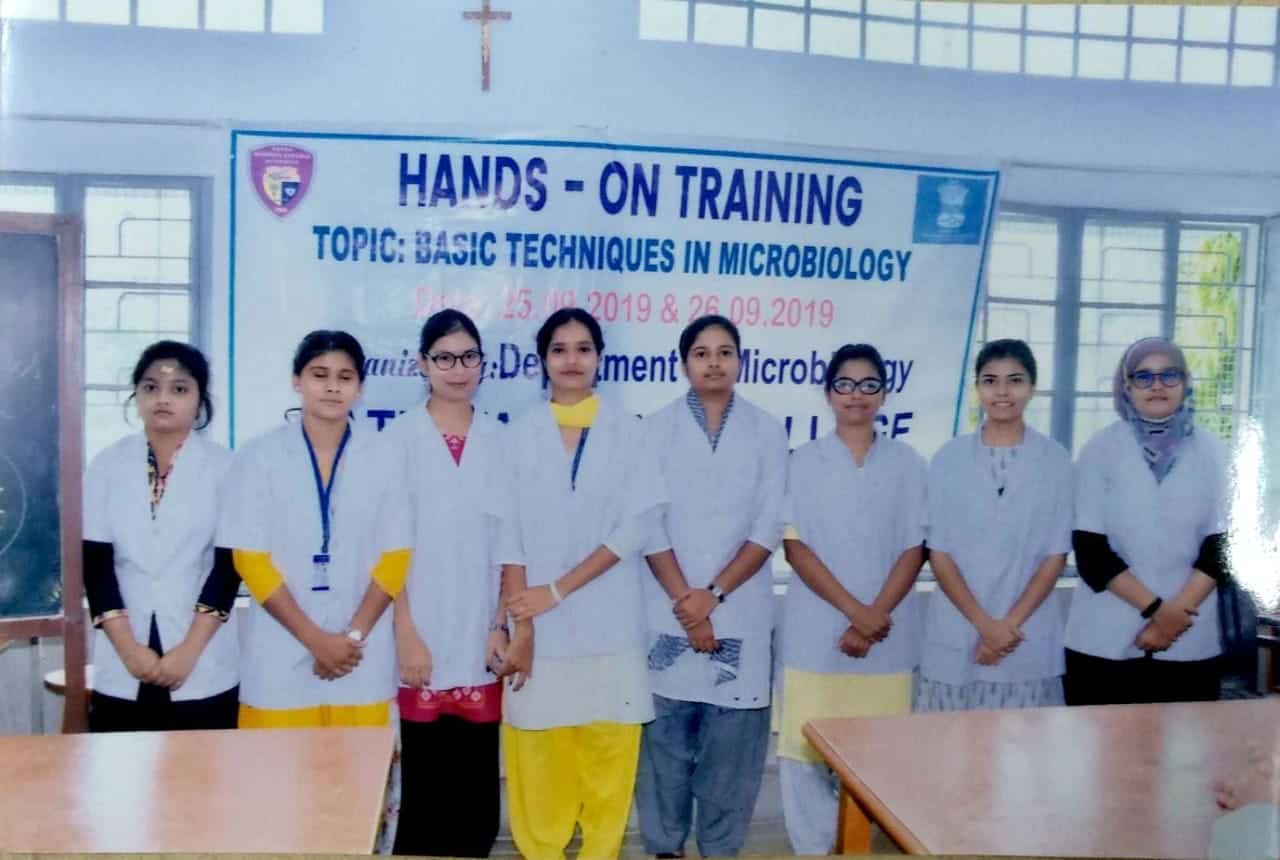
Hands – on training on basic techniques of Microbiology. organised by the department of microbiology on 25 th and 26 th of September 2019

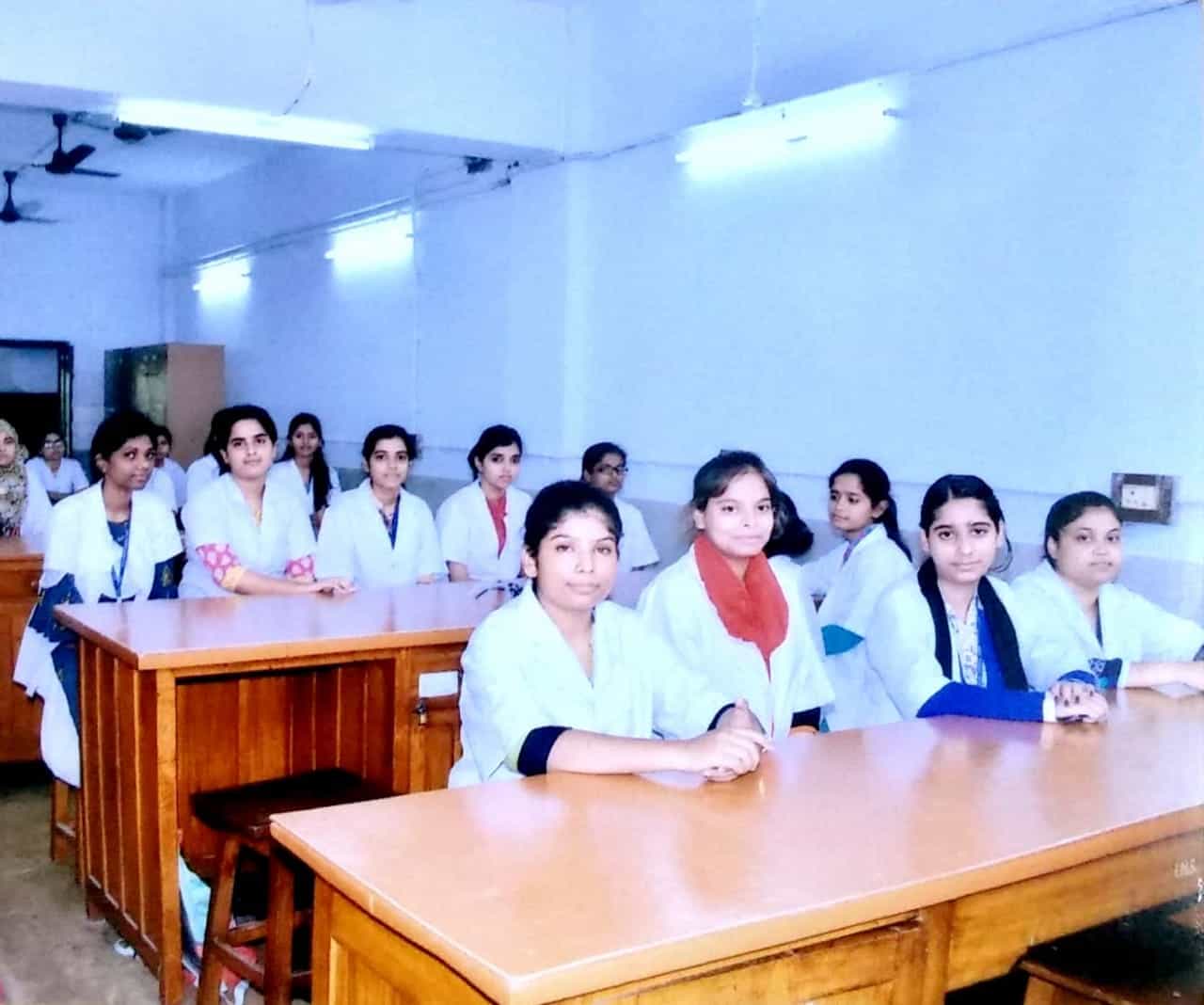
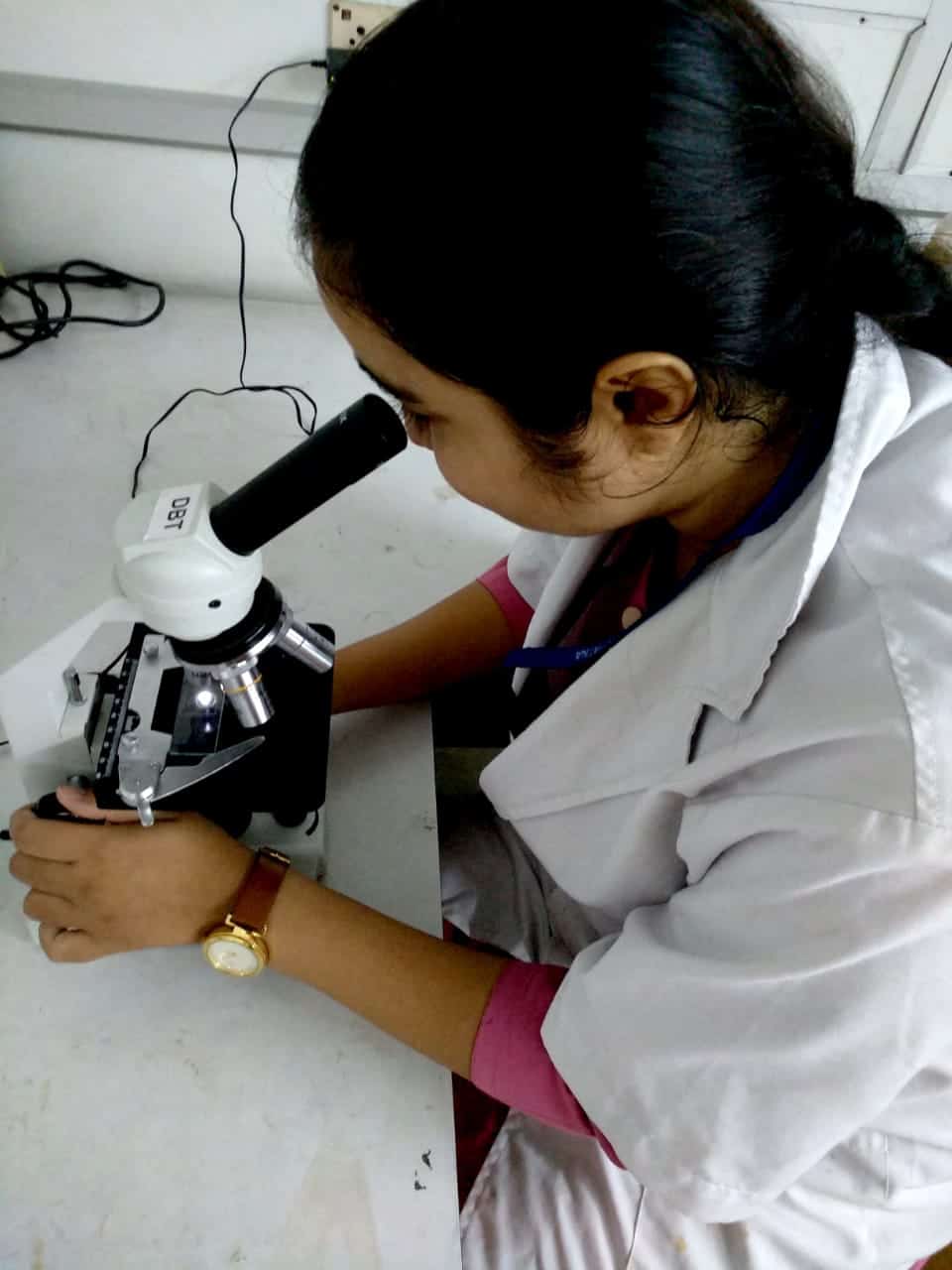
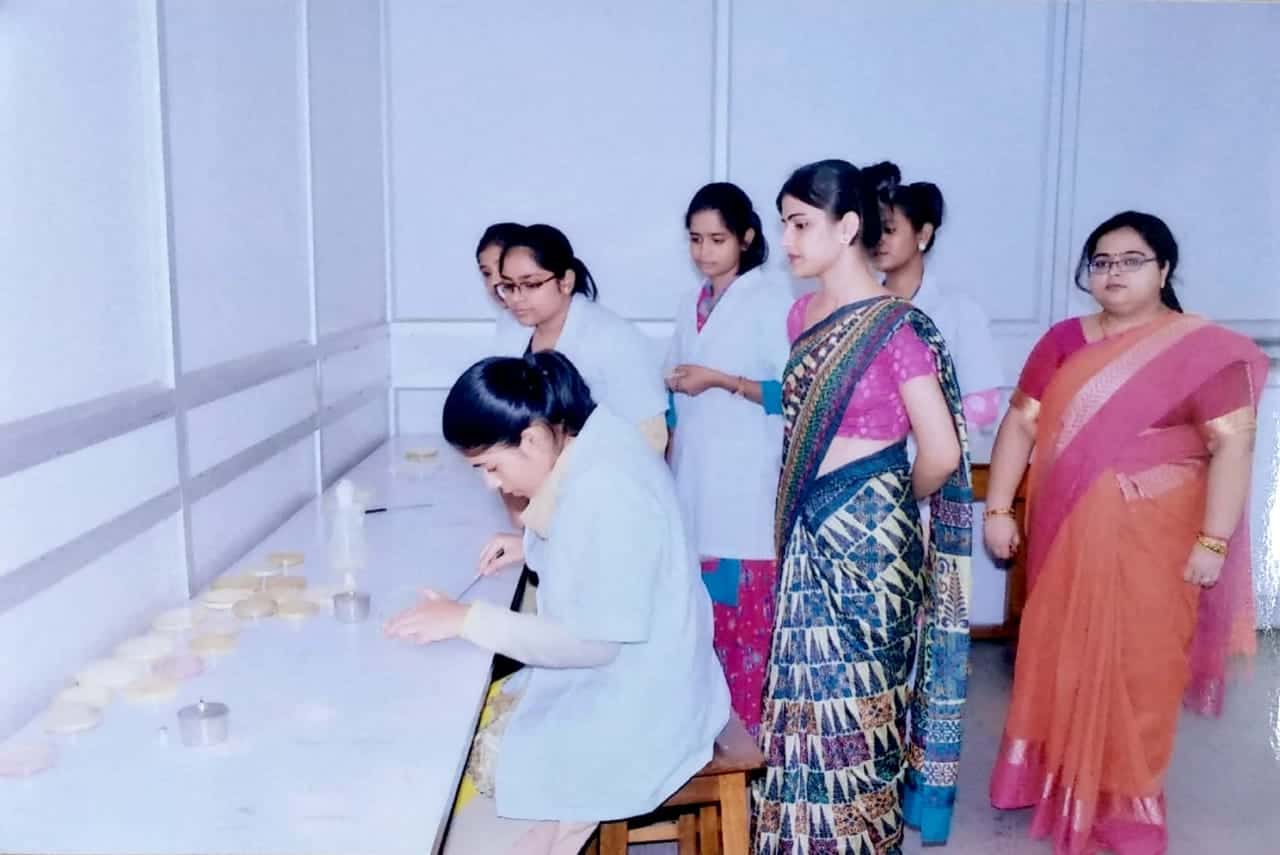
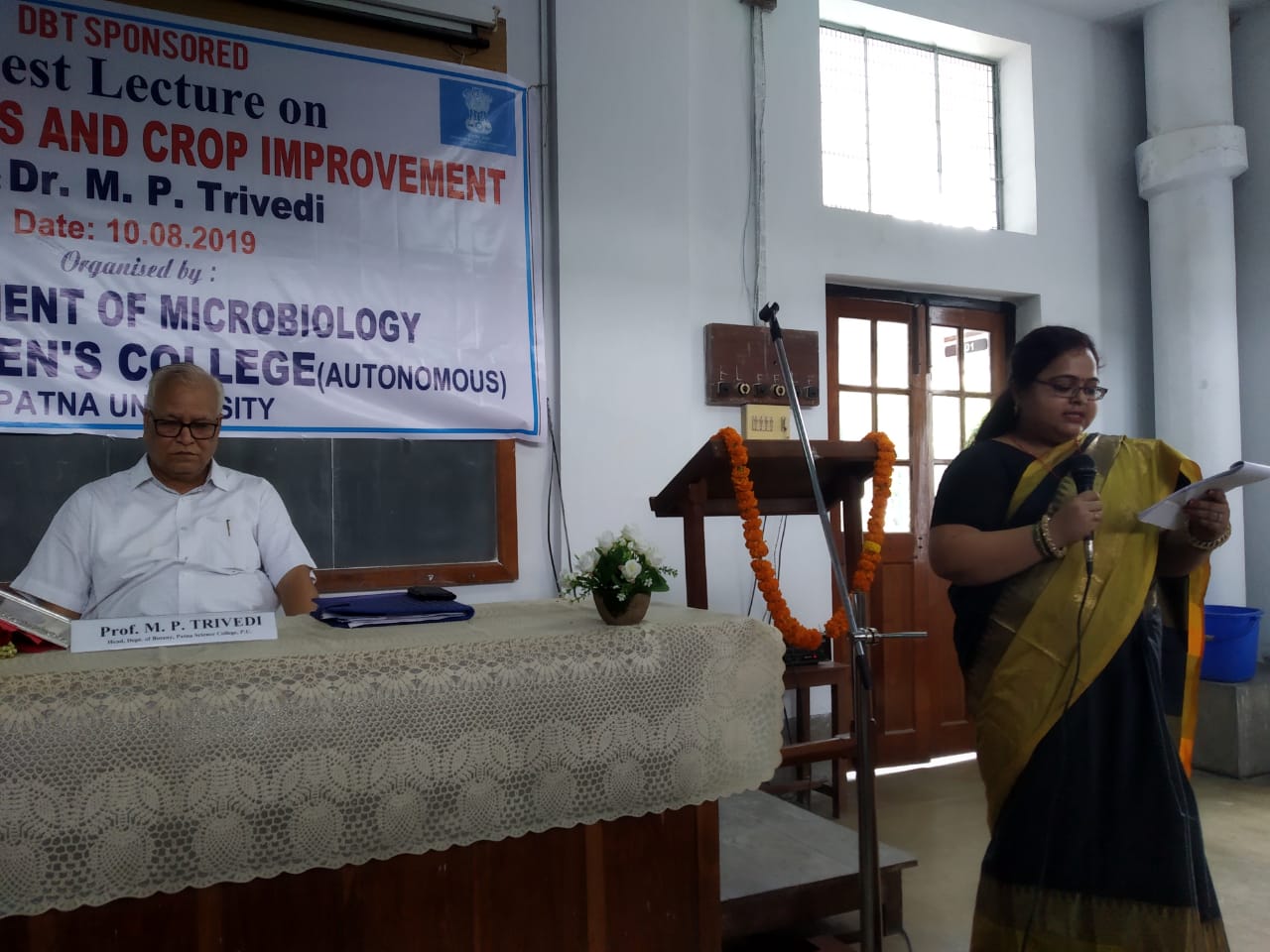
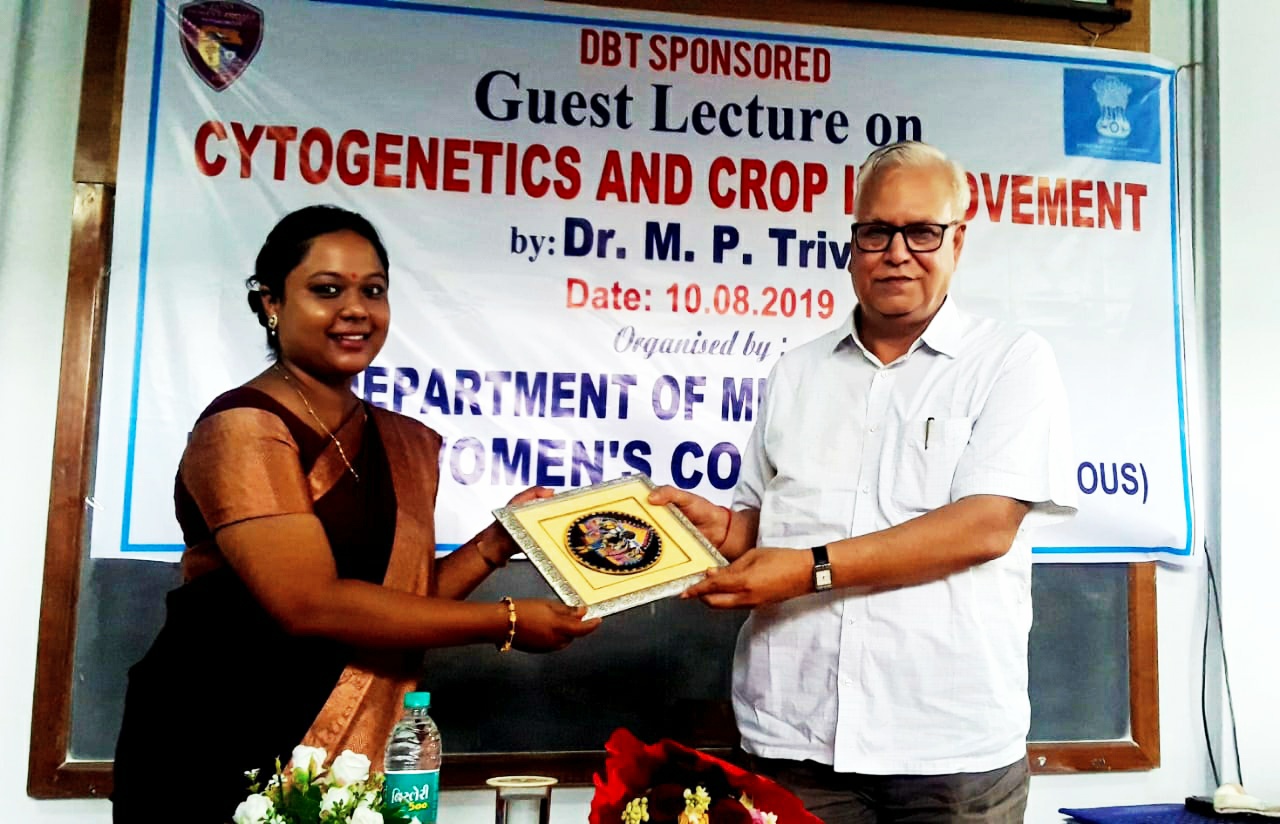
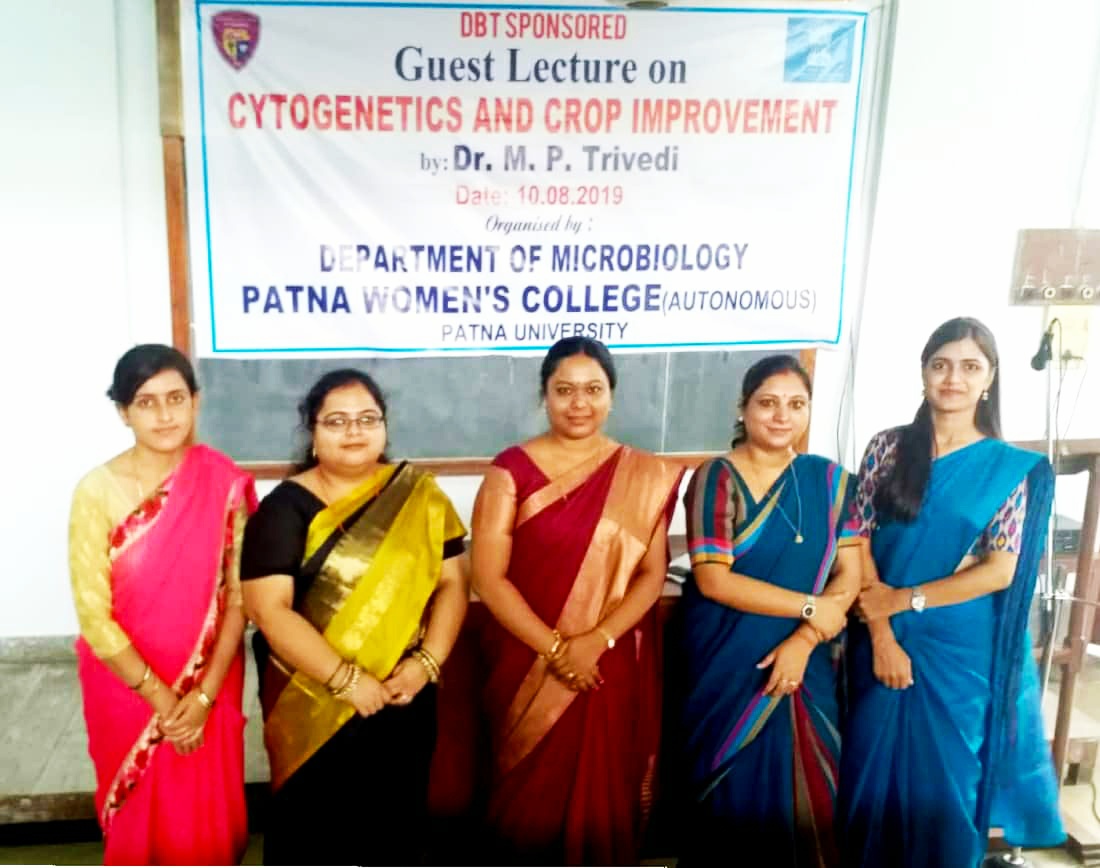
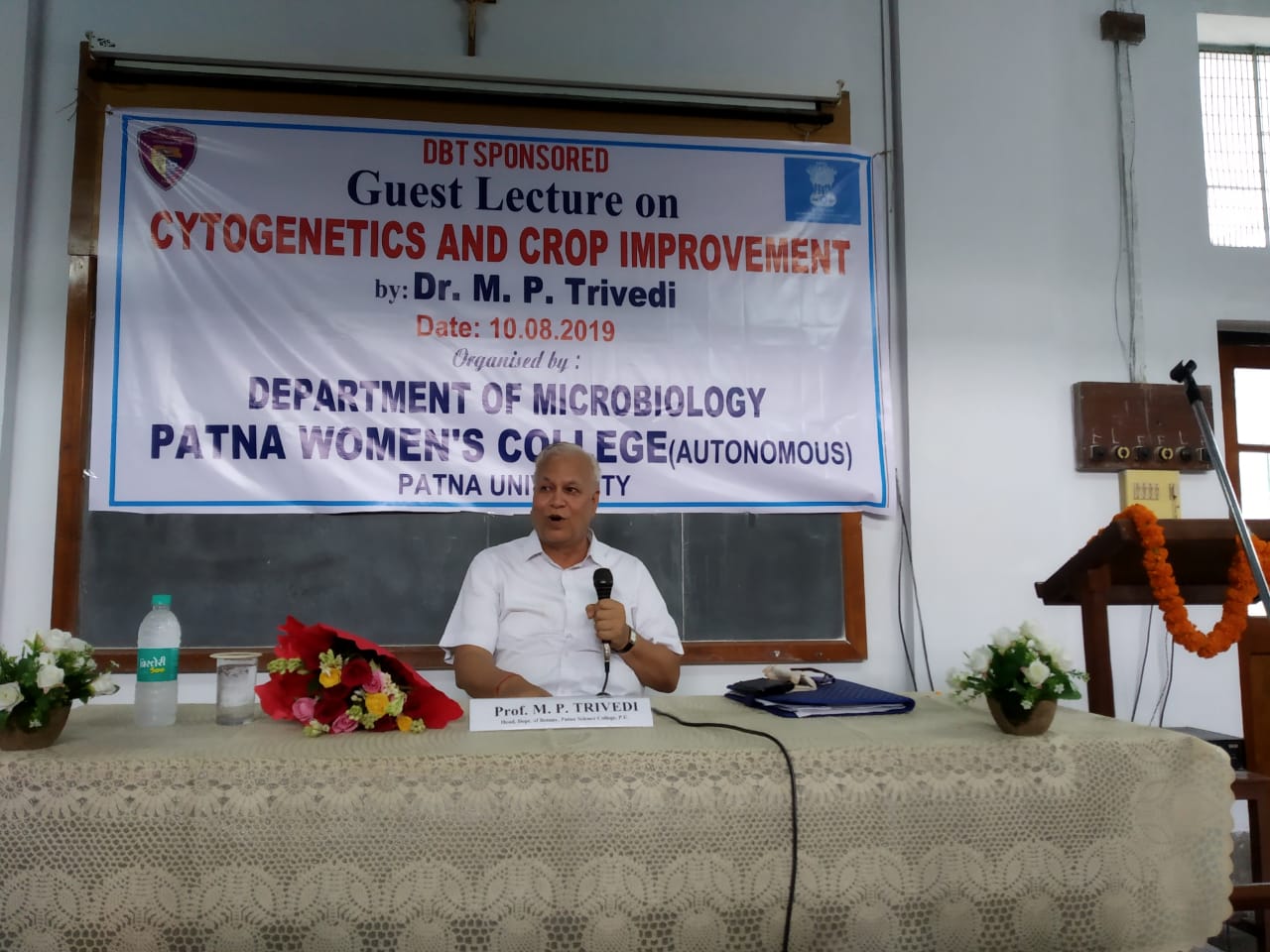
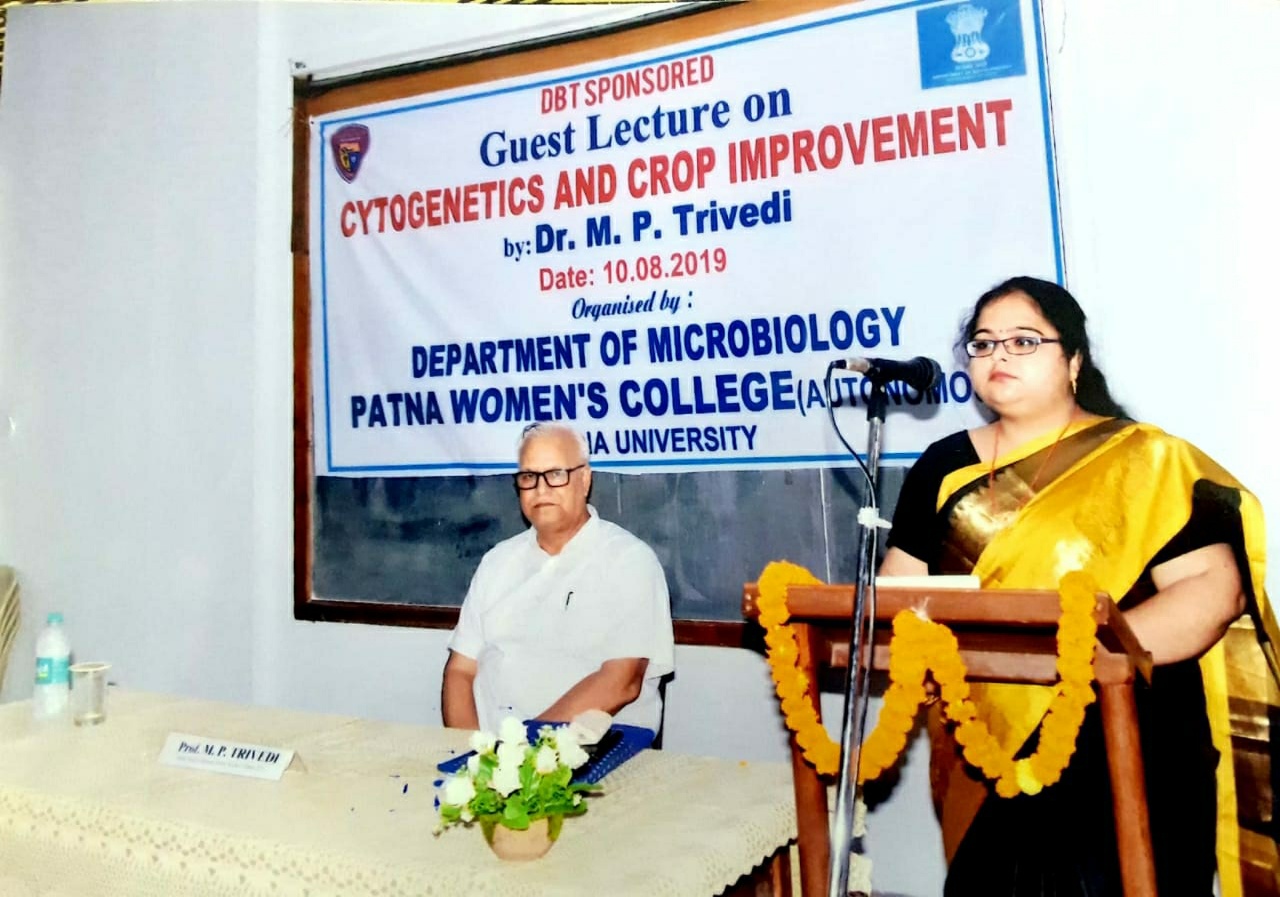
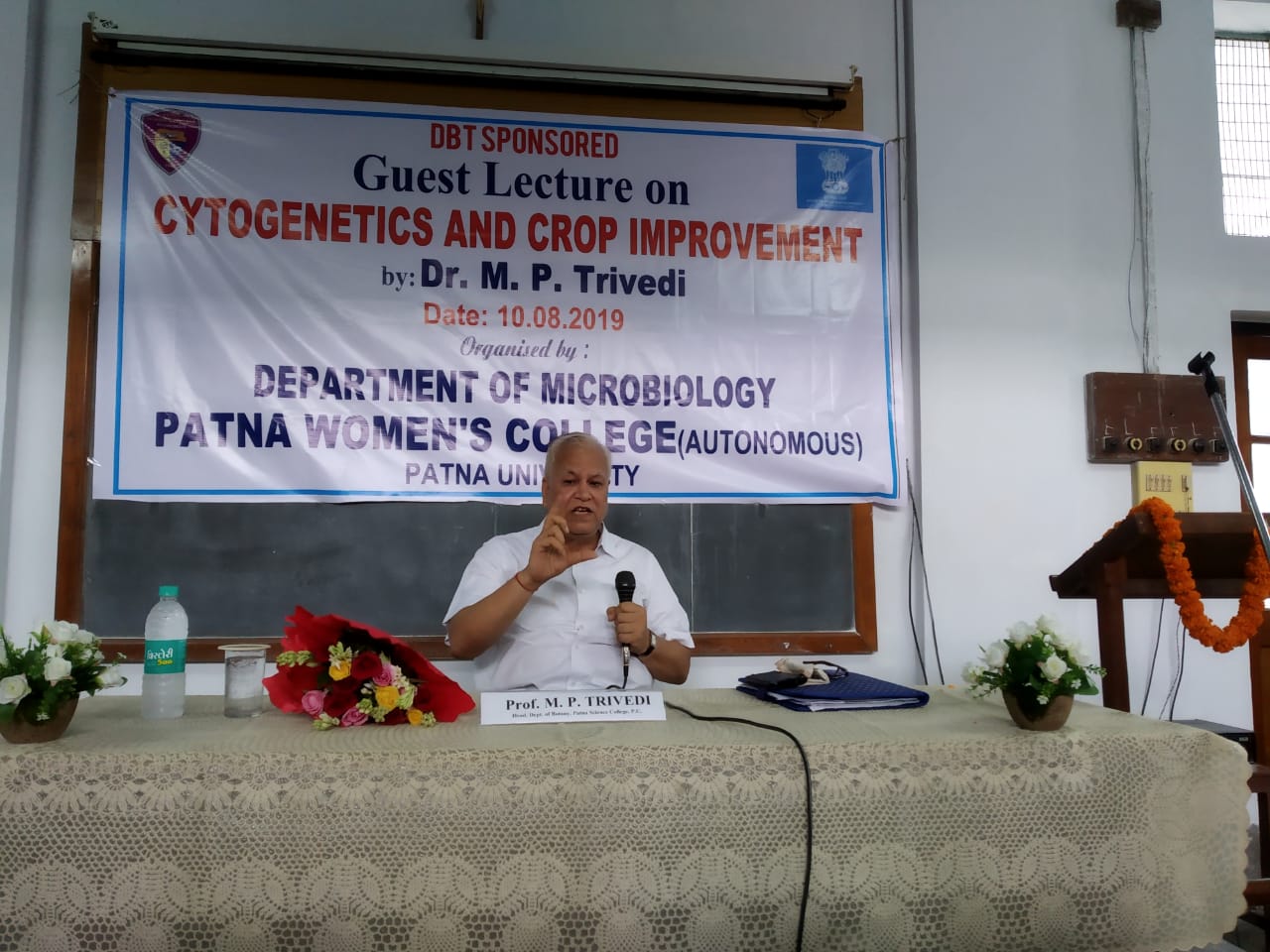
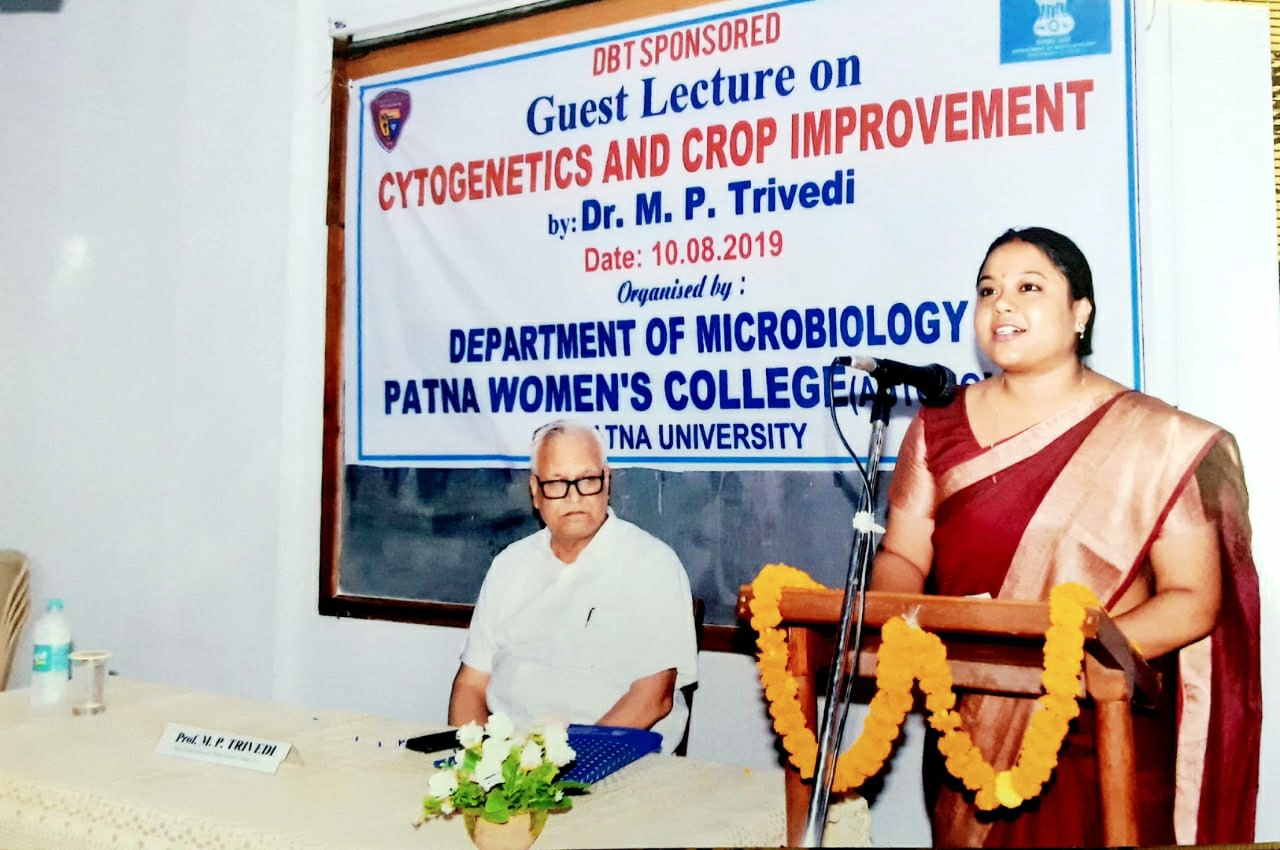
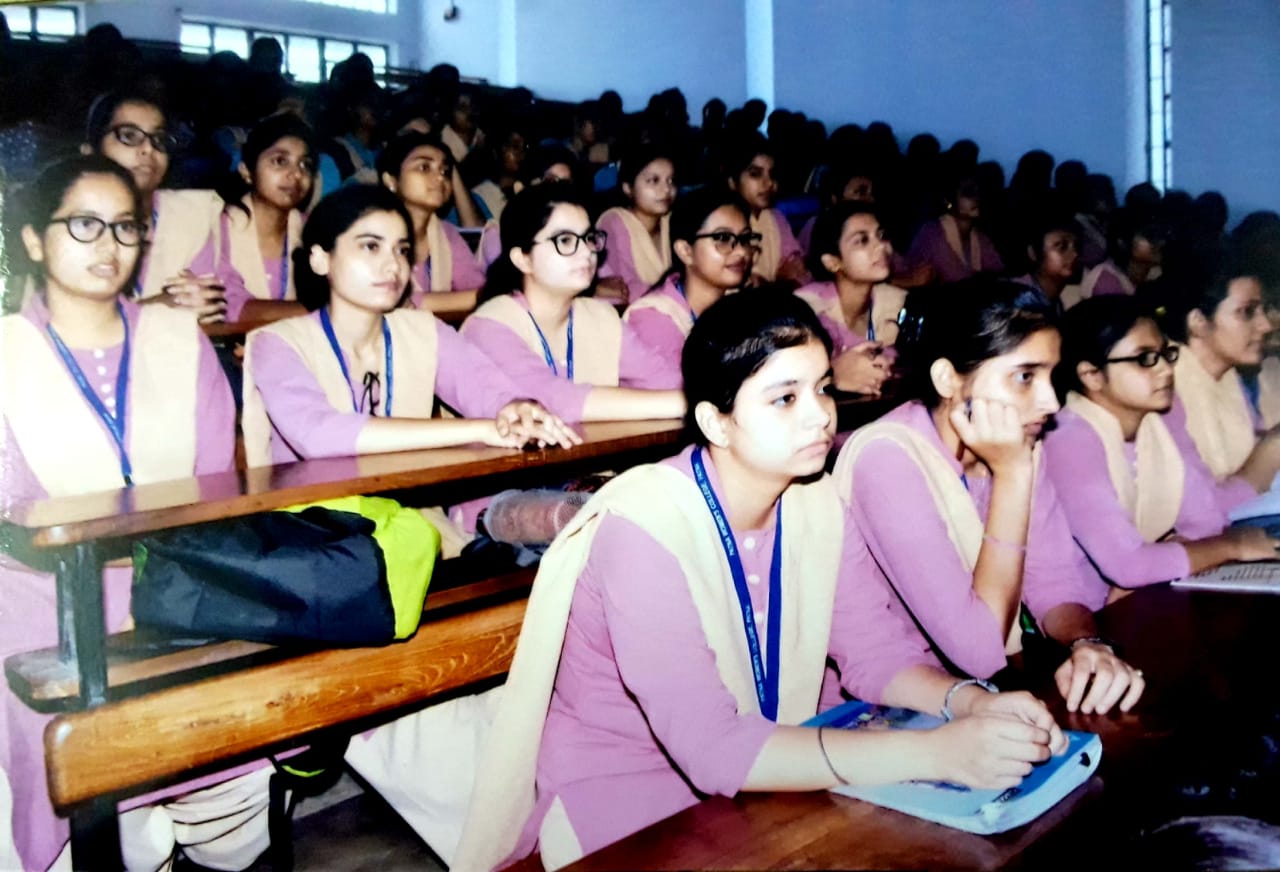
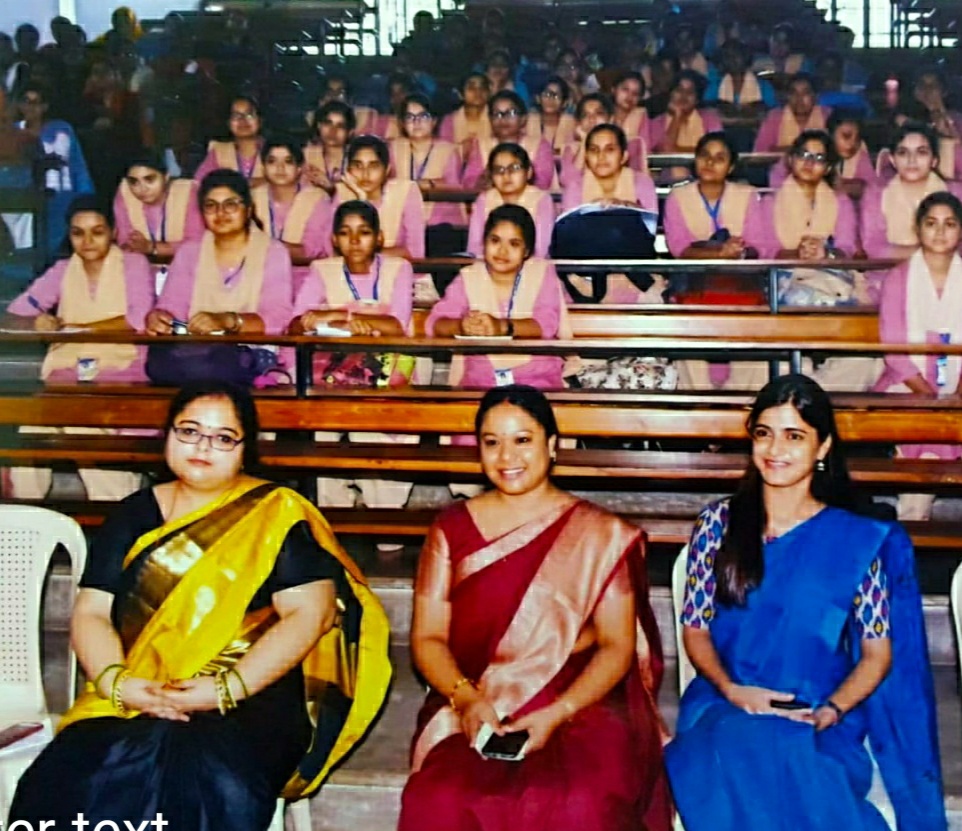
Guest lecture by Prof M P Trivedi on cytogenetics and crop improvement..organised by the department of Microbiology under the Star college Scheme of DBT on 10.8.19

Credit Based Certificate Course
On
BIOINFORMATICS (PWACCBIOINFO)
Department of Microbiology
Patna Women’s College (Autonomous)
Patna University
Introduction
Bioinformatics is a scientific sub discipline that involves using computer technology to collect, store, analyze and disseminate biological data and information, such as DNA and amino acid sequences or annotations about those sequences. It is a dynamic and emerging field of science which deals with an amalgamation of several subjects like biology, chemistry, mathematics, statistics and computer science. It focuses on developing new technologies in the field of medicine, research and biotechnology. Career prospect for bioinformatics includes suitable position in various hospital, healthcare companies, pharmaceuticals companies, data science companies, R&D labs and companies related to biotechnology, drug designing and development, proteomics, bioanalytics and chemical research. This course would include working on a wide range of problems in genomics and proteomics including 3-D structure prediction, multiple sequence alignment, web- based tools for automatic high- throughput sequence annotations and algorithms.
________________________________________
Programme Objectives (POs)
Upon the completion of the Add on course the students will be able to:
PO1: Acquire comprehensive knowledge of major concepts, theoretical principles and practical knowledge of computational biology.
PO2: Acquire the skills in handling computer based tools and techniques used in
science.
PO3: Understand the basics of information and technology and its application in
environmental, health, biodiversity, medical science, and bio mathematical methods development.
________________________________________
Programme Specific Outcomes (PSOs)
Upon the completion of the Add on course the students will be able to:
PSO1: Understand basic concepts of computational, statistical or mathematical
methods for the analysis of large biological datasets.
PSO2: Acquire practical skills of standard bioinformatics tools like BLAST, Clustal
W, data base search.
PSO3: Practical skills on data acquisition, system for storing, searching, and
accessing data, applying or combining sophisticated methods into data
analysis pipelines.
________________________________________
Course Structure
Course Code Course Title Credits
Paper I Basics of Bioinformatics 2 Credits
Paper II Structural Bioinformatics 2 Credits
Paper III PROJECT WORK 2 Credits
Total Credits: 6
________________________________________
COURSE AT A GLANCE
BIO 1—Basics of Bioinformatics (2 Credits)
Course Outcome
1. Understand the basic knowledge of bioinformatics, its history and application.
2. Develop the use of different bioinformatics tools used in biological system.
3. Learn different biological database for nucleic acids and proteins.
4. Apply basic bioinformatics tools.
UNIT I: Introduction to computational Biology and Bioinformatics
A. Different definitions of bioinformatics
B. History of Bioinformatics
C. Emergence of Bioinformatics as a separate discipline
D. Application of bioinformatics and scope of bioinformatics
UNIT II: Tools of Bioinformatics
A. Detailed description and use of different bioinformatics tools
B. FASTA
C. BLAST
D. BLAT, RasMol, Clustal W in biological systems.
UNIT III: Biological database and its types
A. General introduction of biological database
B. Nucleic Acid database (NCBI, DDBJ and EMBL)
C. Protein Database (PDB, Swisprot, PHYRE 2)
D. Structure Databases
UNIT IV: Sequence Alignment
A. Introduction to sequences
B. Alignments and dynamic programming
C. Local Alignment and global alignment.
D. Pair wise alignment (BLAST and FASTA) and multiple sequence alignment
Practical:
1. Database search.
2. Sequence retrieval from database.
3. Sequence alignment.
4. Identification of mutants.
BIO III-Structural Bioinformatics (2 Credits)
Course Outcome
1. Understand the methods of macromolecule structure.
2. Apply the knowledge of different protein structure tools.
3. Demonstration of different biological database.
4. Comprehend the different structural features of RNA.
UNIT I: Introduction to macromolecule structures
A. Fundamentals of X-Ray diffraction.
B. NMR; Spectroscopy of macromolecules.
C. Protein structure: Primary, Secondary, Super-secondary, Domains, Tertiary,
dynamics, Tertiary and Quaternary.
UNIT II: Methods of Protein Tertiary Structure Prediction
A. Homology modeling.
B. Fold recognition.
C. Protein folding
D. Molecular dynamics of protein.
UNIT III: Reading frames and its expression
A. Translating DNA into proteins
B. Reading DNA from files in FASTA format
C. Reading frames
D. Regular expressions, restriction maps and restriction enzymes.
UNIT IV: Structural Features of RNA
A. Primary, secondary, tertiary structure.
B. Introduction to RNA secondary structure prediction
C. Methods for RNA secondary structure prediction
D. Limitation of RNA secondary structure prediction
Practical:
1. Conversion of nucleic acid to protein.
2. Protein secondary structure prediction.
3. Protein tertiary structure prediction.
4. Prediction of protein properties.
BIO Ill— PROJECT WORK (2 Credits)
Candidate must take up a project work where they can apply their theoretical
knowledge.
FACULTY
Qualified, trained and experienced teachers of the college and experts from
outside in this field.
________________________________________
Evaluation Pattern
The students will be evaluated at the end of the course on the basis of written examination, assignment, project work, internship and viva-voce. Pass certificate will be awarded by the college to the students securing 45% and above.
________________________________________
Pattern of Grades
Marks Level of Performance Grade
226 – 300 Outstanding A+
181 – 225 Excellent A
151 – 180 Good B
135 – 150 Fair C
________________________________________
Conclusion
The Credit Based Certificate Course on BIOINFORMATICS (PWCCBIOINFO) offered by the Department of Microbiology, Patna Women’s College provides students with a strong foundation in the interdisciplinary field of bioinformatics by integrating biology with computational and analytical tools. The course enhances theoretical understanding as well as practical skills in sequence analysis, database searching, protein structure prediction, and data interpretation. Through hands-on training, project work, and exposure to modern bioinformatics software and databases, students gain valuable technical competence applicable in research, healthcare, biotechnology, and pharmaceutical industries. Overall, the programme prepares learners for advanced studies, research opportunities, and emerging career prospects in computational biology and life sciences.
Credit Based Certificate Course on Bioinstrumentation (PWCACCBIOINSTRU)
________________________________________
Introduction
Bioinstrumentation is a credit-based add-on certificate course designed to enhance the practical and technical competencies of undergraduate life-science students. The course focuses on providing hands-on training in bio-instrumentation, molecular and analytical techniques, laboratory safety practices, and basic data interpretation skills, which are essential for modern biological research and industry applications. The programme aims to bridge the gap between theoretical knowledge acquired in the classroom and practical skills required in research laboratories, diagnostic centers, and biotechnology-related industries. Through structured laboratory sessions, demonstrations, and guided project work, students gain exposure to commonly used biological instruments and experimental techniques. Bioinstrumentation prepares students to become industry- ready, research-oriented, and academically confident, thereby improving their employability, internship readiness, and ability to undertake higher studies or research projects in the field of life sciences.________________________________________
Programme Objectives (POs)
Upon the completion of the Add on course the students will be able to:
PO1: Acquire a clear understanding of the principles, functioning, and applications of commonly used bio-instruments in biological laboratories.
PO2: Understand basic laboratory techniques and molecular biology experiments by following standard operating procedures and safety guidelines.
PO3: Acquire appropriate laboratory practices including sample preparation.
________________________________________
Programme Specific Outcomes (PSOs)
PSO1: Operate basic bio-instrumentation and laboratory equipment by following standard operating procedures and biosafety guidelines.
PSO2: Perform essential molecular and analytical laboratory techniques with accuracy and technical competence
PSO3: Record, analyze, and interpret experimental data while adhering to good Laboratory Practices and professional ethics.
________________________________________
Course Structure
Course Code Course Title Credits
BIS-I Fundamentals of Bioinstrumentation 2 Credits
BIS-II Bio-Analytical Instrumentation 2 Credits
BIS-III PROJECT WORK 2 Credits
Total Credits: 6
________________________________________
Detailed Syllabus
Course Code: BIS-I (2 Credits)
Course Outcomes:
• Understanding the basics of bioinstrumentation
• Understand the basic knowledge of solution preparation.
• Develop the use of optical instruments in bioanalysis.
• Learn basic analytical techniques.
UNIT I: Introduction to bioinstrumentation
A. Definition and scope of bioinstrumentation
B. Components of biomedical instrumentation systems
C. Importance in Biological and Medical Research
D. Biomedical instrumentation standards
UNIT II: Basics of Laboratory solutions
A. Molarity and normality of common acids and bases.
B. Preparation of solution, dilutions, percentage solutions.
C. Molar, molal, and normal solutions.
D. Knowledge about common toxic chemicals and safety measures in their handling.
UNIT III: Advanced Microscopic Techniques
A. Introduction to advanced microscopy
B. Atomic Force Microscopy
C. Scanning Probe Microscopy
D. Scanning Tunneling Microscopy
UNIT IV: Analytical Techniques
A. Centrifugation: Principle and Instrumentation.
B. Analytical centrifugation.
C. Differential centrifugation.
D. Application in Biological sciences
Practical:
A. Numerical problems of molarity, molality and normality.
B. Preparation of working solution from stock solutions.
C. Separation of cellular components using centrifugation
D. Study of images through micrograph
________________________________________
Course Code: BIS-II (2 Credits)
Course Outcomes:
• Understand various imaging techniques for biochemical analysis.
• Knowledge of DNA sequencing methods.
• Comprehend spectroscopic techniques.
• Apply basic serological techniques in medical diagnosis.
UNIT I: Biophysical Techniques.
A. FISH
B. Chromosome banding.
C. X-ray crystallography
D. NMR
UNIT II: DNA Sequencing Tools
A. Introduction to DNA sequencing
B. Principles of DNA Sequencing
C. Types of sequencing
D. Application of Sequencing
UNIT III: Spectroscopic Techniques
A. Introduction of spectroscopy
B. IR spectroscopy
C. Fluorescence Spectroscopy
D. Application of Spectroscopy
UNIT IV: Serological Techniques.
A. Antigen–antibody reaction.
B. ELISA.
C. Western Blot.
D. Application in Biomedical Research
Practical:
A. Estimation of biomolecules using standard curve.
B. Analysis of DNA sequence
C. Estimation of DNA purity and concentration
D. Study of steps and interpretation of western blot image
________________________________________
BIS III – PROJECT WORK
Candidate must take up a project work where they can apply their theoretical knowledge.
________________________________________
EVALUATION
The students will be evaluated at the end of the course on the basis of written examination, assignment, project work, internship and viva-voce. Pass certificate will be awarded by the college to the students securing 45% and above.
________________________________________
DISTRIBUTION OF MARKS
Paper I: Theory (70) + Internal Assessment (30)
Paper II: Theory (70) + Internal Assessment (30)
Paper III: Project (75) + Viva-Voce (25)
THE PATTERN OF GRADES WILL BE AS FOLLOWS
Marks Level and performance indicated Grade
226-300 Outstanding A+
181-225 Excellent A
151-180 Good B
135-150 Fair C
________________________________________
FACULTY
Qualified, trained and experienced teachers of the department of Microbiology and experts from outside in this field. ________________________________________
CONCLUSION
The Bioinstrumentation Certificate Course equips students with essential theoretical knowledge and practical laboratory skills required in modern biological and biomedical sciences. Through exposure to advanced instruments, analytical techniques, molecular biology methods, and project-based learning, students develop scientific aptitude, technical competence, and professional ethics. The course successfully bridges the gap between classroom learning and real-world laboratory applications, preparing students for higher studies, research opportunities, internships, and employment in biotechnology, healthcare, diagnostics, and allied life-science industries. Overall, the programme fosters research-oriented thinking, confidence, and industry readiness among aspiring life-science professionals