Highlights of the Department
- Established in 1954 offering a B.A. Programme to students, the Department of Political Science has evolved into one of the flagship and intellectually vibrant departments of the College. The Department introduced B.A. (Hons.) in 1976 and M.A. (Hons.) in 2020, consistently broadening its academic horizons in response to contemporary educational needs. It adopted the Choice-Based Credit System (CBCS) in 2018 and further introduced the National Education Policy (NEP) for undergraduate courses from 2023 onwards.
- Renowned for its culture of academic excellence, critical inquiry, and democratic engagement, the Department is committed to outcome-based learning that combines intellectual rigour with holistic development. The Department regularly organises national and international seminars, conferences, symposiums, memorial lectures, debates, workshops, educational excursions, and extension activities on issues of national and global significance. Activities such as Mock Parliament, Preamble Reading, celebration of Constitution Day, Voter’s Day, Ambedkar Jayanti, Human Rights Day, Independence Day and visits to Legislative Assemblies and Councils provide students with experiential learning and a deeper understanding of democratic institutions and constitutional values.
- The Department also actively conducts Student Council and PUSU Elections and conducts several engaging sessions and activities through its vibrant and intellectually engaging clubs, the Electoral Literacy Club and Jagriti-The Constitutional Values and Ethics Club, which foster civic awareness, democratic participation, and ethical reflection among students. In addition, the Department offers two Add-on courses in Human Rights and Value Education, and a certificate course in Women’s Studies enriching students with socially relevant and value-oriented learning experiences.
- The Department takes immense pride in its accomplished faculty members, whose contributions in research, publications, conference presentations, curriculum development, and academic mentorship have substantially enhanced the scholarly prestige of the institution. Through its unwavering commitment to scholarship, innovation, and public engagement, the Department has firmly established itself as one of the most prestigious and dynamic centres of higher learning in the College.
Teaching Staff






Activities


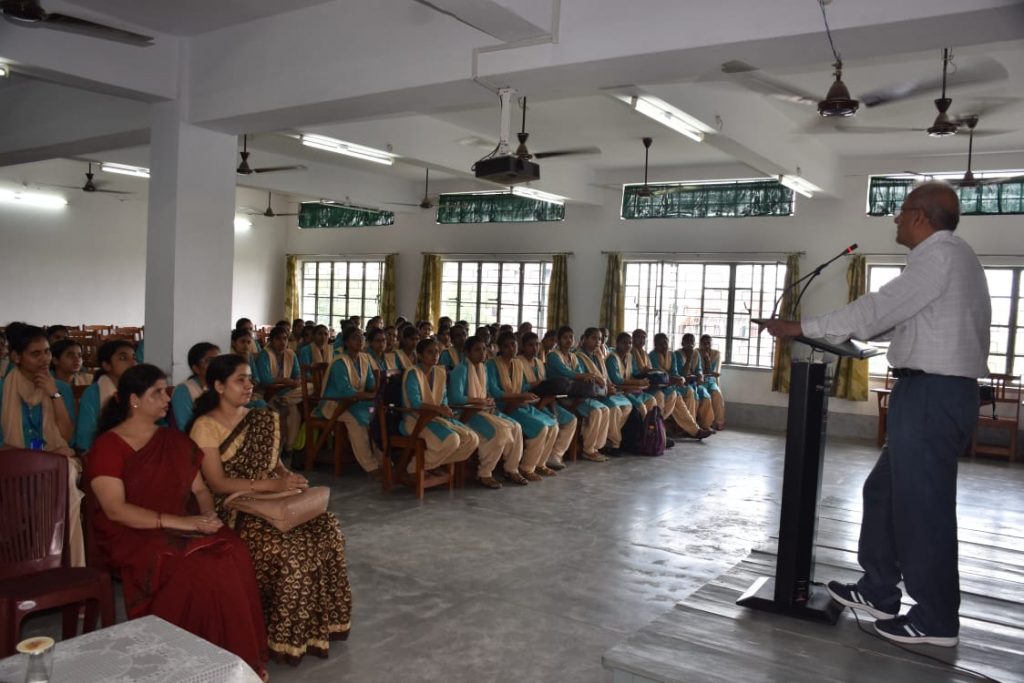


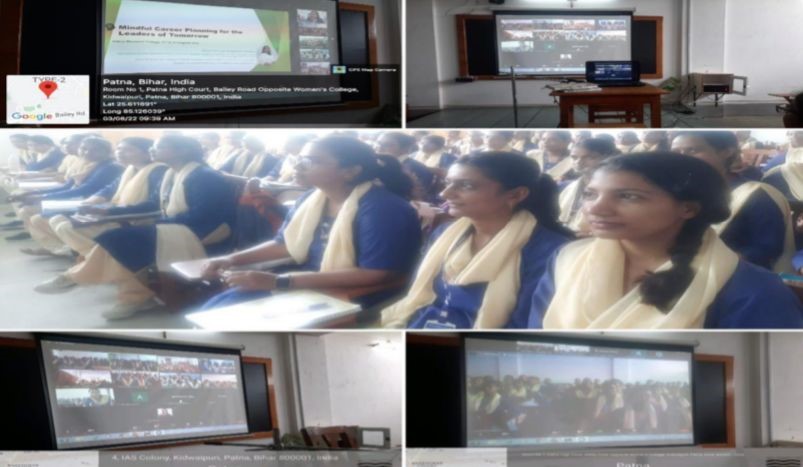
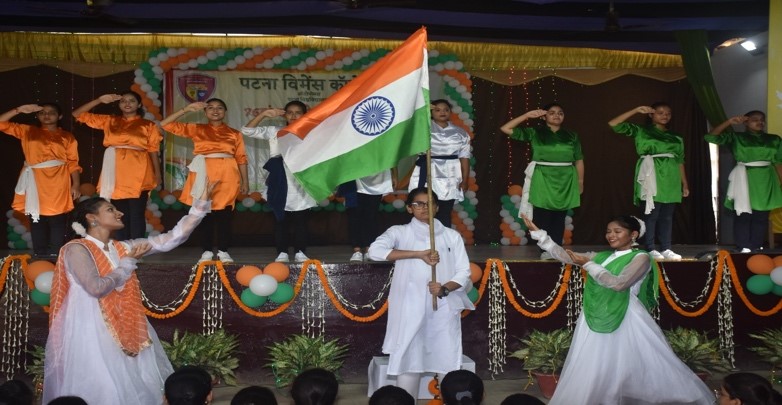




Report on Personality Class-16 May 2022
A discussion facilitated by Dr. Miranda Das was held on a video about Plato’s Allegory of Cave with the students of B. A. Semester 4 on 16 May 2022 at 04:00 PM on Zoom platform. It was about ten prisoners in a cave who would view shadow of different things and people reflected on the wall from outside and believe that was the reality. One of the prisoners somehow got himself outside the cave and encountered light and real people, objects, and animals. Through this encounter with real world and objects, the prisoner felt enlightened and went back to the cave to free others also so that others might also have the same experience. But the rest of the prisoners did not agree with him and stayed back in the cave believing that the shadow of things and people on the wall of the cave was the reality, not the world that existed outside.
The students were asked to react to the video. They expressed that most of the time we desist from accepting new ideas because it had been unknown to us. One of the students opined that expressing or accepting new ideas could create problems for a person as it happened in Galileo’s case when he proposed against the church that it was the earth that moved around the sun, not the other way round. It was underscored that one must come out from their comfort zone for new ideas and enlightenment. The discussion was completed on a cautionary note that one must also be careful not to be easily swayed by every new idea that they come across.


REPORT ON PERSONALITY CLASS ON SIGNIFICANCE OF HOUSEHOLD ACTIVITIES-DR VINITA PRIYEDARSHI
Department of Political Science conducted a personality class for BA Semester II. The students discussed on the topic Significance of Household activities. Girls told how their mother worked whole day and collectively took a resolve to help their mother. They even suggested the idea of giving their mother a day off and doing entire Household work by themselves with the help of their father and brothers. The online session was conducted on zoom at 01:00 PM by Dr Vinita Priyedarshi.

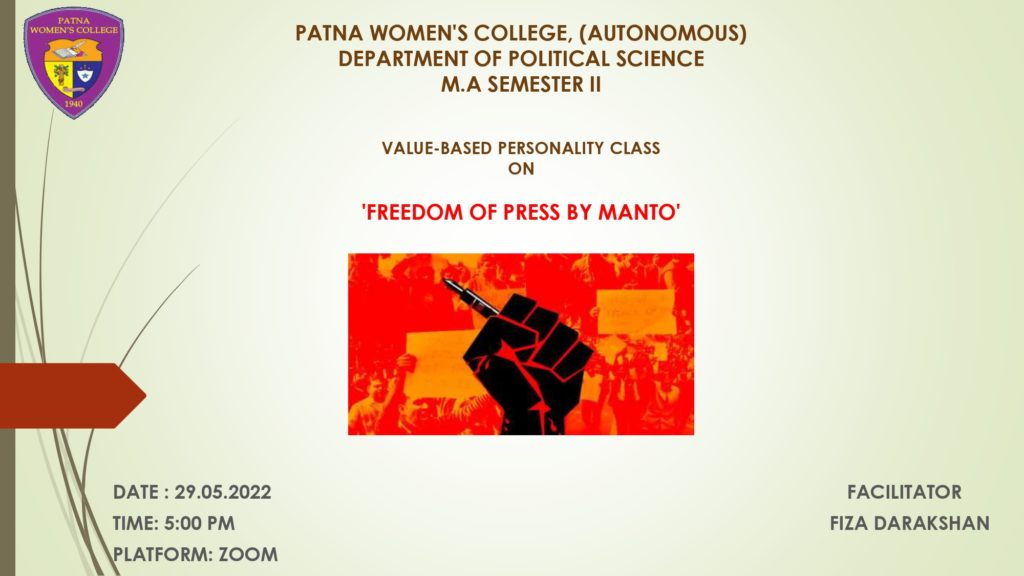
REPORT ON ONLINE PERSONALITY CLASS- FREEDOM OF PRESS BY MANTO-FACILITATED BY FIZA DARAKSHAN
A short video clip by was shown to students of MA SEM II(2021-22) on 29th March,2022(Sunday) from 05:00 p.m. to 05:30 p.m. The online session was facilitated by one of the faculties of the Department, Fiza Darakshan. The video shown to students was 19 minutes long clip from the movie ‘MANTO’, comprising largely of address given by Sadat Hassan Manto on being criticized for his progressive thoughts and blatant writing. The video helped to understand the value of free speech and how press must be free from biasness. The topic was chosen to mark the Press freedom day which is observed on 3rd May of every year. This was followed by a discussion between and among students. The students put up their opinion and suggested ways to enhance free press and the value of it being fourth pillar of democracy. The discussion ended with some valuable points and inspiring acknowledgement from the students.

REPORT ON FAREWELL CELEBRATION OF M.A SEMESTER IV, 2022
Students of M.A Semester II of the Department of Political Science organized Farewell celebrations for M.A semester IV students on 31.05.2022 at 10:00 am in MTH. The programme was started with a group song based on friendship and reminiscing college days, followed by experience sharing session of passing out batch. The programme also included dance performance and games in between. The programme ended with Head and other faculty members showering best wishes and blessing over semester 4 students. Refreshments and gifts were distributed to all and it concluded with group photography session.

The Department of Political Science organized a virtual presentation by the students of BA Semester II on the theme Unsung Heroes of Bihar to celebrate Azado ka Amrit Mahotsava. Students showed presentation on the lives and works of known and unknown personalities like Jay Prakash Narayan, AN Sinha, Ram Pyari Devi, Tara Rani Shrivastava, Malati Devi Choudhary etc.
The program was organized on 25th of April from 5 to 7 pm on Zoom.
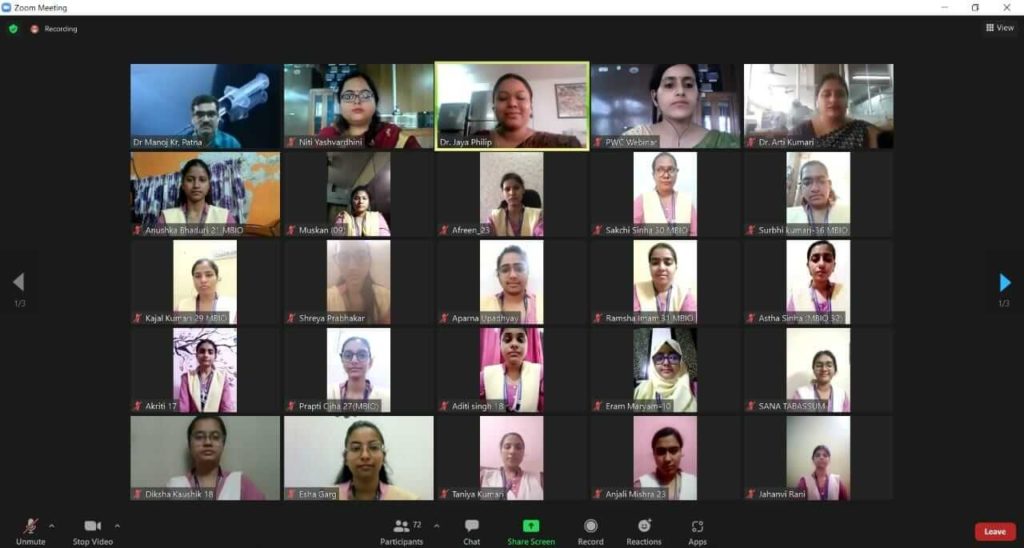
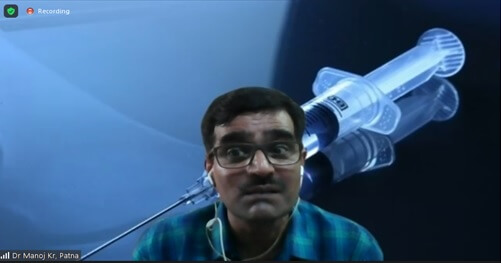
An online guest lecture was organised by the Department of Microbiology on the topic “Covid 19 Vaccine: The Science Behind It” on 28.04.2022 from 01:00 PM onwards. Dr. Manoj Kumar, Head, Department of Veterinary Microbiology, Bihar Animal Sciences University, Patna was the resource person. Nearly eighty students attended the lecture. The event started with welcome address by Dr. Jaya Philip, Head, Department of Microbiology. Dr. Kumar highlighted the basic structure of SARS CoV-2 virus and its mode of infection and also elucidated its importance in designing the coronavirus vaccine. He highlighted the different strategies involved in designing and delivery of vaccine with special reference to coronavirus vaccine. He explained his contribution in controlling bird flu at Patna Zoo and shared his views on his first hand experience in handling this virus. At the end students put forth their questions and got their queries and doubts regarding the coronavirus cleared. Vote of thanks was proposed by Dr. Preeti Swarupa. Dr. Niti Yashvardhini was the moderator of the event.


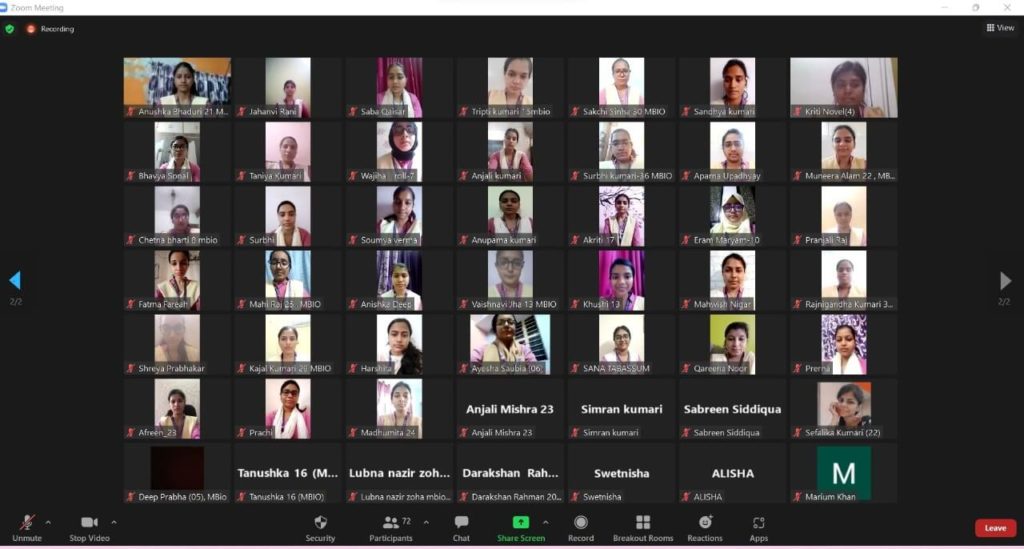
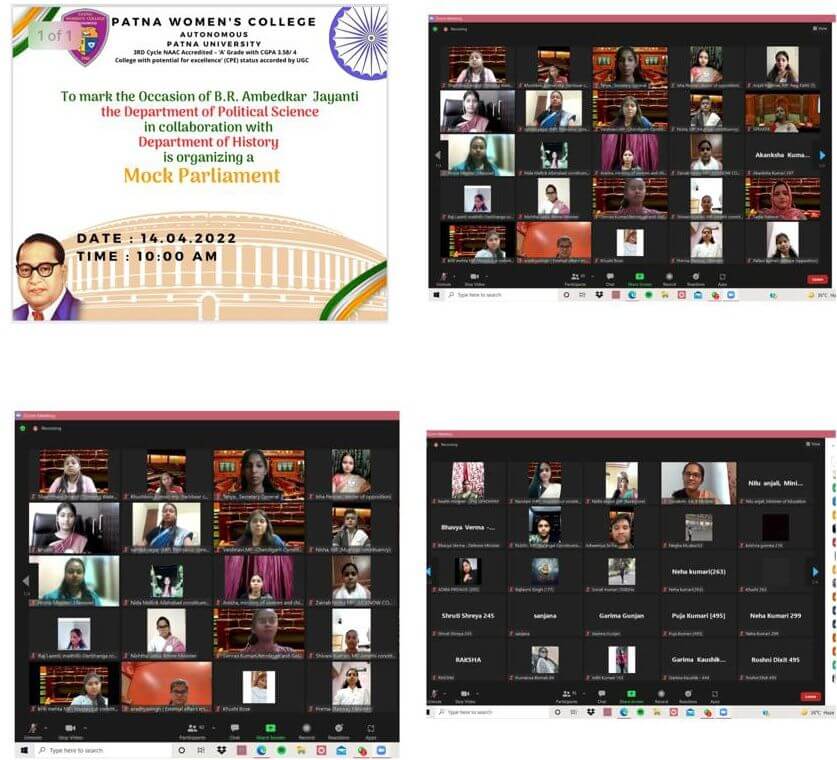
Mock Parliament was organised by the Department of Political Science in collaboration with Department of History on 14th April 2022 on the occasion the 131st Jayanti of B.R. Ambedkar, at 10 a.m on virtual platform zoom.
Students of the Department from BA Semester II from both the departments participated in the program.
Mock Parliament’s are a creative and unique way to teach students about the functioning of the Parliament along with inculcating cherished constitutional and parliamentary values in them. In this due process students also learn about the rights and duties of citizens and parliamentarians. Mock Parliament’s also instil in students the life skill of public speaking and debating in order to enhance their persona while making them well informed citizens.
During the proceedings students acted as Speaker, Prime Minister, Leader of the Opposition, Council of Ministers, Secretary General of Lok Sabha and Member of Parliaments.
They took oath of office in various languages namely Hindi, English, Urdu, Sanskrit and Bengali showcasing the diversity of India. They debated on various issues of women reservations, employment, rise in petroleum prises, two front war and asked question’s from the ministers. Finally deliberations were held on Women Reservation Bill and how it will affect the rights of women and empowers them. The bill was passed after the third reading.
The program was jointly presided by the Head of the Department Dr. Vineeta Priyadarshi and Dr. Sister Celine Cresta A.C. The program was coordinated by Mr. Adweetiya Sinha, Assistant Professor, Department of Political Science.
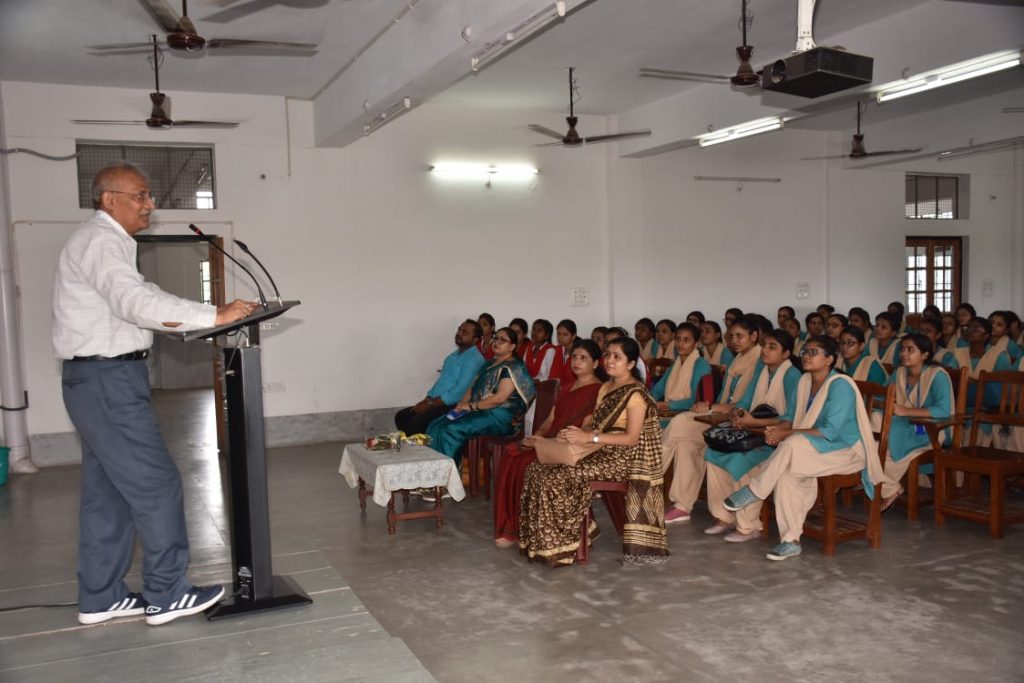
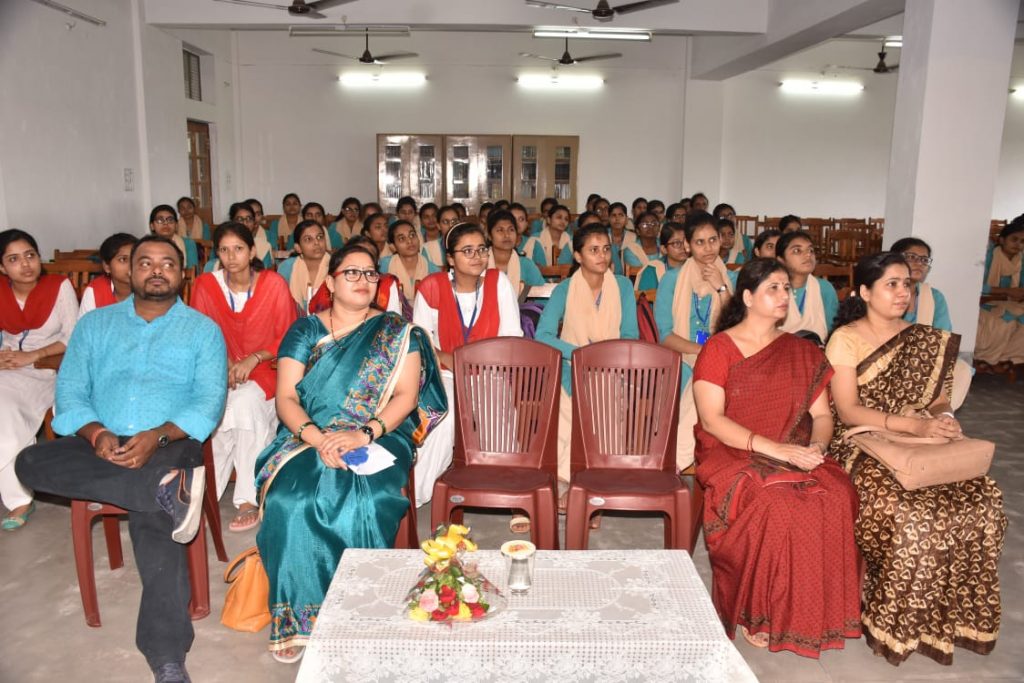
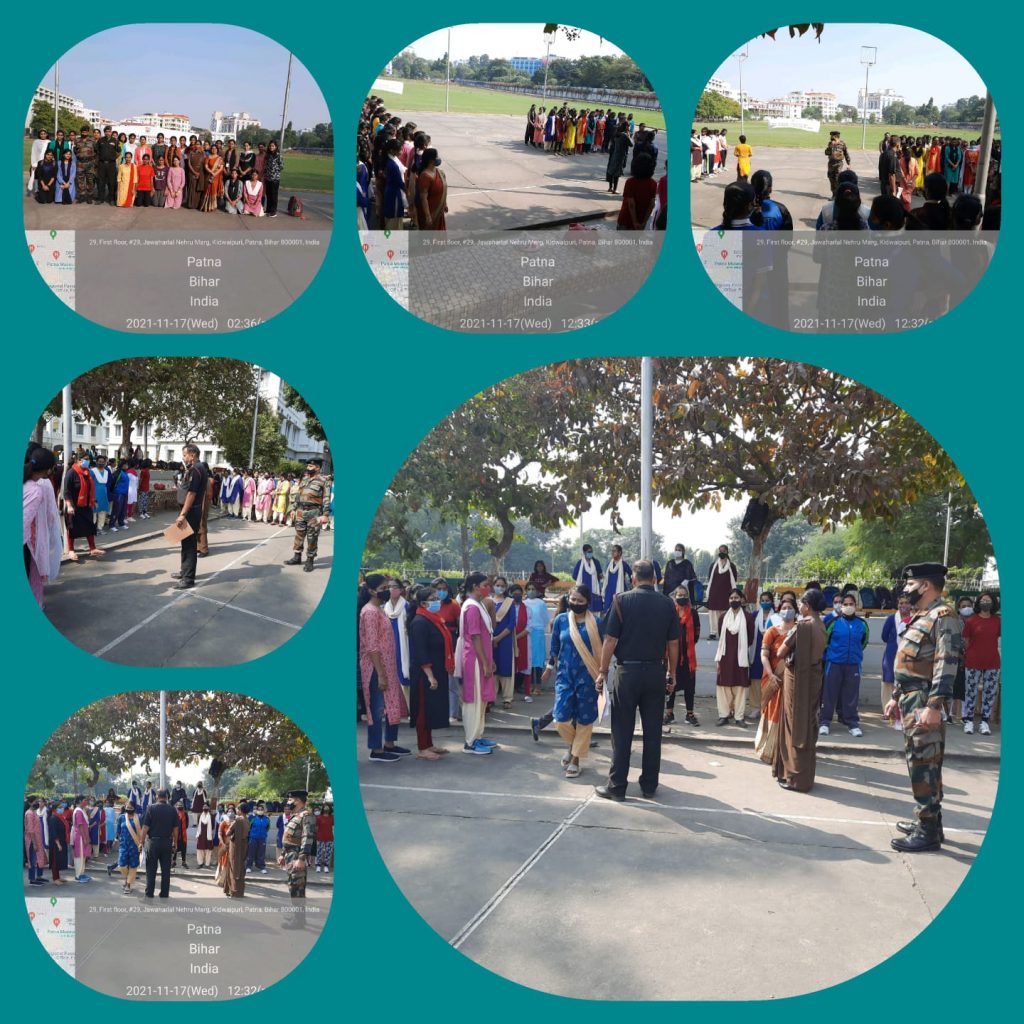
NCC Enrollment for BA Semester I was held on 17th November 2021 in the basketball ground from 12 noon onwards. Out of 96 students who had registered their names 26 were selected. Nayab subedar U K Thakur, GCI Supriya, Hawaldar Ranvijay and ANO Dr Vinita Priyedarshi selected the students on the basis of their heights and their performance in drill and 100 meter race.
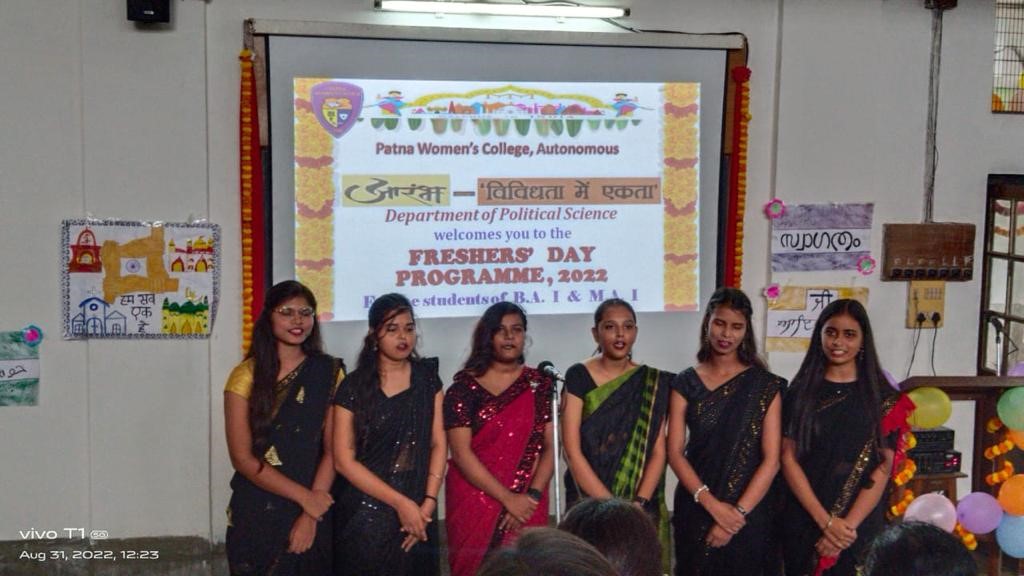
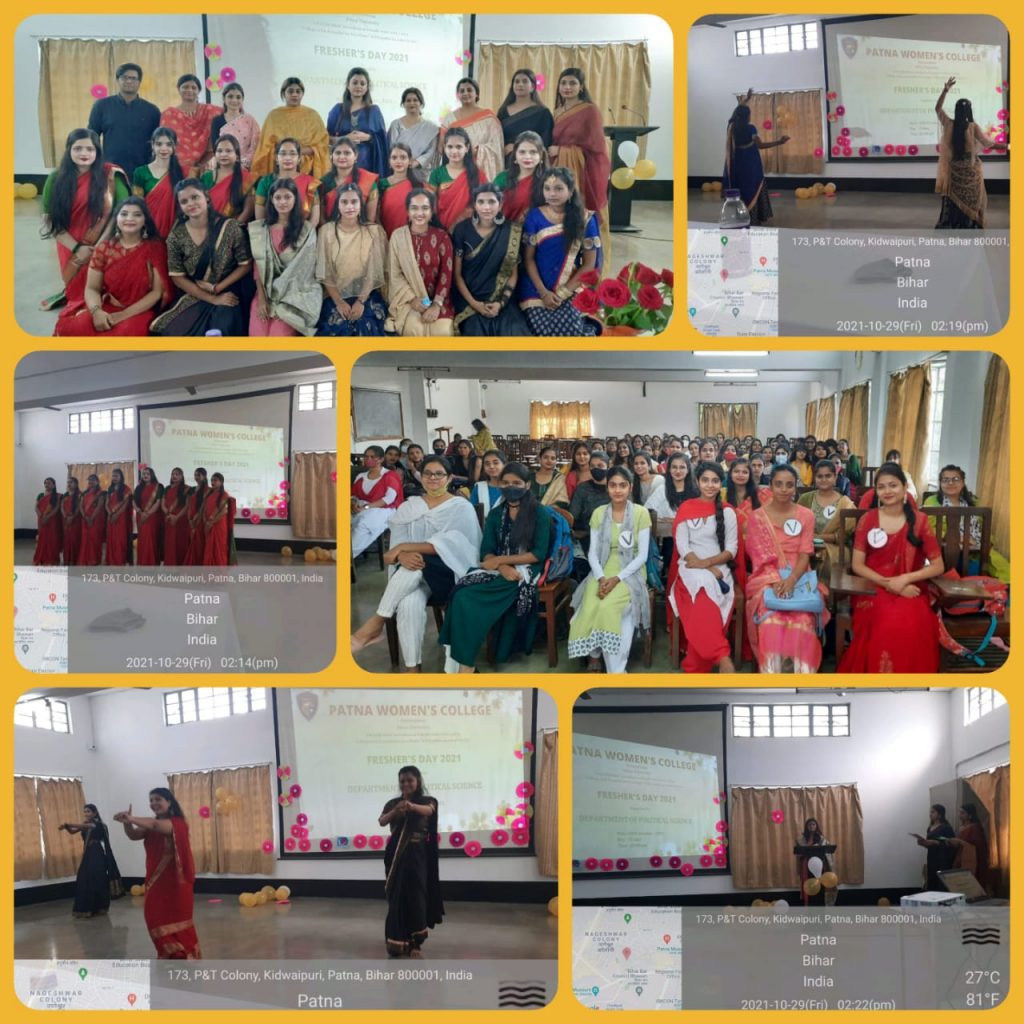
Department of Political Science organized Freshers Day on 29th of October 2021 in MTH at 2.00 pm. Students of BA I and MA I presented a semi classical dance followed a group dance. Students also recited self composed poetry. The program started with a welcome song followed by a motivational address by the Head of the Department. Cultural coordinators as special guests and faculties of the Department attended the program
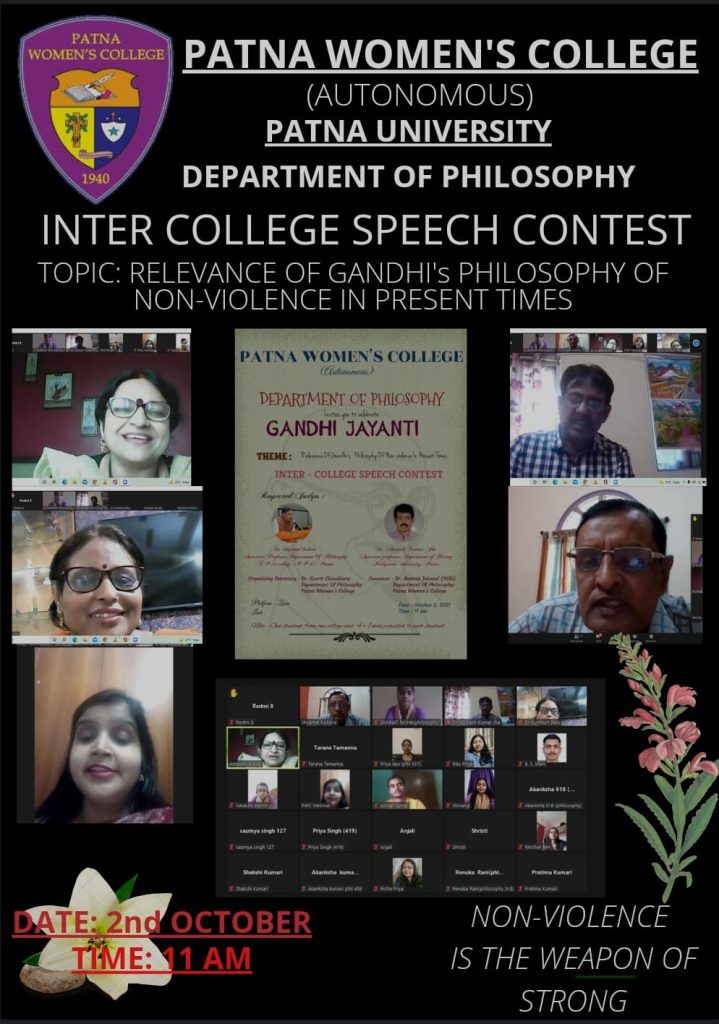
Department of Political Science on 2nd October 2021 screened a documentary GANDHI by Marc Wallace followed by an interactive session with the students on the eve of Gandhi Jayanti . 289 students attended the program online on Zoom
A virtual Parent-Teacher’s Meet was organized by the Department of Political Science for BA Semester-I students on PWC LMS Portal on 24.09.2021 from 9:45 am to 11:00 am. The Meet started with the official video of the College followed by address and a Power Point Presentation by the Head of the Department, Dr. Vinita Priyedarshi. She elaborated the Vision, Mission and Core values of the college through the Presentation. This was followed by a brief introduction about the Department and its functioning. Subsequently, a virtual tour of the Department was shown to them. After this, the faculty members briefly introduced themselves.
Finally, an interactive session was conducted whereby parents asked their queries and gave their useful suggestions. The parents were inquisitive mostly about offline classes. Some of the parents also stressed on the need for regular internal assessment. They expressed satisfaction with the online classes and methodology of teaching.
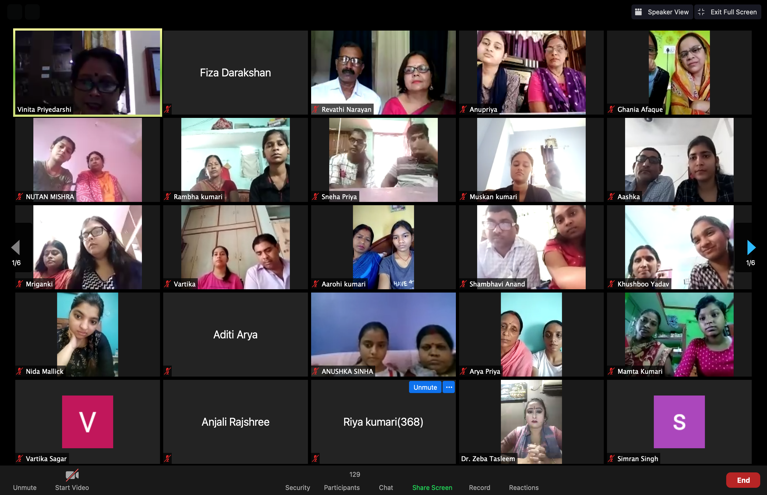
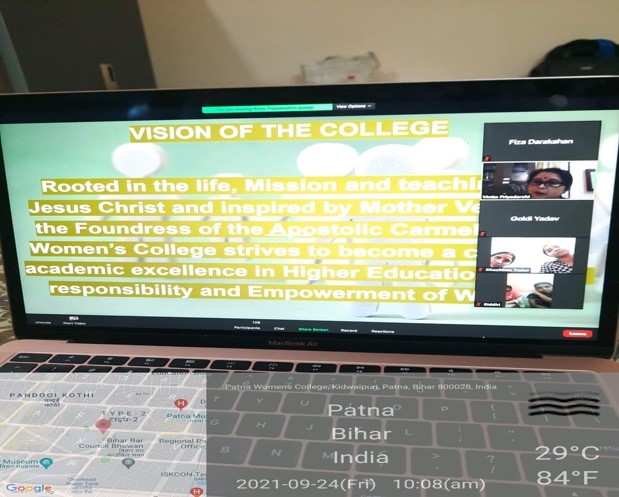
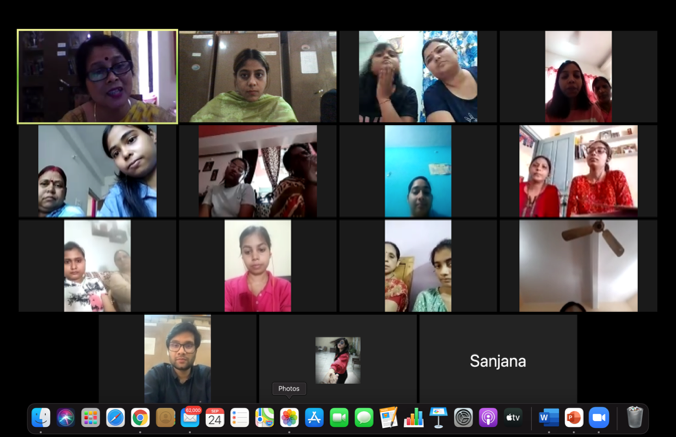
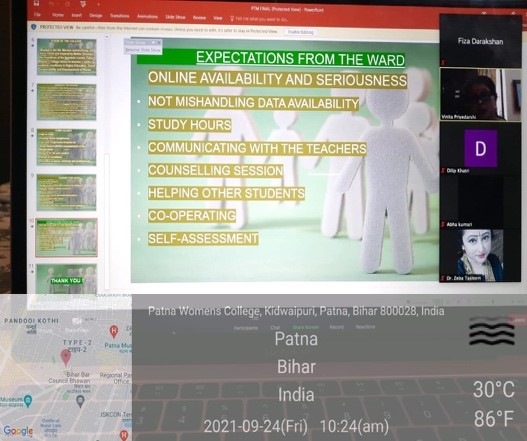
A virtual Parent-Teacher’s Meet was organized by the Department of Political Science for MA Semester-I students on PWC LMS Portal on 24.09.2021 from 11:30 am to 12:15 am. The Meet started with the official video of the College followed by address and a Power Point Presentation by the Head of the Department, Dr. Vinita Priyedarshi. She elaborated the Vision, Mission and Core values of the college through the Presentation. This was followed by a brief introduction about the Department and its functioning. While addressing the parents, the Head focused on the need for self-study as a concomitant corollary to classroom and online teaching. Subsequently, a virtual tour of the Department was shown to them. After this, the faculty members briefly introduced themselves.
Finally, an interactive session was conducted whereby parents asked their queries and gave their useful suggestions. The parents were inquisitive mostly about offline classes. Some of the parents also stressed on the need for regular internal assessment. The discussion also consisted of the importance of career- orientation of the students. Lastly, they expressed satisfaction with the online classes and methodology of teaching.


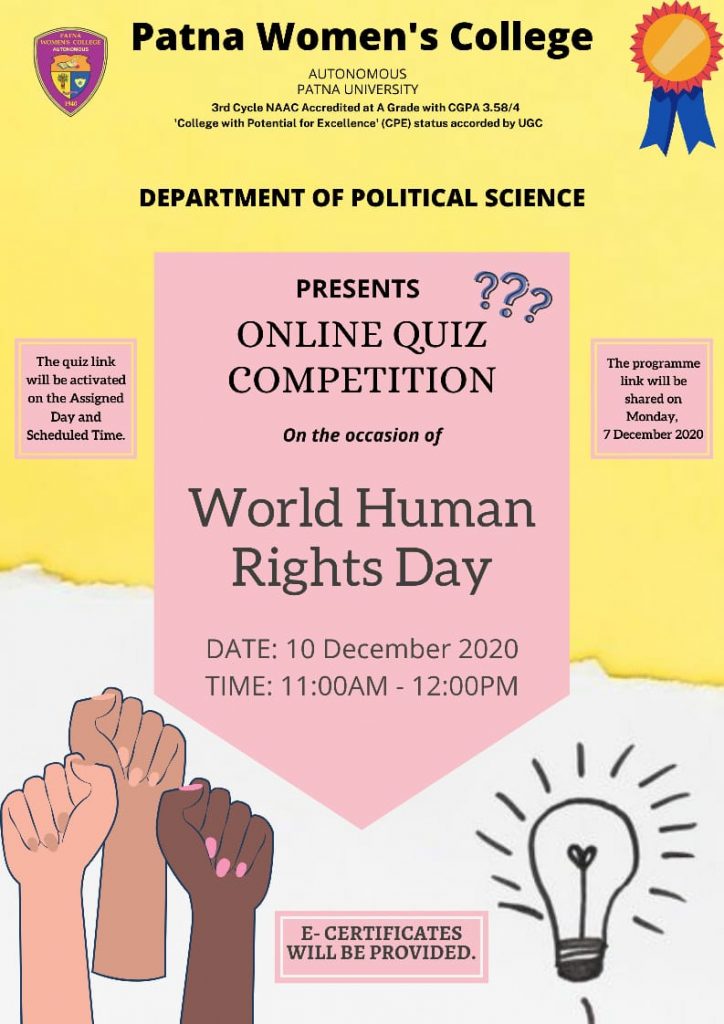


- Department of Political Science organized an online quiz competition to commemorate International Human Rights Day on 10th December 2020. The quiz was open for all and e-certificates were given to the participants.
Download Pdf Quiz competition 2020 - One day online webinar was organized by the Department of Political Science to commemorate VP Mehra birth centenary on 25th of November 2020. Prof. Swaran Singh from JNU and Coln. PK Gautam were the resource persons.
- Department of Political Science organized a Guest Lecture on the occasion of International Women’s Day on Zoom on 6th of March 2021 from 6-7 pm. Dr Papiya Raj from IIT, Patna and Dr Navjoy Simi (IPS) Bihar cadre were the resource persons.
- Department of Political Science organized an Interactive session with DR Yatan Pal Singh Balhara, Visiting Faculty AIIMS, Rishikesh on the topic ‘Managing Anxiety and Depression among students in the Covid Age’ on 5th of May 2021 from 10 to 11 am on Zoom.
- Department of Political Science organized the 75th Independence Day Programme on 14th of August from 4.30 pm onwards. The Programme was streamed on PWC YouTube channel.
- The Department of Political Science organized Fortnightly Exchange of lecture with Sophia Girls College on 14th August from 6-7pm. Students of UG and PG of both the colleges attended the lecture which was held on google meet.
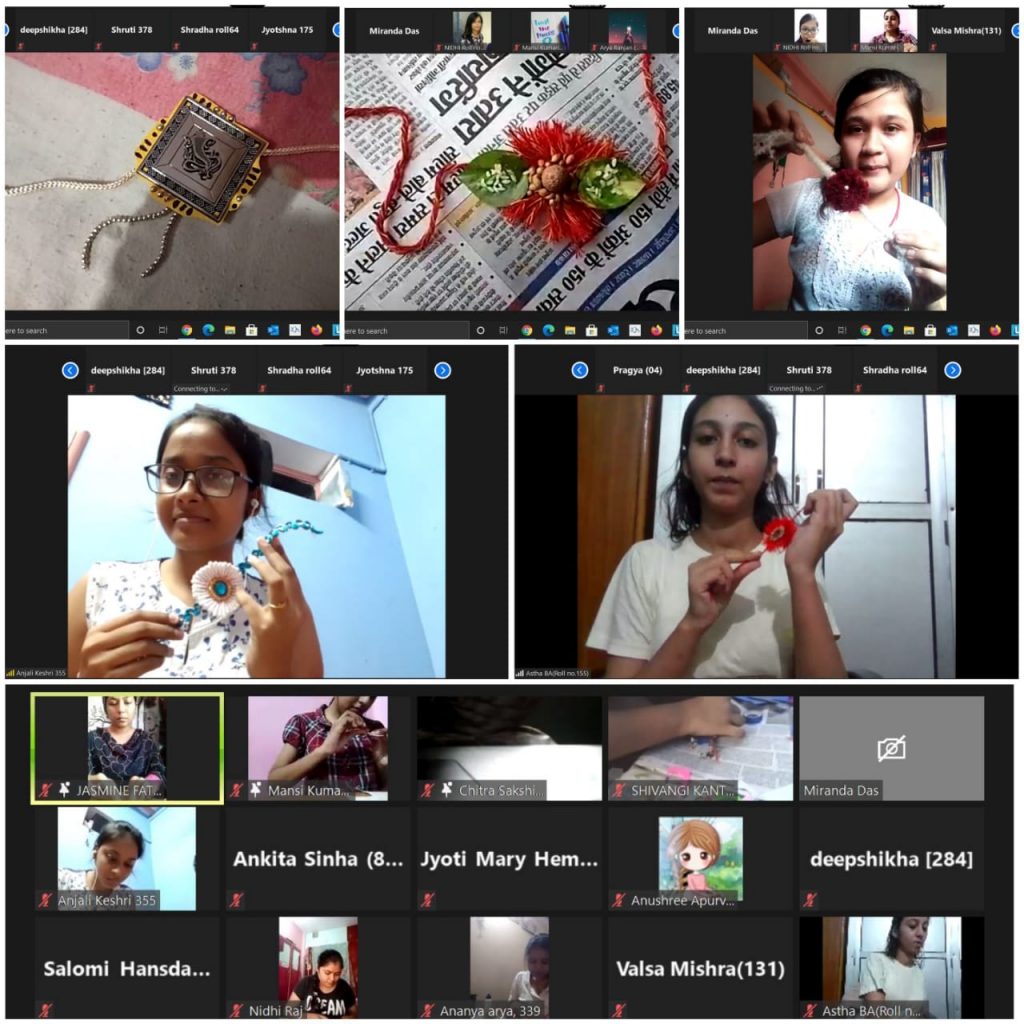
Download Pdf SOPHIA GIRLS’ COLLEGE - The Department of Political Science held online Rakhi competition for BA Semester II, MA Semester II and BA Semester V on 19th of August from 3 to 5 pm. The girls prepared Rakhi out of waste as a mark of their commitment to save Mother Earth by keeping it clean.
Report on Faculty Exchange Programme Lecture
—————————————————————————————————————————————————————-
Department of Political Science held a value based discussion on ‘Learning love and compassion from Mother Earth ‘ with MA SEM II on 26th of June 2021 from 10.45 onwards followed by discussion with the students..
Department of Political Science Patna Women’s College organized Fortnightly Exchange of Lectures with Sophia Girls College Ajmer on 12th of June. The students of BA III and PG of both the colleges attended the lecture. Dr Vinita Priyedarshi of PWC and Dr Neelam Bhatia of Sophia Girls College delivered the lecture. The program was held online on Zoom from 3 to 5 pm.
A video clip from a Swedish movie Force Majeure (2014) was screened for the students of B.A. Semester 5 on the Zoom platform on 15 June 2021. It was followed by a discussion facilitated by Dr. Miranda Das on the role of human values, for instance, care, benevolence, responsibility, and love in adverse situation.

MA Semester II students participated in painting and slogan writing to mark the World Environment Day on 5th of June 2021.
On the occasion of World Environment Day on 5th June 2021 the Department of Political Science of Patna Women’s College Autonomous organised a one of its kind competition among it’s students of BA Semester V. In the competition students were supposed to research and make a presentation on environmental issues based on their research. Full creative freedom was given to students and they could present it in any of the following forms-
- PPT
- Poster
- Poetry
- Story Telling
- Discussion
- Speech
- Farrago of all the above methods of presentation.
Department of Political Science organized a Mock Youth Parliament on the eve of Ambedkar Jayanti on 13th of April from 2.00 to 3.30 pm.
These students of the department of Political Science attended the webinar.
Name of webinar- Art of influencing through communication
Speaker – Siji Varghese (TEDx speaker
Date- 13th july 2020
Time- 4 p.m.
Platform -Zoom
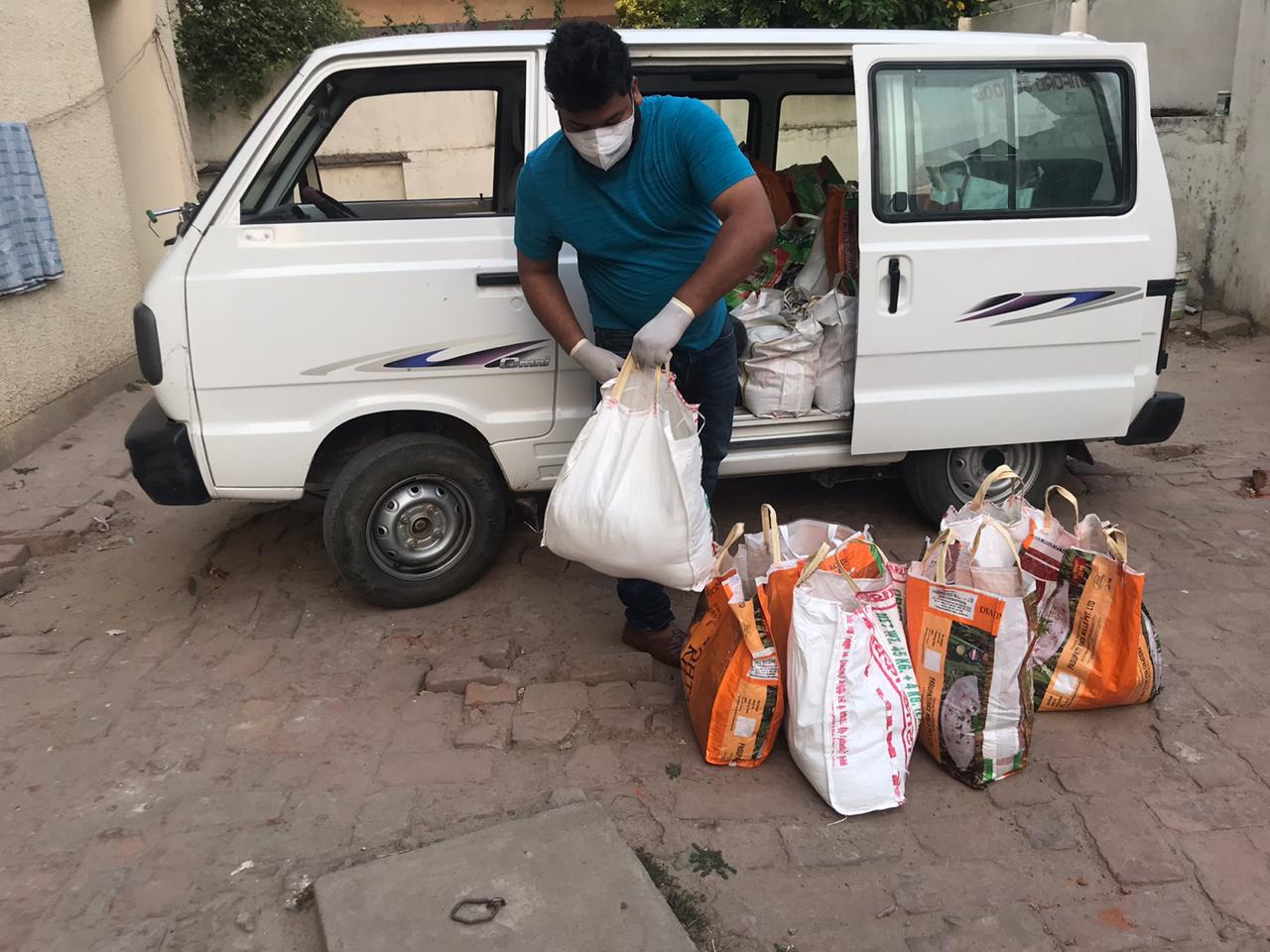
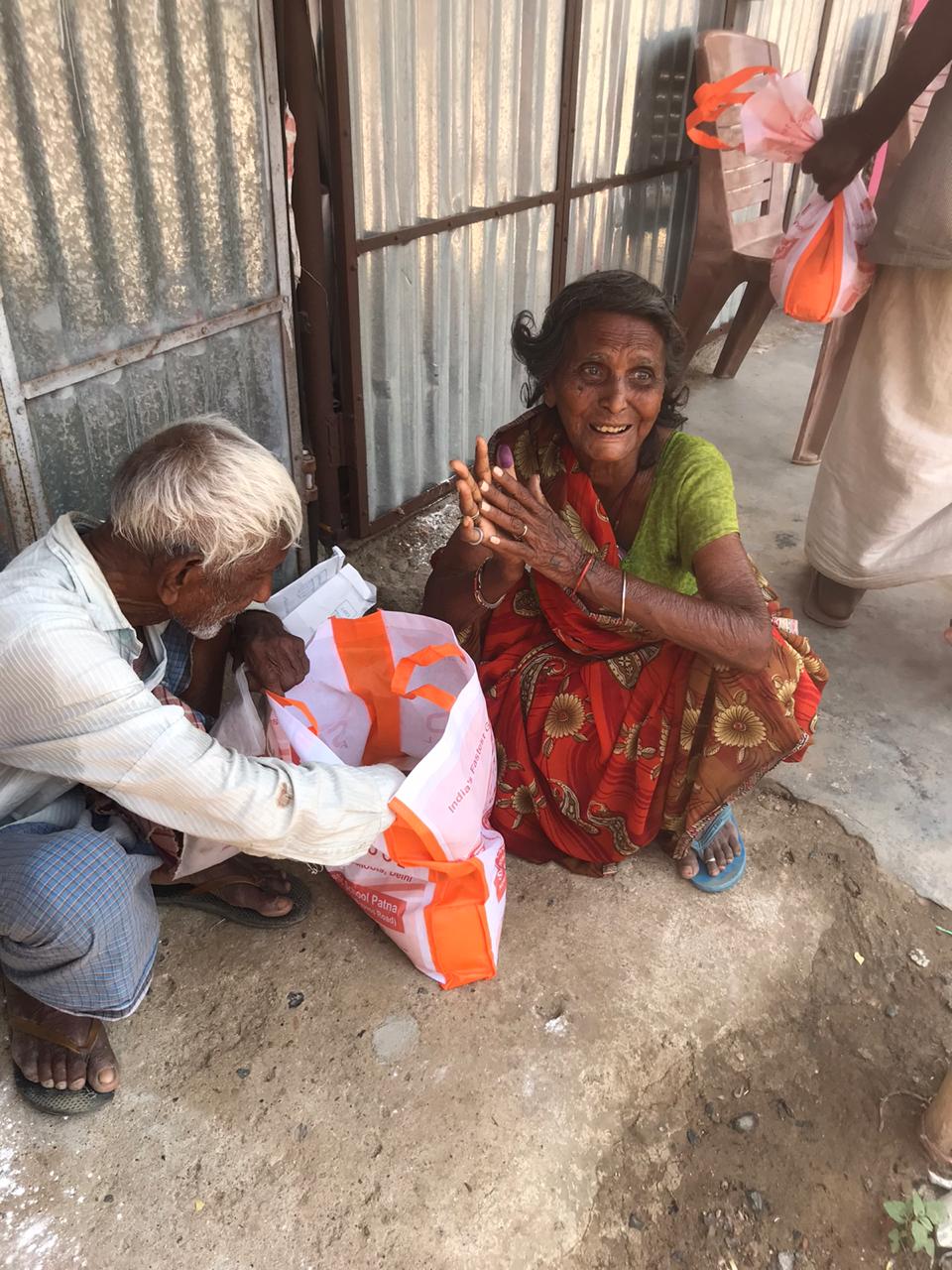
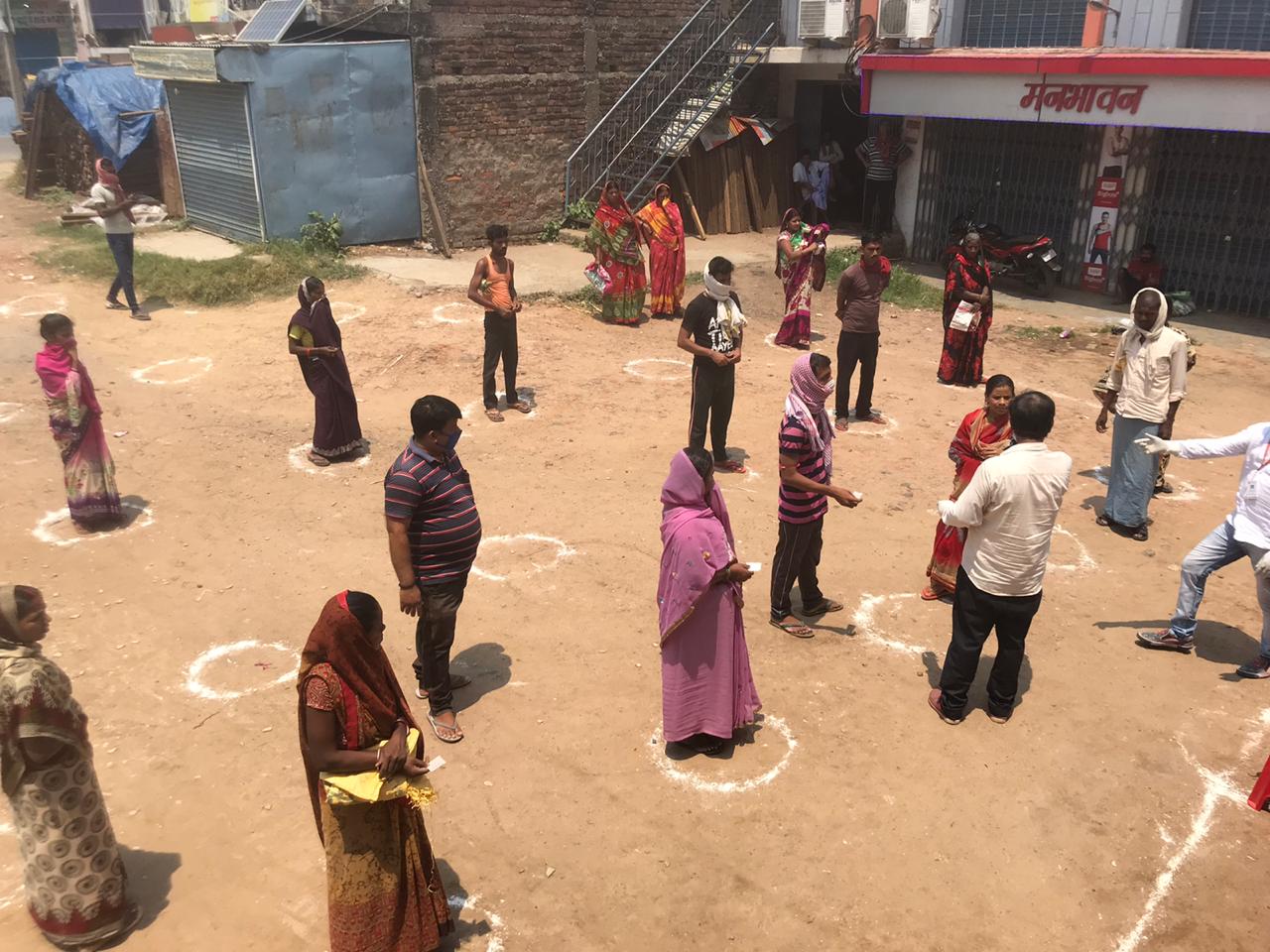
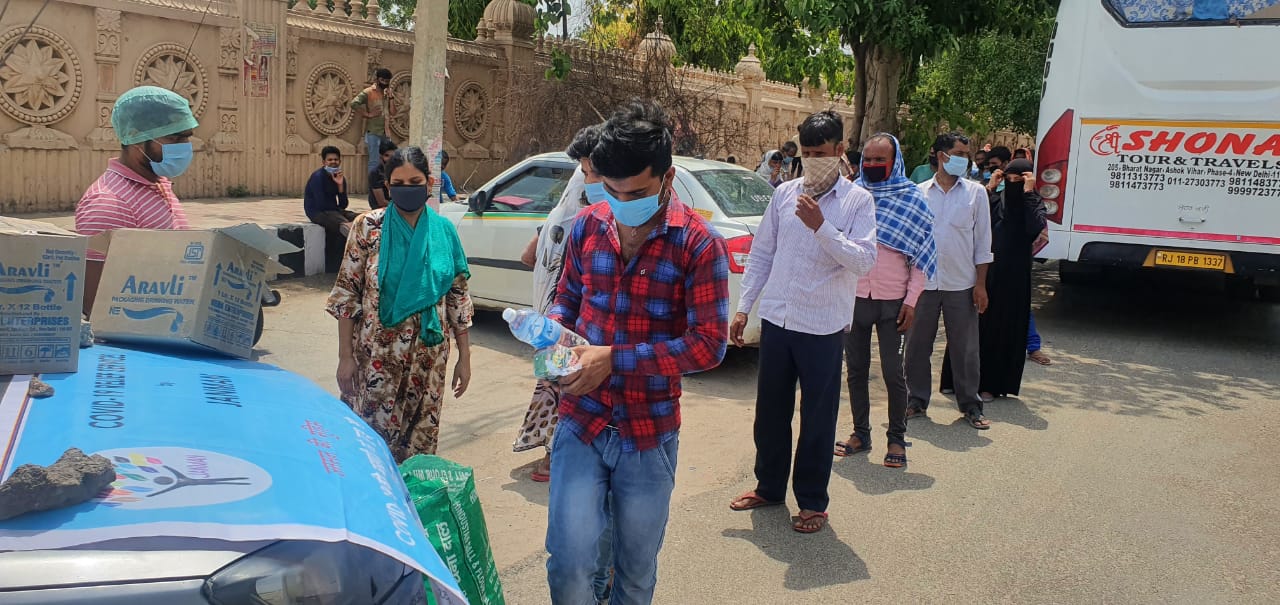
Bhanu Pratap from the Department of Political Science initiated a crowd funding. Rupees 9000 was collected and given to Janman , an NGO which in collaboration with Aaruni charitable trust distributed ration to the migrant workers in Patna and Delhi with this amount . All the teachers of the Department contributed generously for the noble cause


Leadership webinar attended by Dept. of Political science Student
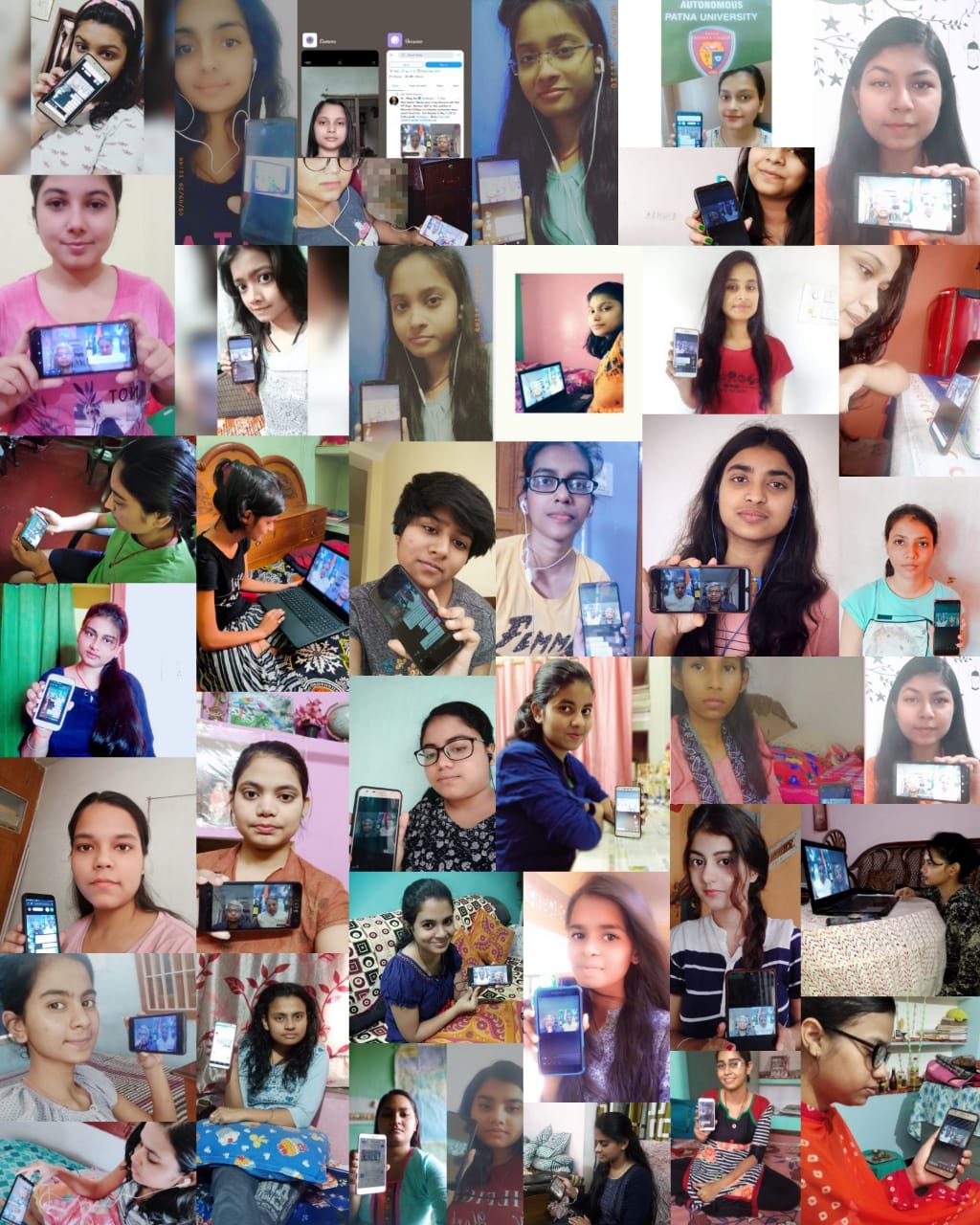
Webinar attended by Political Science students
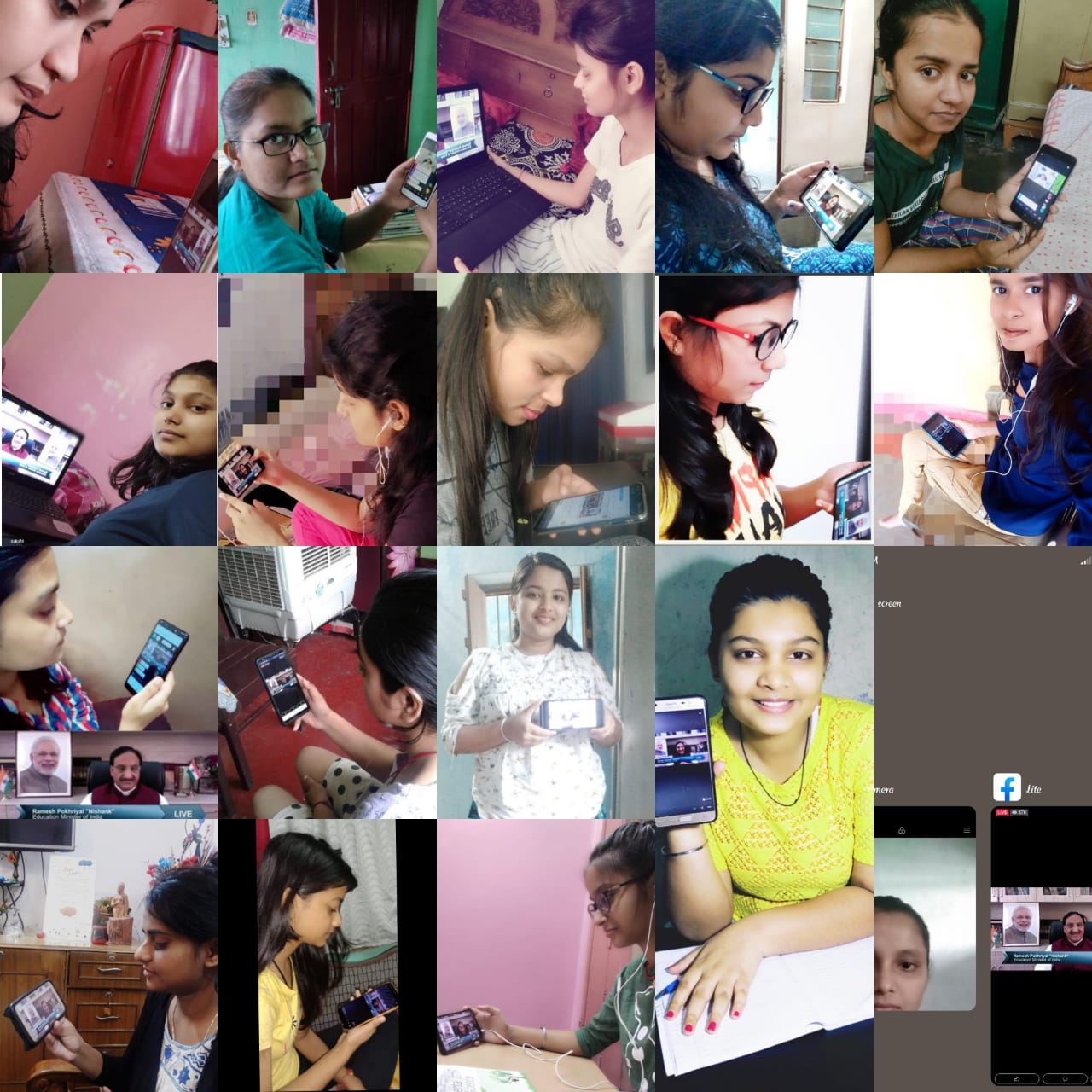
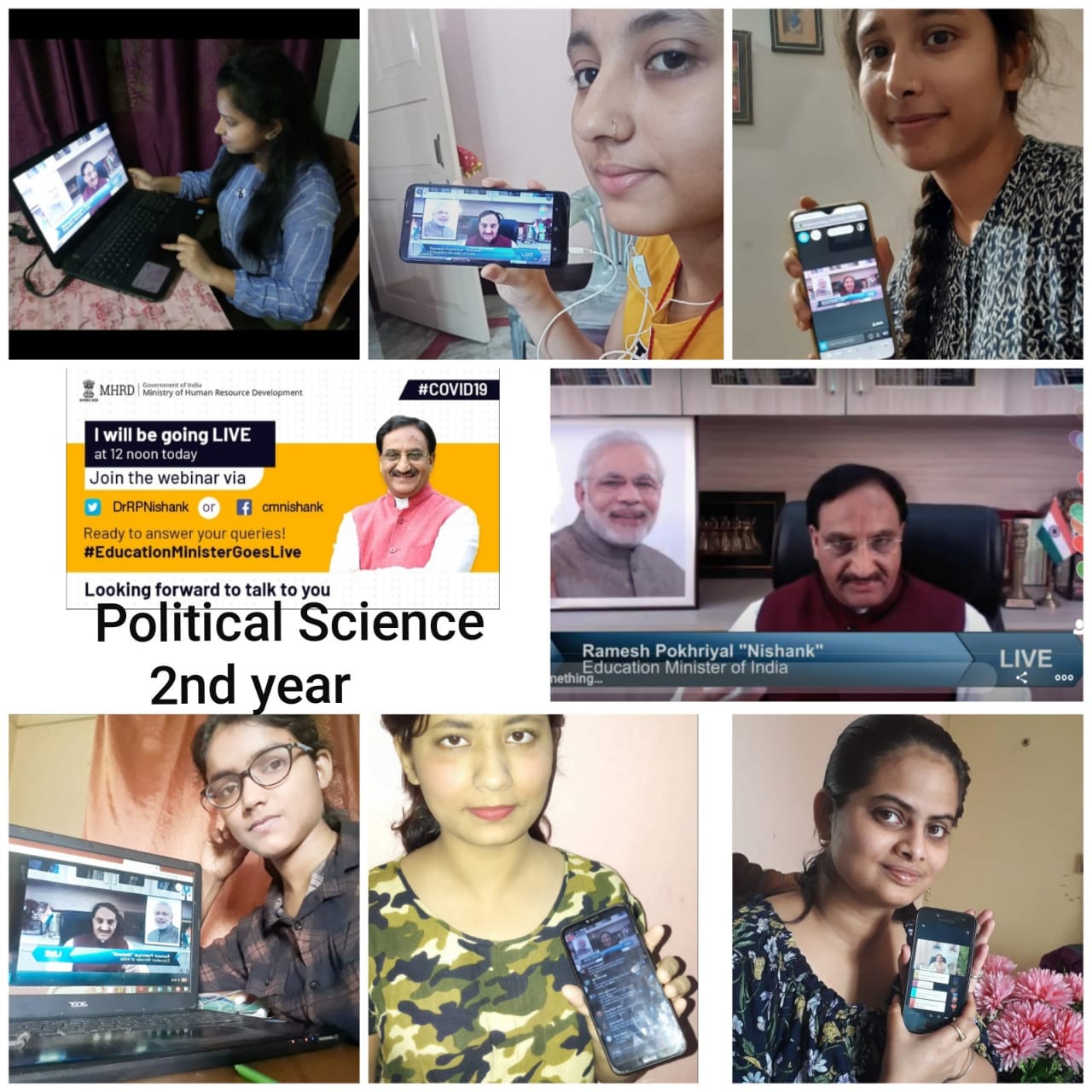
Department of Political Science organised an interactive session with the students of BA 1 and BA 2 on the theme, What it means being a women to mark the occasion of International Women’s Day. The students shared their experiences of being a girl child. The students were then told to make a report on it.

Students of the Department of Political Science celebrated International Women’s Day with the students of Asha Kiran on 7th of March 2020. The students of Asha Kiran presented a song and a dance which were taught to them by the students of the Department. The students of the Department presented a short skit on the occasion on the life of Jyotiba Phule and Savitri Phule. Sister Mary Sujita was the chief guest. Students of the Asha Kiran were given gifts and chocolates after the programme.
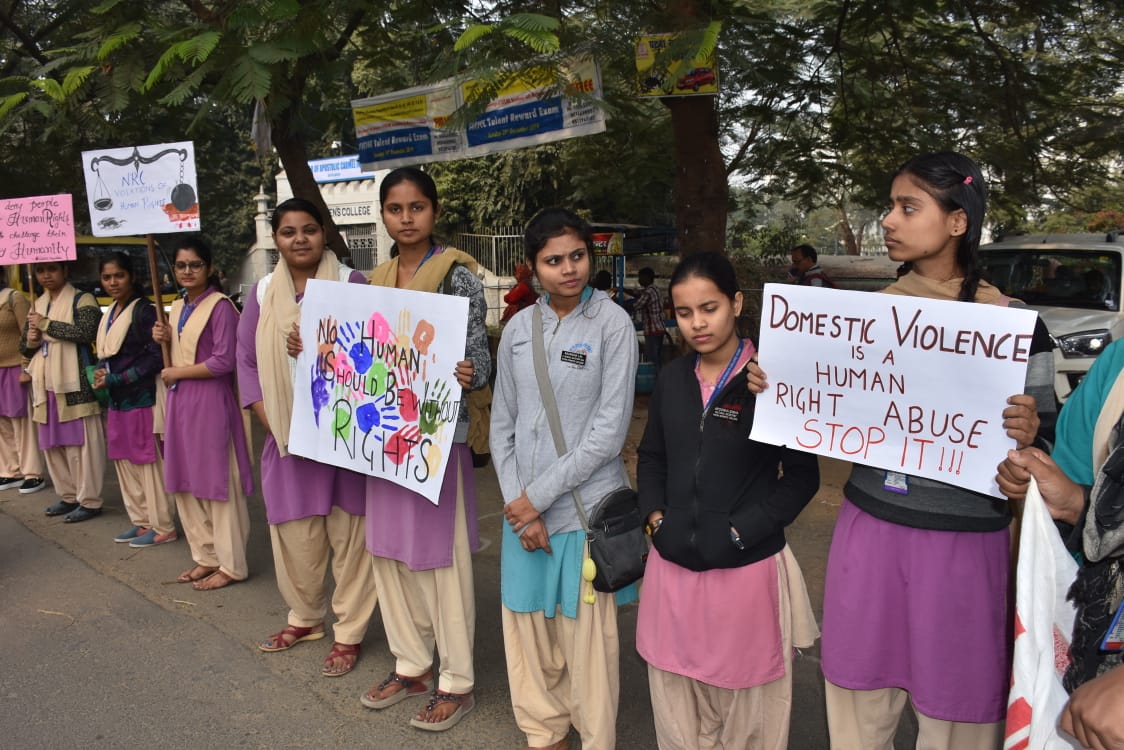
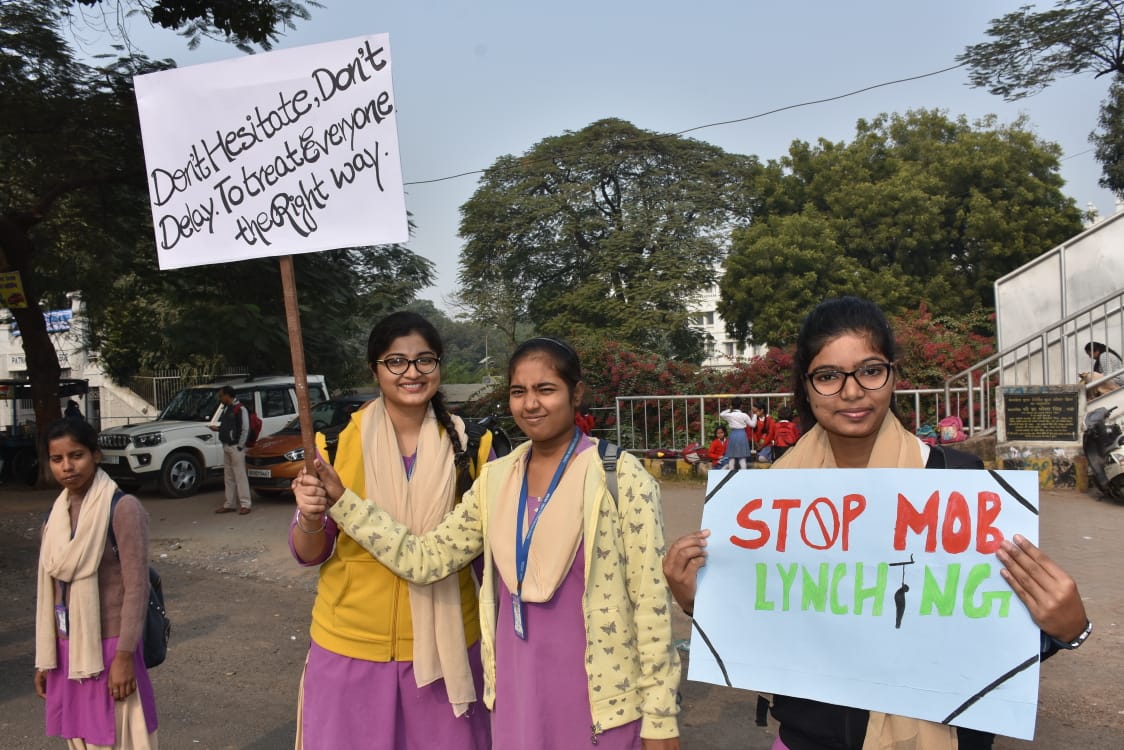
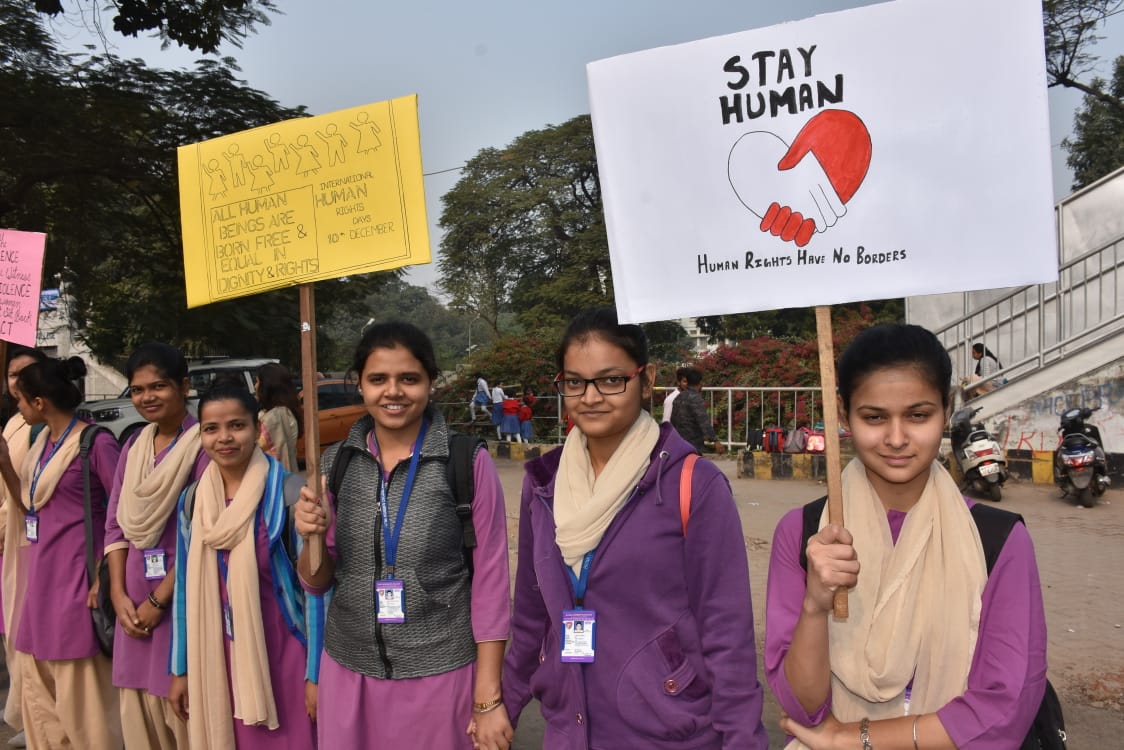
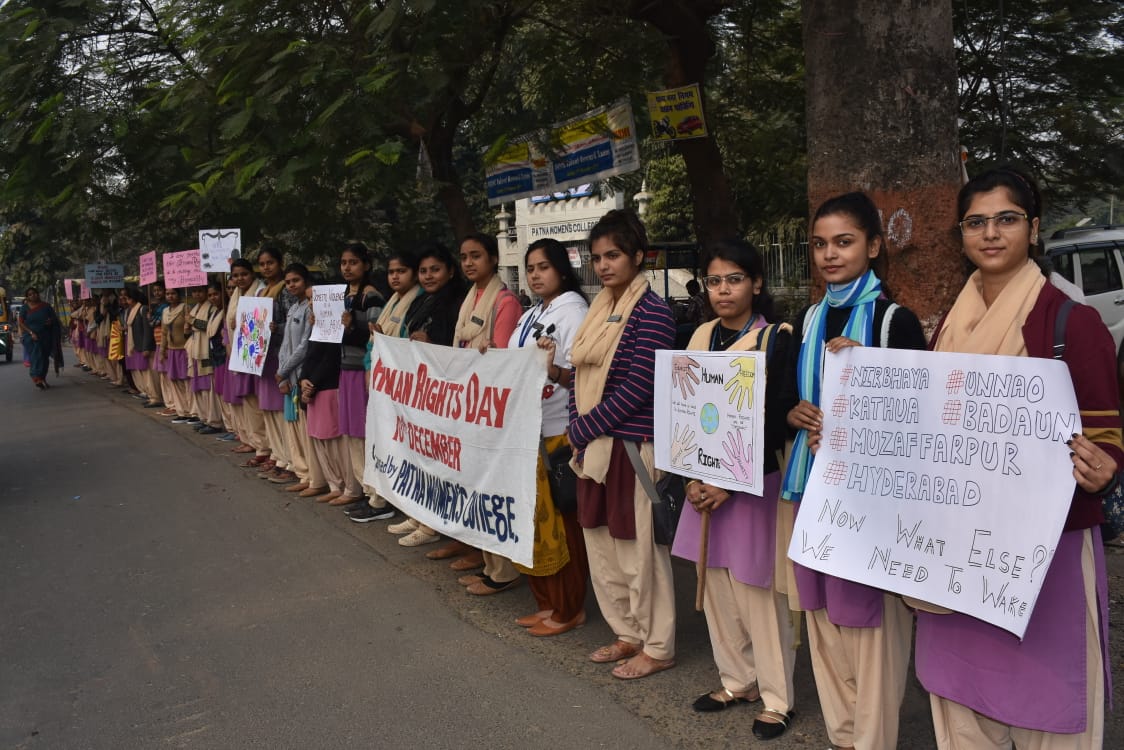
The students of the Department of Political Science celebrated Human Rights Day by forming a human chain outside the college gate.

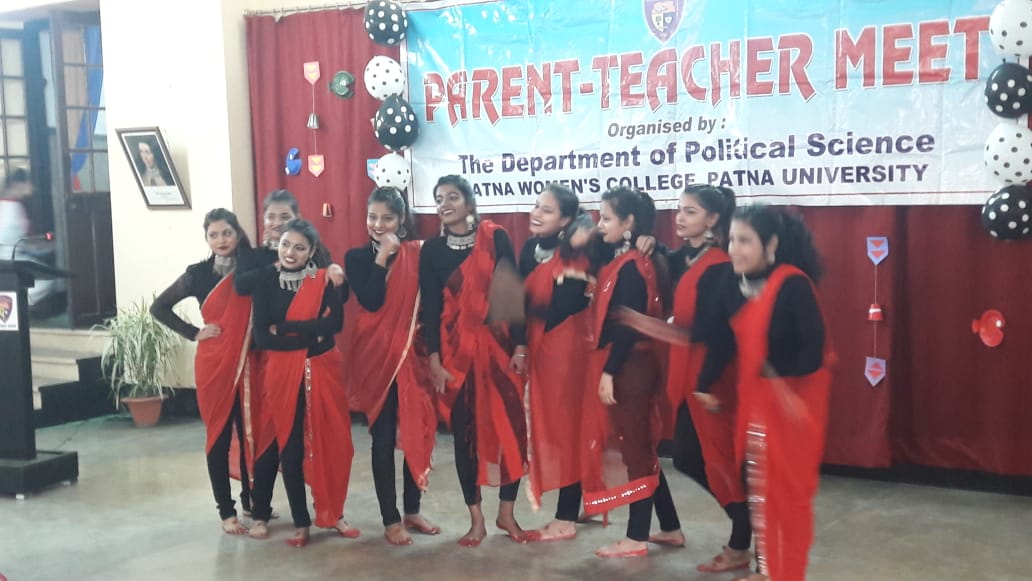
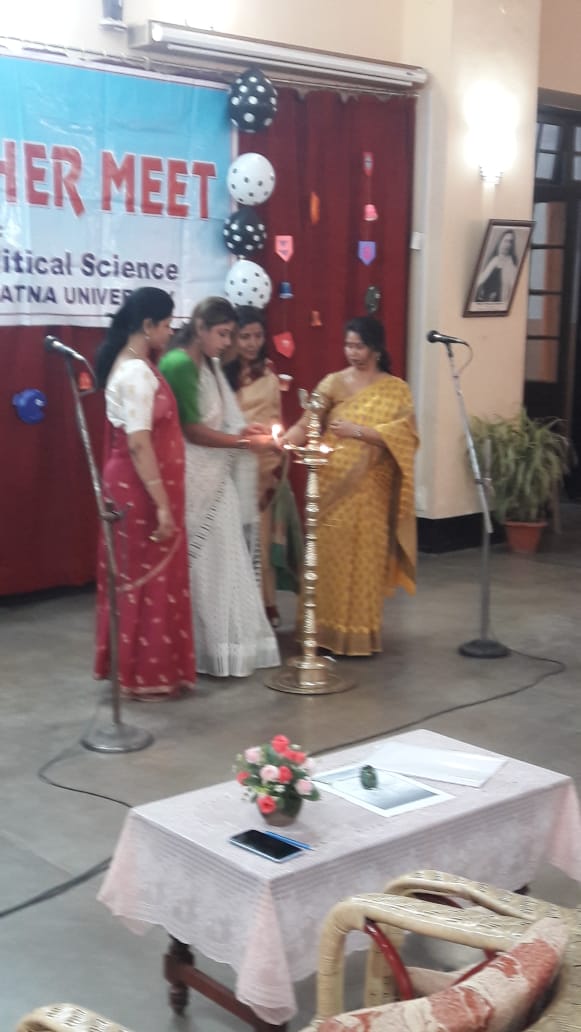
Department of Political Science organised Parent Teacher Meet on 27th November 2019 with B. A. 3 in Carmel hall at 10.am.

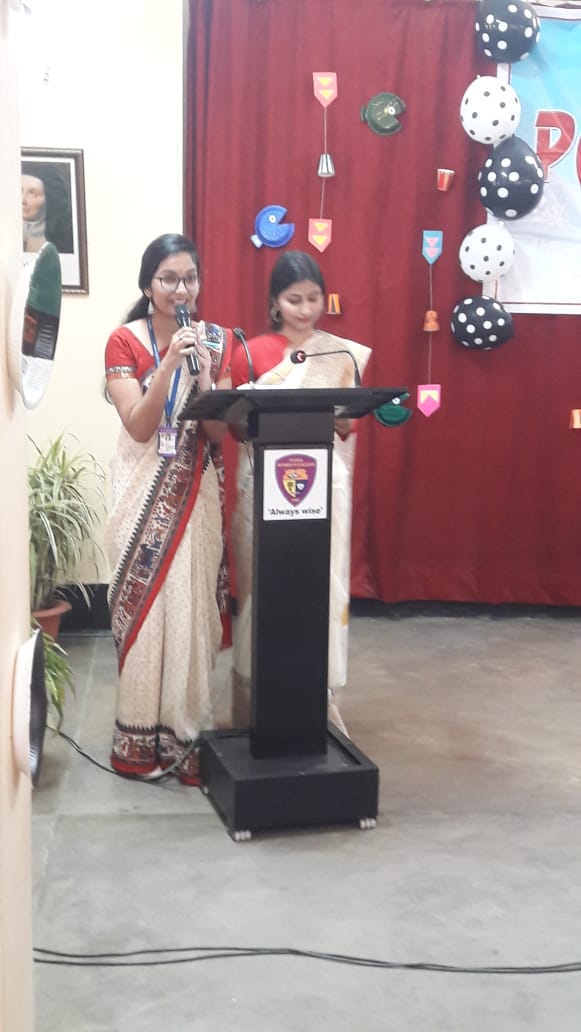
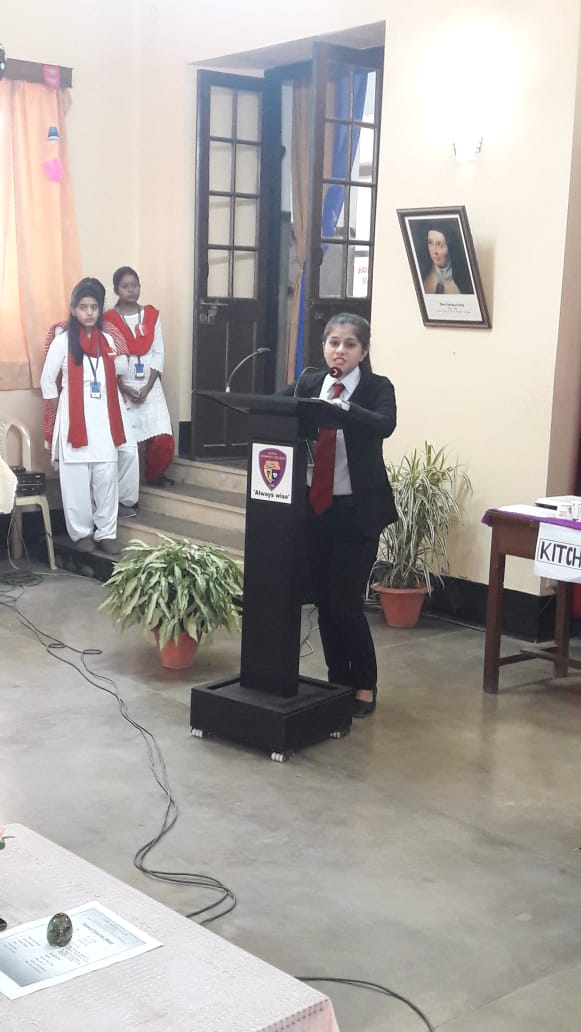
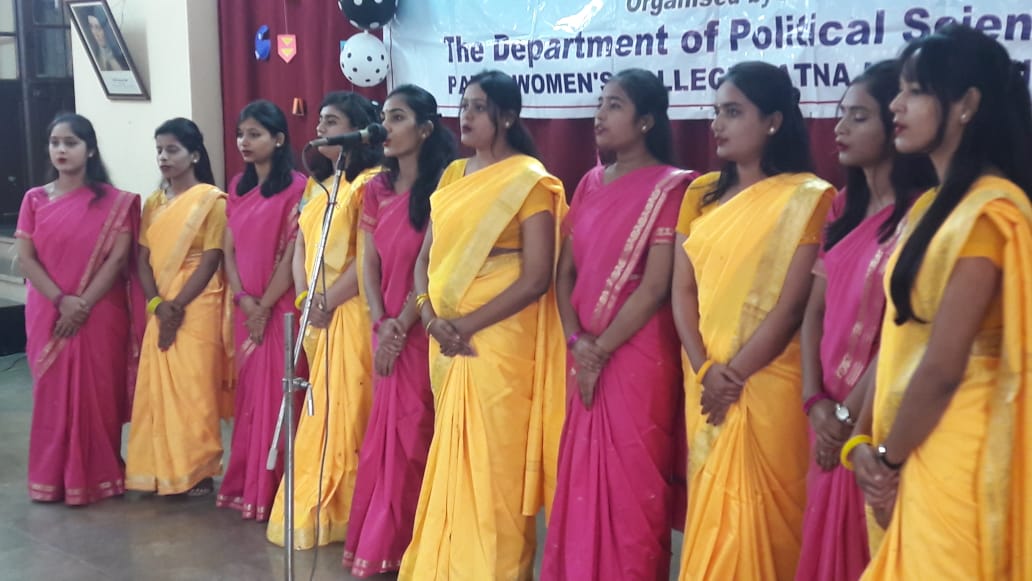
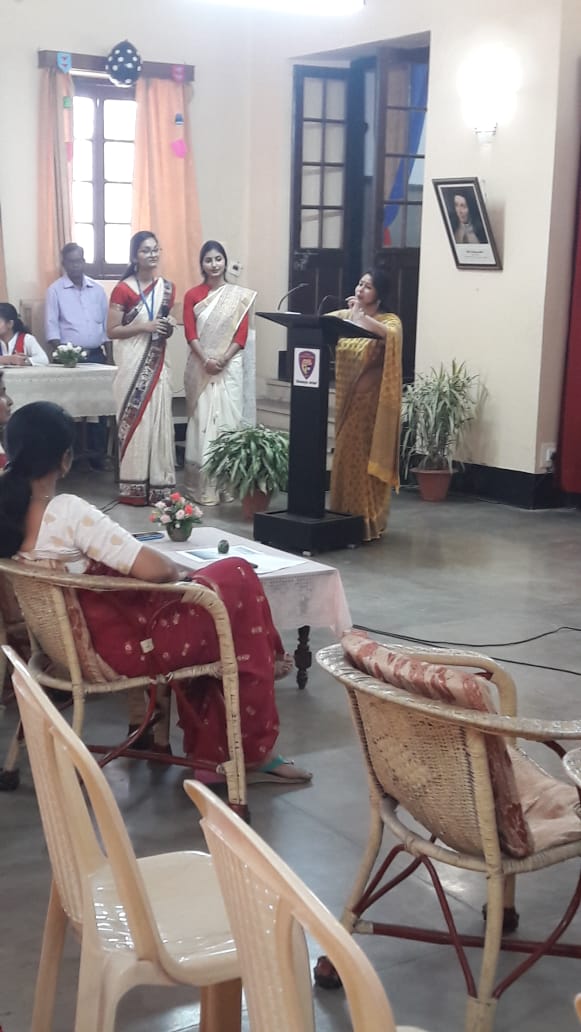
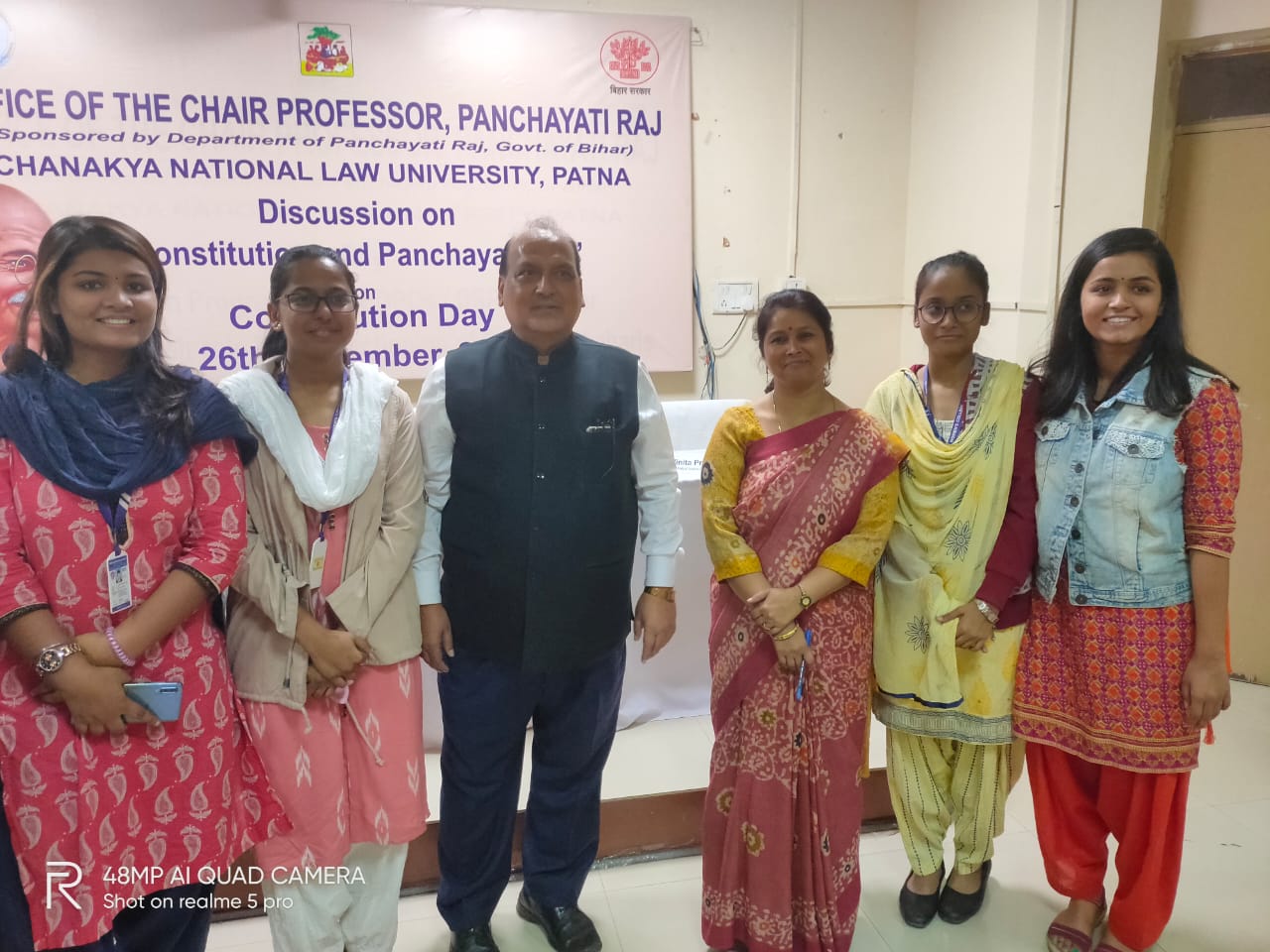
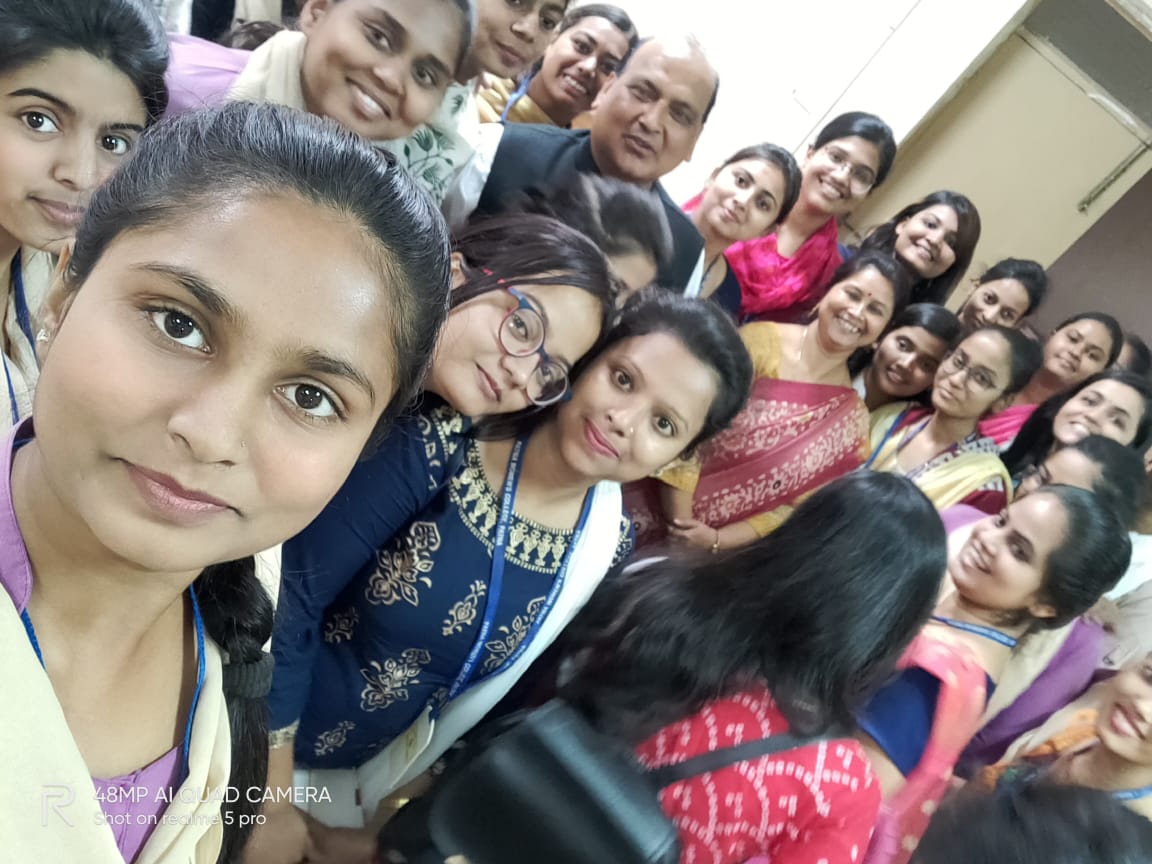
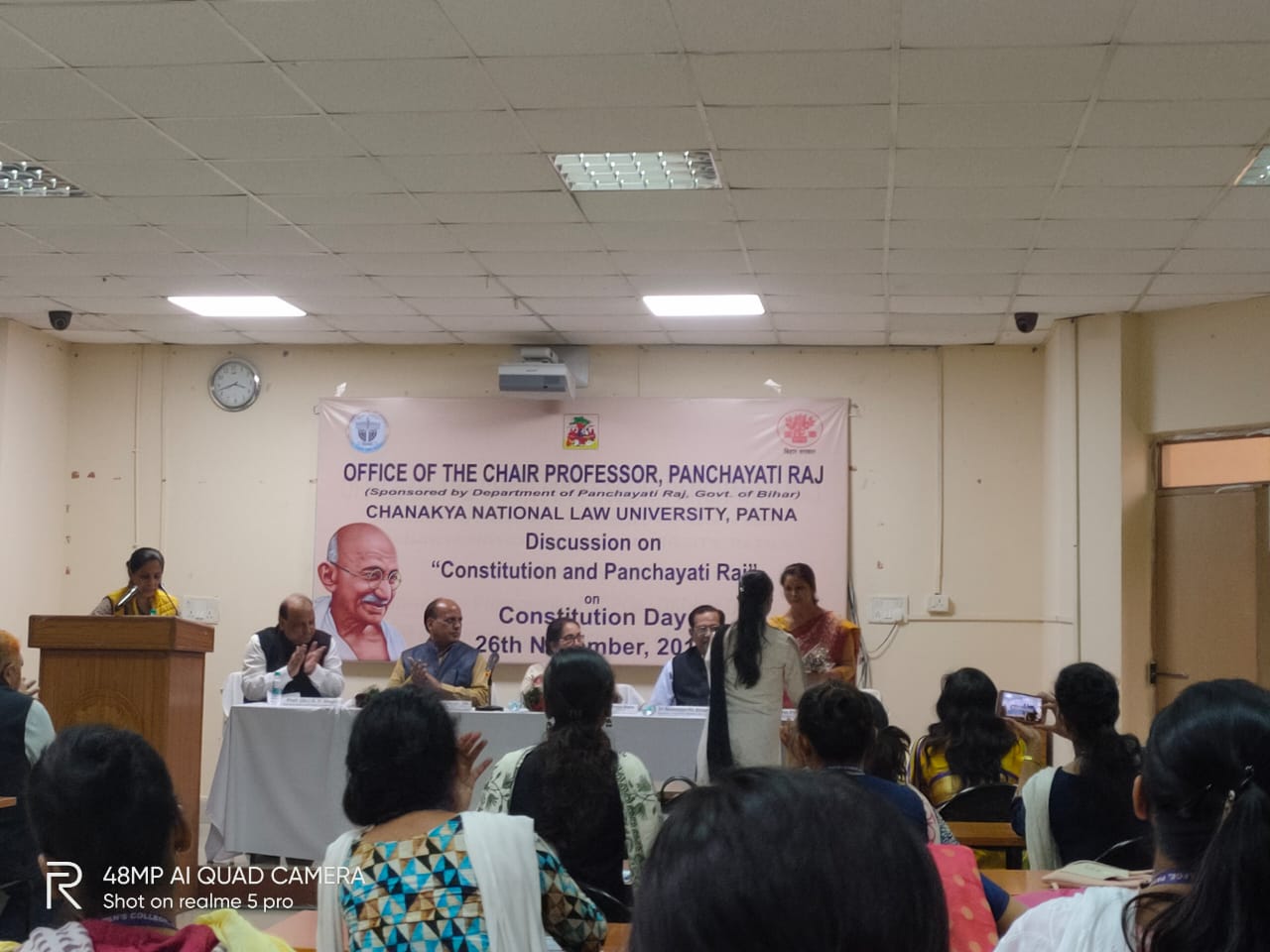
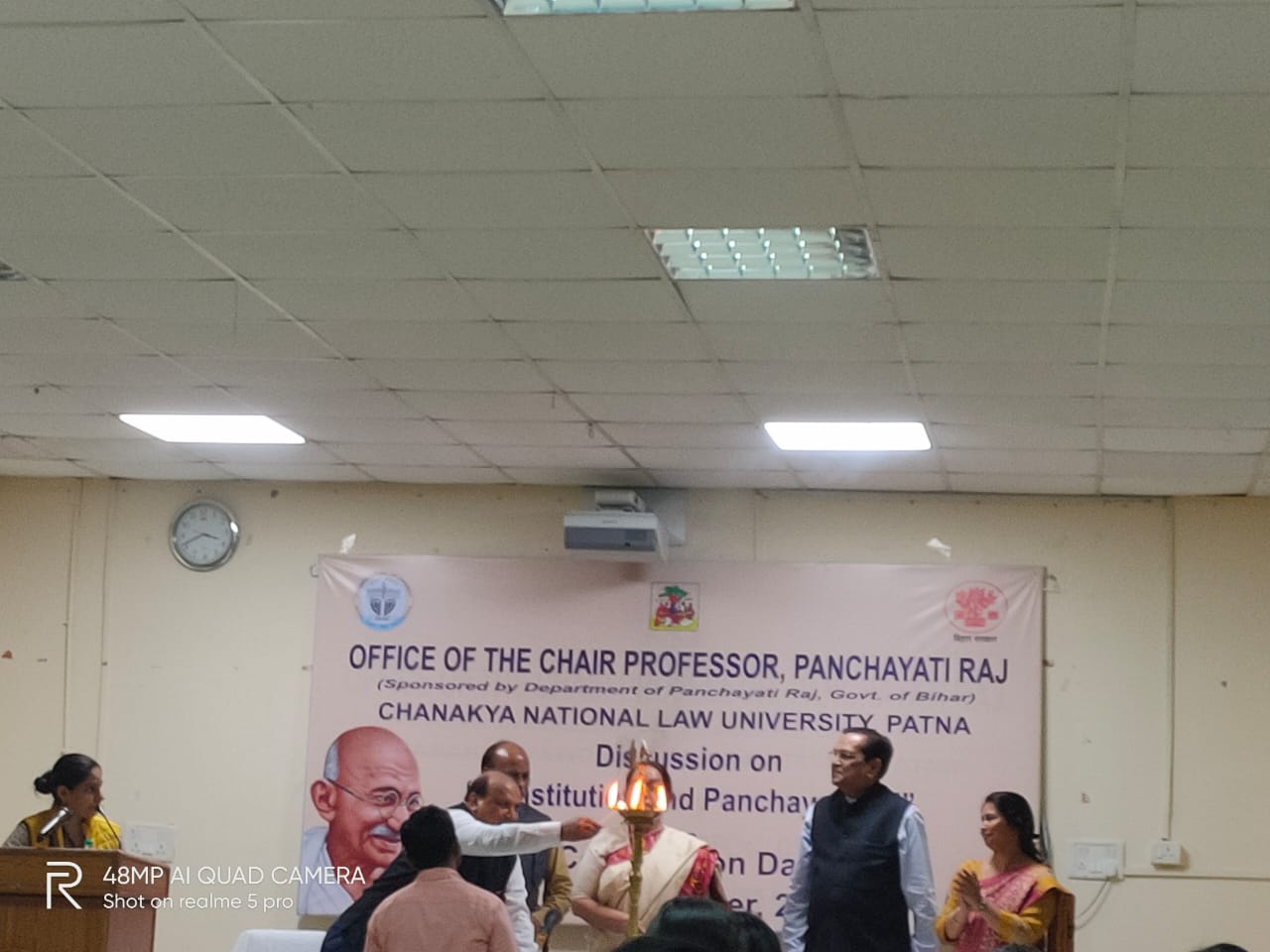
Students of the Department of Political Science participated in the discussion on Constitution and Panchayati Raj organised by CNLU on the eve of Constitution Day.

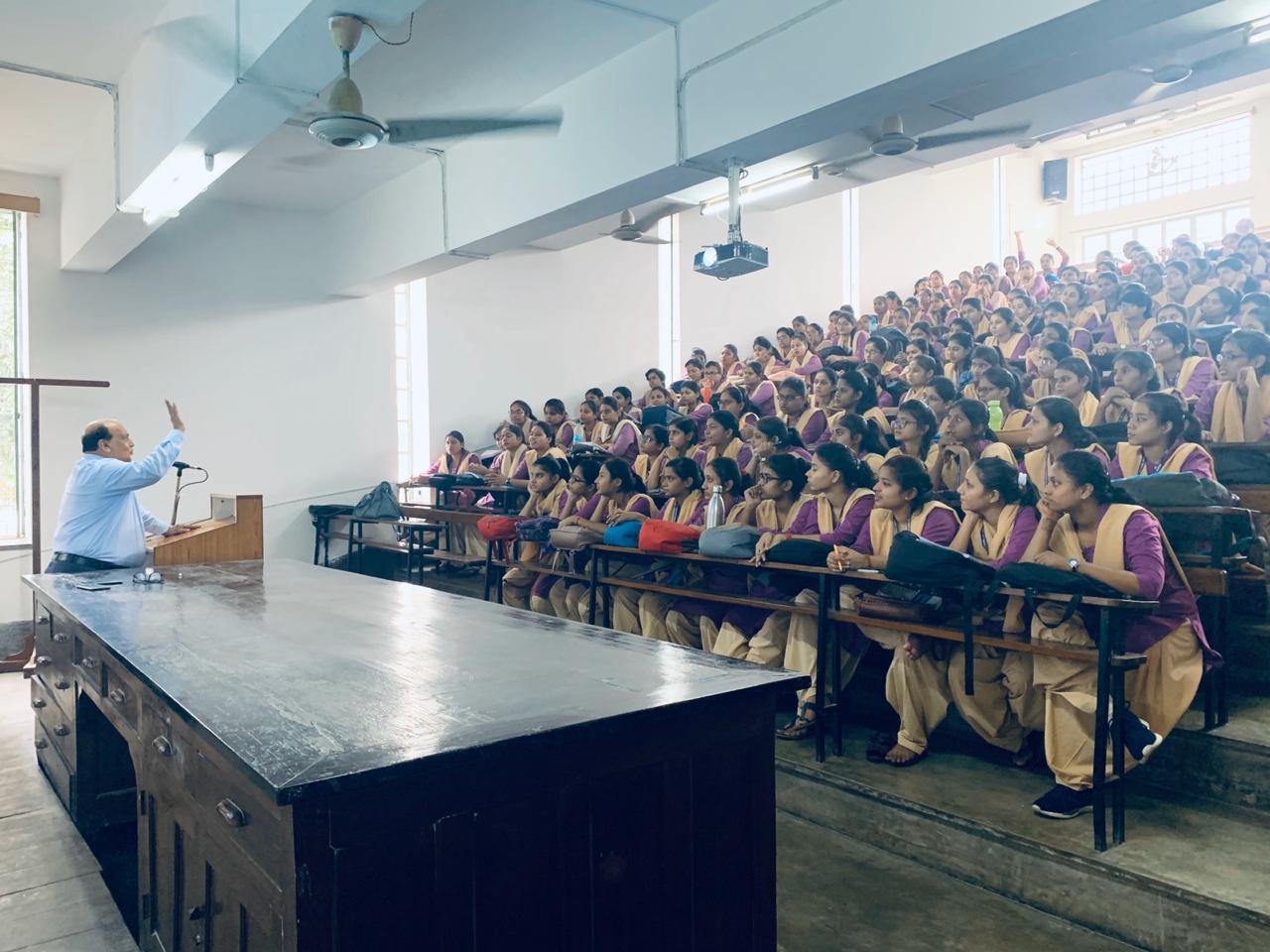
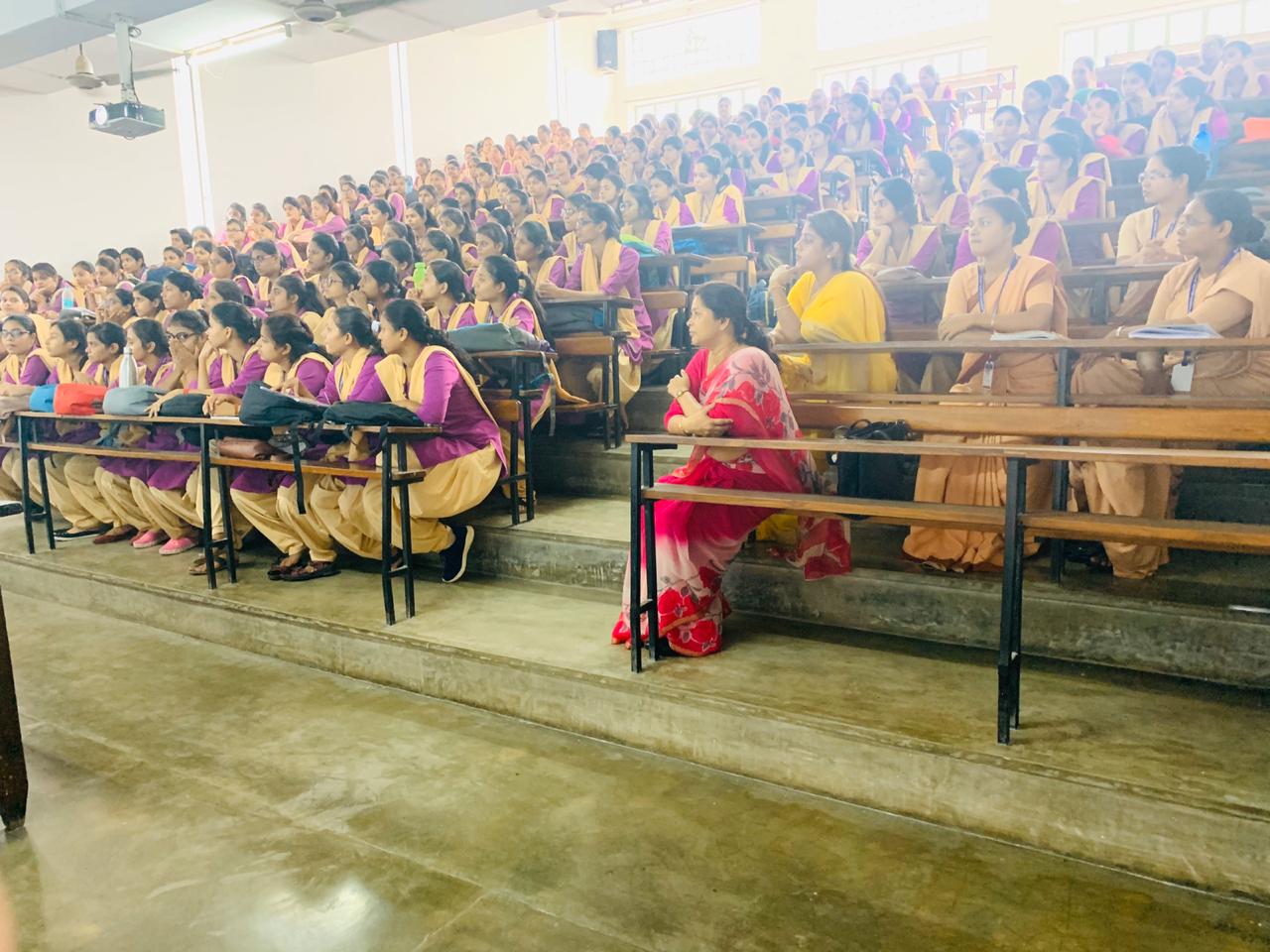
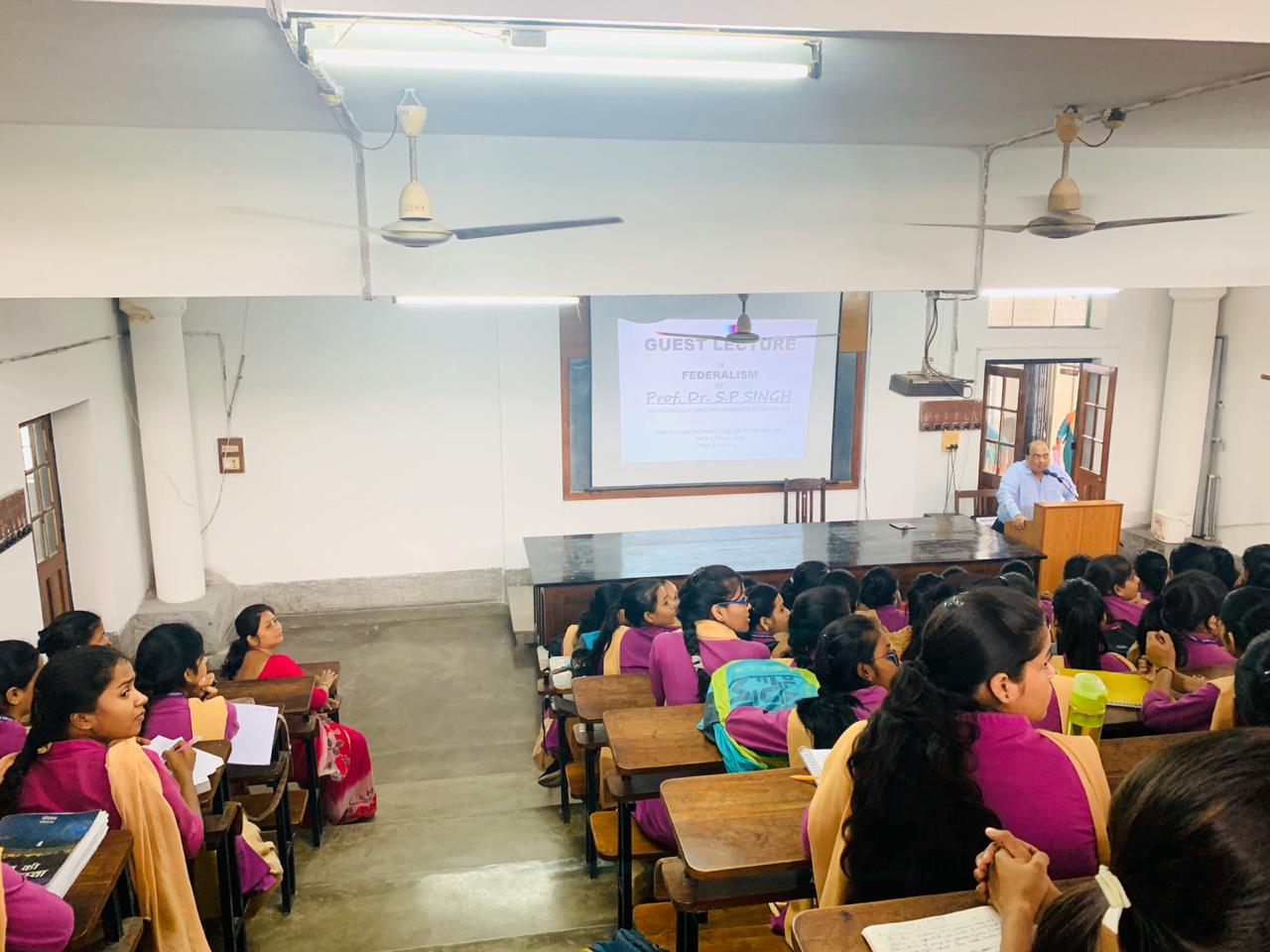
A guest lecture was organised by the Department of Political Science in room number 101 for BA 1 and BA 3 on 21.10.19. Lecture was delivered by Professor Dr. S P singh Dean of Social Sciences and Humanities.

CERTIFICATE COURSE IN WOMEN’S STUDIES
Programme Outcome:
This one-year Certificate Course in Women’s Studies is designed to enable the students to:
- Understand critically the basic concepts in Gender and Women’s Studies
- Analyse major issues in the field of Gender and Women’s studies
- Explore the intersectionality of gender, race, sexuality, class etc
- Learn through analysis, field work, and research
- Get gainful employability in various government and private agencies related to the women and child development sectors.
Programme Specific Outcome
This one-year Certificate Course in Women’s Studies is specifically designed to cater to the following needs of the students:
- To make students aware about gender sensitization
- To enable them to raise and address gender issues in their every day life, academic pursuit and career plans
- To cultivate gender perspective to evaluate various social issues and institutes
- To develop critical abilities among the students to analyse norms, traditions and state laws, and the discourse surrounding them through gender lens.
- To inculcate among the students the techniques of research through field work
- To provide them with better employability options
Course objectives:
After the completion of this course the students will be able to:
- Understand the relevance of Women’s Studies and its evolution
- Critically engage with the causes of gender discriminations and evaluate the role of national and international laws in creating gender parity
Course Outcomes:
After the completion of the course the students will be able to:
- Understand the conceptual framework and evolution of Women’s Studies
- Discern and comprehend the various causes of gender discrimination and gender- based violence
- Understand the various remedies and affirmative strategies dealing with women empowerment
- Analyse the various existing national and international laws and bodies meant for women empowerment
CERTIFICATE COURSE IN HUMAN RIGHTS AND VALUES IN EDUCATION-
PROGRAMME OUTCOME:
This one-year Certificate Course in Human Rights and Values in Education is designed to enable the students to –
· To help students understand the wider meaning of Human Rights and Value Education To enable students to understand the nature of International human rights in the face of global political, economic, social, legal, ethical and environmental challenges.
· To describe and critical analyse the differing approaches, perspectives, and models of human rights and how they impact the ways in which human rights education is carried out in diverse settings.
· To design, conduct, analyse and present findings using diverse research tools and methods in order to create knowledge and awareness about human rights issues.
· To draw critical pedagogies, produce advocacy tools and curricular resources to be used in formal or non-formal educational contexts to address human rights violations
PROGRAMME SPECIFIC OUTCOME:
This one-year Certificate Course in Human Rights and Values in Education is specifically designed to cater to the following needs of the student:
· Identify issues and problems relating to Human Rights and Values Education. Discern and comprehend the various causes of Human Rights violation and the importance of imparting value education in society. Understand the various remedies and affirmative strategies to protect the human rights of individuals.
· Analyze the various existing national and international laws and bodies meant for the protection of human rights.
· Discusses the importance of inculcating Values in our society.
· Examines the Values propagated by Indian ethical philosophers.
COURSE OBJECTIVE:
After the completion of the course the students will be able to-
· Identify and understand the concept and importance of Human Rights in our society.
· Explain the significance of Value Education and inculcate values in the society.
COURSE OUTCOME:
After the completion of the course the students will be able to-
· Understand the conceptual and theoretical framework of Human Rights. Comprehend the evolution of Human Rights at national and International levels. Discern and comprehend the various causes of Human Rights violation.
· Understand the various remedies and affirmative strategies dealing with Human Rights violation.
· Analyse the existing national and state bodies (particularly Bihar) meant for advocating Human Rights and its importance.
· Gain deeper understanding about the purpose of their life.
· Comprehend and apply the essential steps to become responsible citizens with clear conviction to practice values and ethics in life.
· Undertake research work, will be aware of the research techniques used in case study and field work(Internship).
· Will provide them with better employability choices.
Electoral Literacy Club
Rooted in the vision of inculcating integrated civic culture, voter’s education and electoral participation, the Electoral Literacy Club of Patna Women’s College has been consistently working to create awareness and enable critical thinking among students on issues related to elections, rights, democratic and non-democratic electoral systems and its processes.
The Electoral Literacy Club members engage in closed or open group sessions on relevant topics with the targeted groups to create voting awareness by conducting mock parliaments, debated, elocutions, essay writing and other progammes and activities.
The vision of the Club is:
· To inculcate civic culture, political participation, and electoral awareness among the youth
· To develop a culture of electoral participation and maximize the informal and ethical voting and follow the principle- every vote counts and No voter to be left behind.
The mission of the Club is:
· To educate the targeted population about voter registration, electoral process and related matters through hand on experiences.
· To familiarize the targeted population with EVM and VVPAT and to educate them about the robustness of EVM and integrity of the electoral procedures using EVMs.
· To help the target students understand the value of their vote to ensure that they exercise their right to suffrage in a confident, comfortable and ethical manner.
· To harness the potential of the members of the Electoral Literacy Club in carrying out electoral literacy in communities
· To facilitate voter registration for its eligible members who are yet not registered